
The Architecture of Morning: Designing a Frictionless Bathroom

Bathrooms fall apart quietly.
It's never a sudden collapse. It starts with a damp towel left on a door handle or a toothpaste cap that doesn't quite make it back to its home. We add one "temporary" bottle to the counter, promising we'll use it tomorrow. Then, one morning, you find yourself standing there—already late, pulse rising—searching for something that should be right in front of you.
After a decade of organizing, I've realized this isn't a lack of discipline. It's a design failure. I've seen clients lose ten minutes every morning digging through deep cabinets where face creams vanish into the dark. That isn't a personal flaw. It's friction.
The bathroom is the most demanding room in the house. It's where water, steam, and our most vulnerable daily rituals collide in the smallest square footage. When a system fails here, it's usually because it respects an "ideal" version of us, rather than the way we actually move when we're half-awake.
These bathroom organization ideas aren't about creating a spa no one can actually live in. They're about removing friction from the start of your day.
Table of Contents
Why Bathrooms Create Their Own Chaos
Bathrooms don't just collect clutter. They generate it.
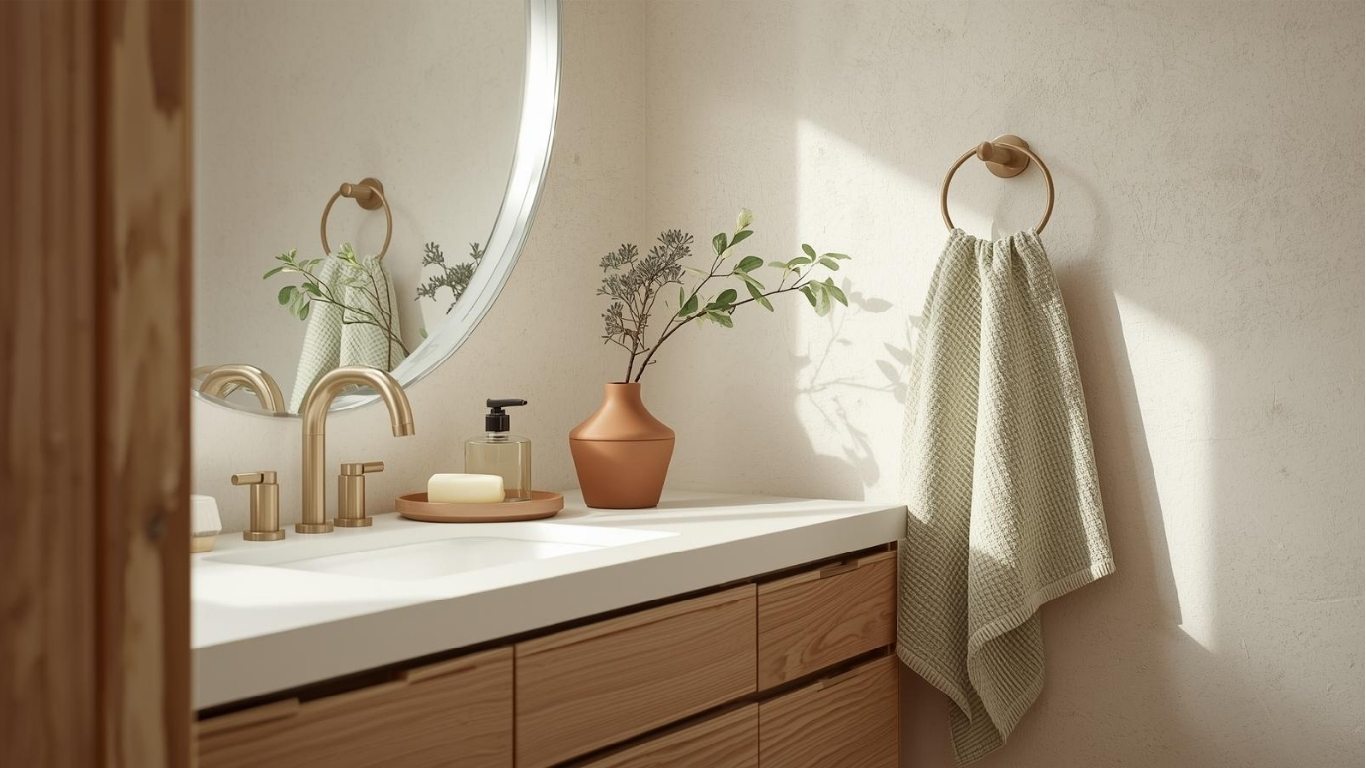
Almost every object is a tool—brushes, jars, bottles—picked up and dropped multiple times a day. If an object doesn't have a landing spot that's easier than leaving it on the counter, it stays out. Multiply that by a week, and the room starts to feel loud.
The biggest mistake I see is mixing timelines. When your daily moisturizer is tangled up with "sometimes" treatments or bulk backstock, the space loses focus. True bathroom organization ideas separate these timelines so your morning flow remains uninterrupted.
Design for Reality, Not Aspirations
Most systems fail because they expect us to change.
We won't.
If a drawer sticks, you'll stop closing it. If a towel bar requires a perfect fold, the towel will end up on the floor. In my work, I look for "data" in the mess. Where do things naturally land? That's where the solution belongs.
Hooks win every time. If no one uses the towel bar correctly, replace it with hooks. They're easier to use and they actually get used.
And here's the real test: if you share the bathroom, a system only works if your partner or kids can understand it without a lecture. If you have to explain where the soap goes, the design hasn't solved the friction yet.
Think in Zones, Not Just Containers
In a world of "Severance"-like boundaries, your bathroom should be a place of visual rest.
A well-organized bathroom doesn't rely on hiding everything. It relies on clarity.
The Daily Zone
These are the items you reach for without thinking—toothbrush, cleanser, moisturizer. They deserve prime access.
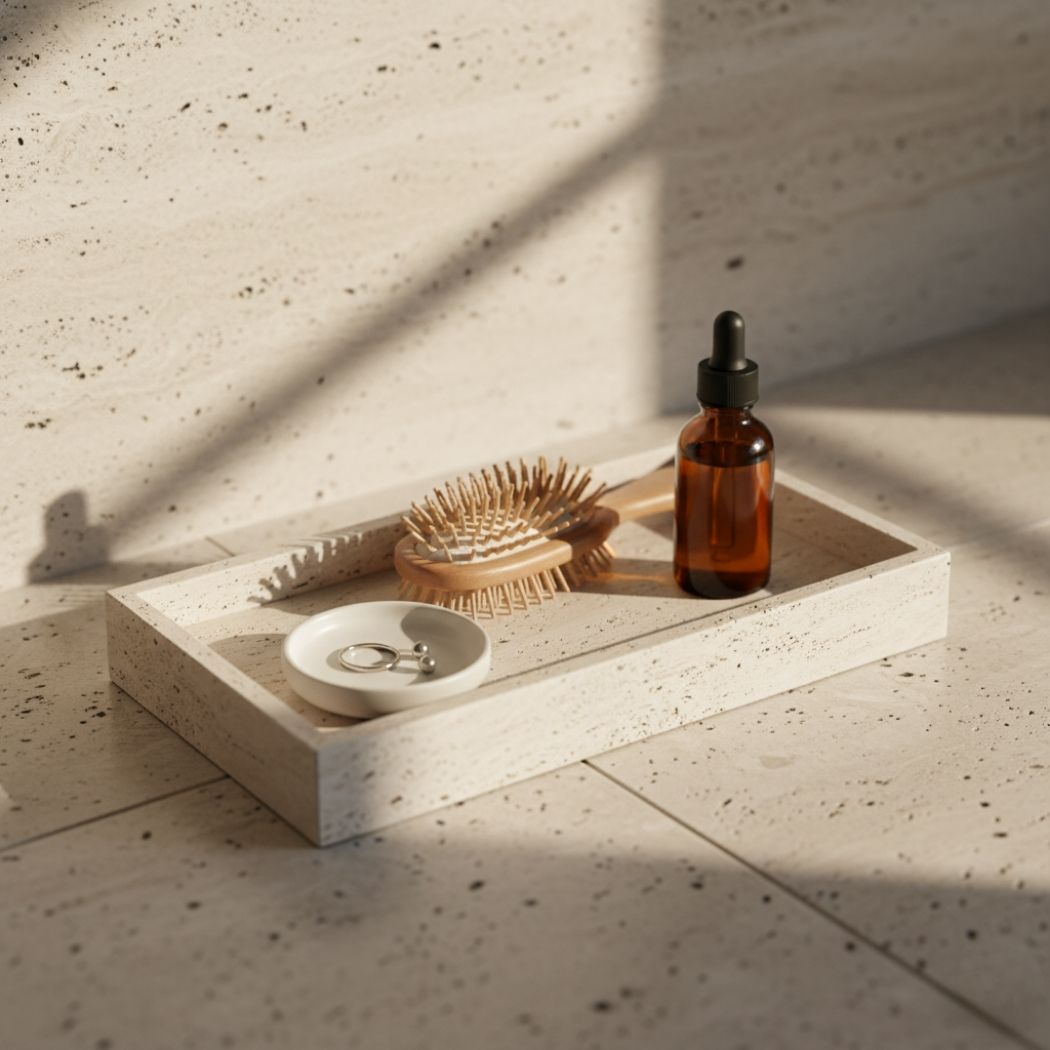
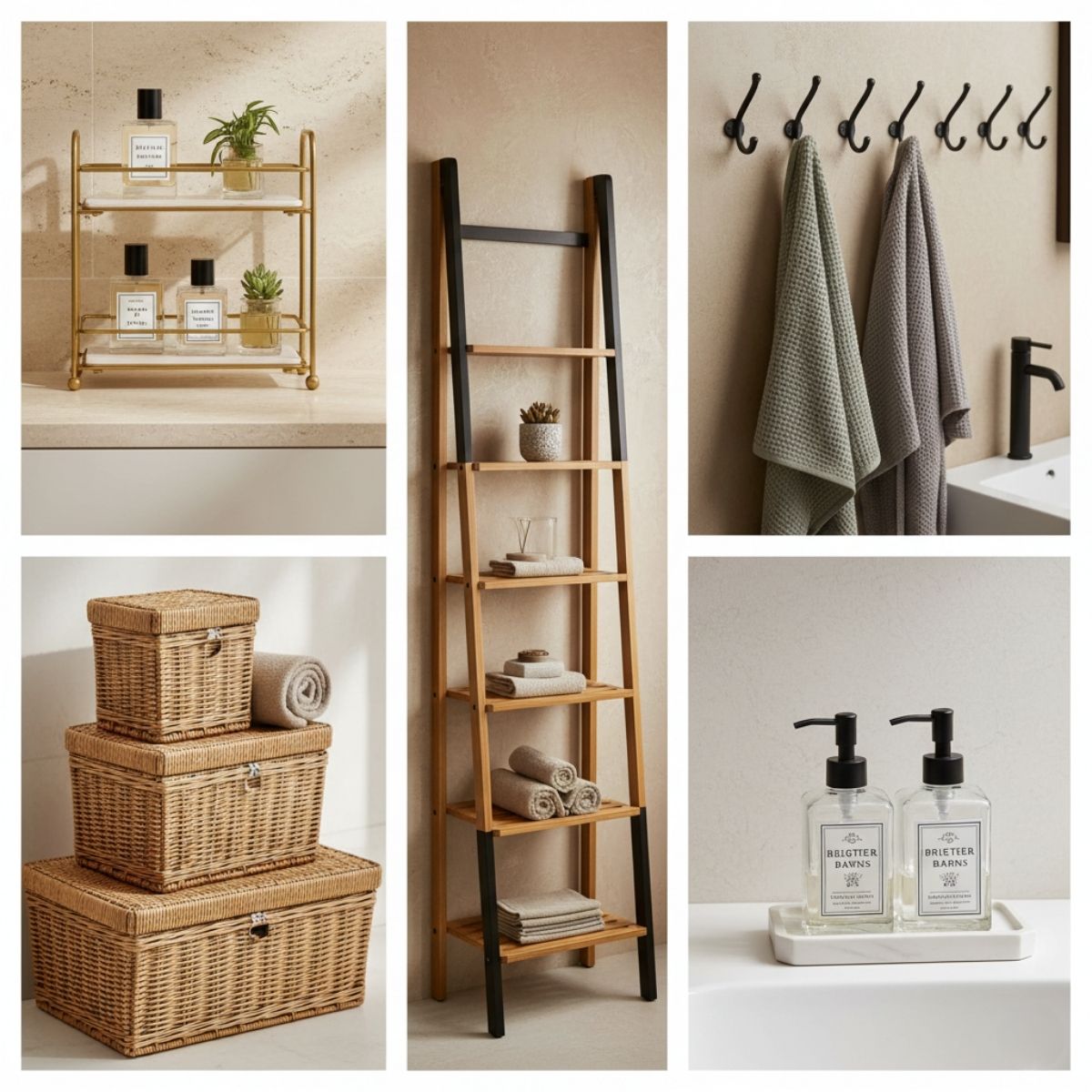
If they live in a drawer or cabinet, great. If they must stay on the counter, they need boundaries. A wide tray in natural stone or smooth ceramic turns a cluster of bottles into something intentional. The material matters less than the function. Stone or ceramic feels grounded. A wooden tray or woven basket adds warmth. Matte black metal works in more modern spaces.
The Weekly Zone
Masks, treatments, nail tools. Useful, but not urgent. These belong slightly out of reach. Lower drawers. A lidded basket in natural woven material. A shelf you don't open every morning.
The Backstock Zone
Extra shampoo, bulk paper goods, unopened replacements should never compete with daily items. If you don't have a linen closet, use opaque bins with lids under the sink or high shelves. You shouldn't see these things unless you're restocking.
When timelines stay separated, the bathroom stays usable.
Using Vertical Space Without Overwhelming the Room
Small bathrooms demand vertical thinking. But open storage comes with a risk: visual overload.
If you install shelves, don't fill them. Leave space. Air is part of the design.
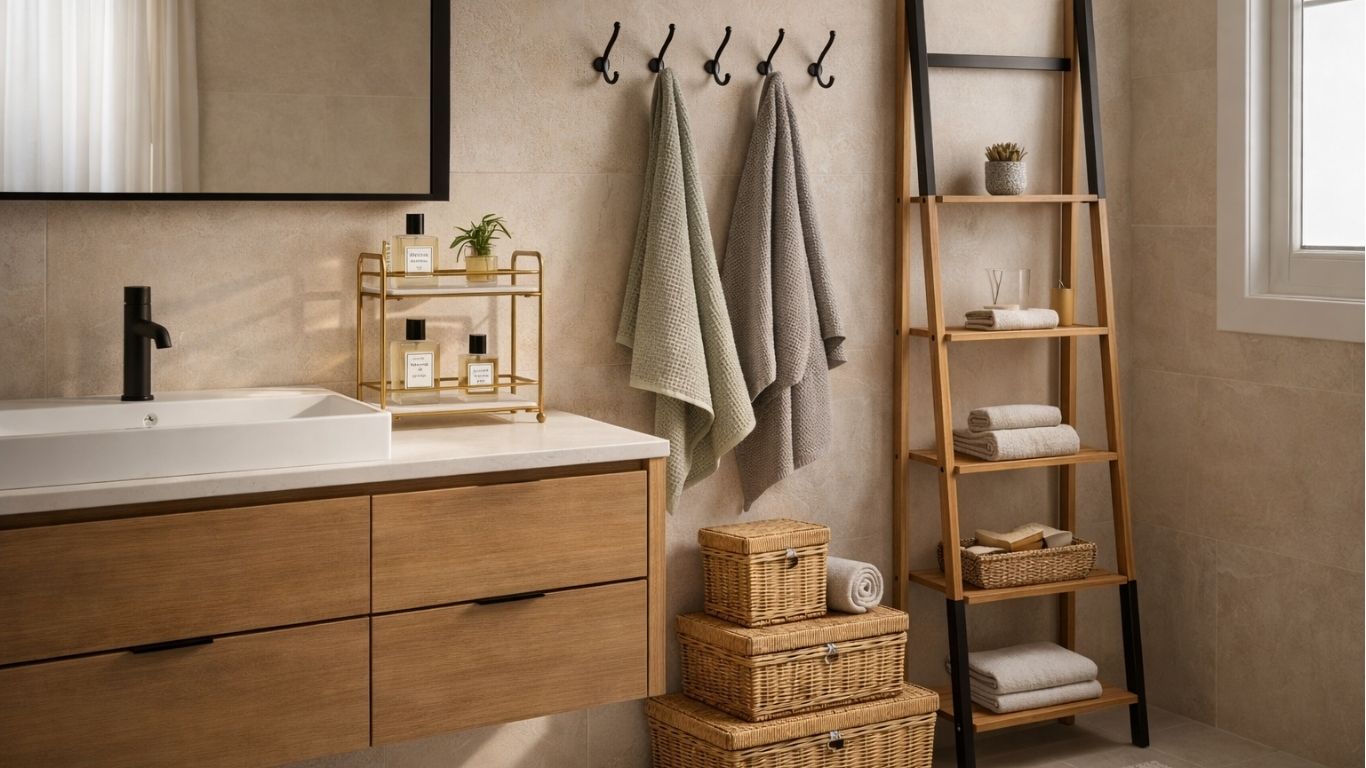
Rolled towels in matching colors, a few ceramic containers, and one trailing plant work better than rows of mismatched bottles. Hooks are often more effective than bars, especially in tight layouts.
For renters, a leaning ladder shelf in natural wood or simple peg rails add storage without commitment. Just be selective. Vertical space should feel open, not crowded.
When Less Organization Works Better
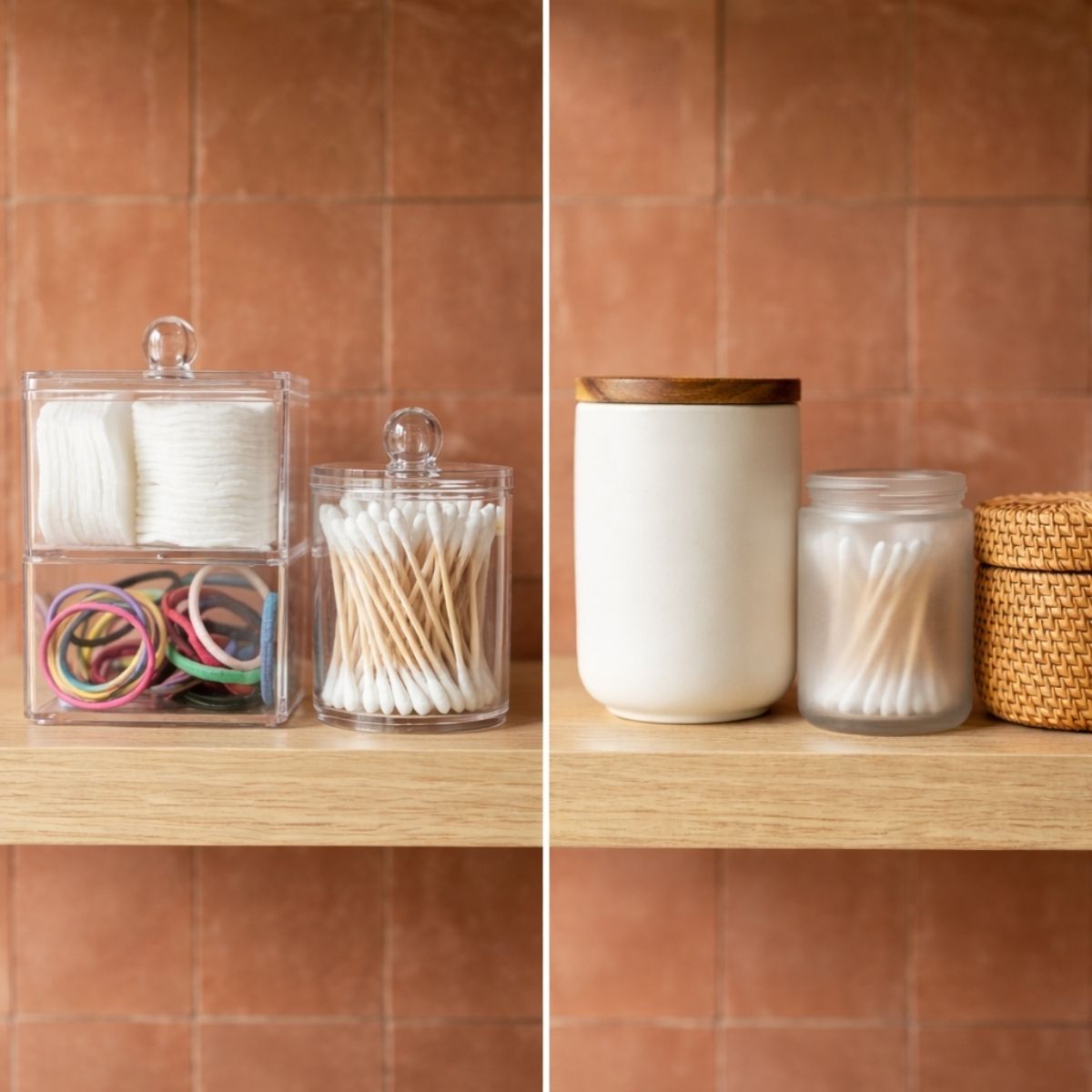
Not all organization is helpful.
Clear containers look neat in photos. In real bathrooms, they expose every label, color, and half-used bottle. That visual noise adds up fast.
Opaque storage is your friend. Woven baskets in natural fibers. Ceramic canisters with lids. Solid trays in warm wood tones. They absorb the chaos without demanding extra effort.
Decanting everything isn't necessary, and honestly, it's exhausting to maintain. But for items that live permanently on the counter, like hand soap, switching to a single glass or ceramic refillable dispenser makes an immediate difference. One object. One material. No branding shouting for attention.
When you remove the visual clutter, the bathroom stops feeling like a storage unit and starts feeling like a place where you can take a full breath. That shift is immediate. You notice it the first morning.
The Two-Minute Reset
No space stays organized on its own.
Think of your bathroom like a kitchen. It needs a reset.
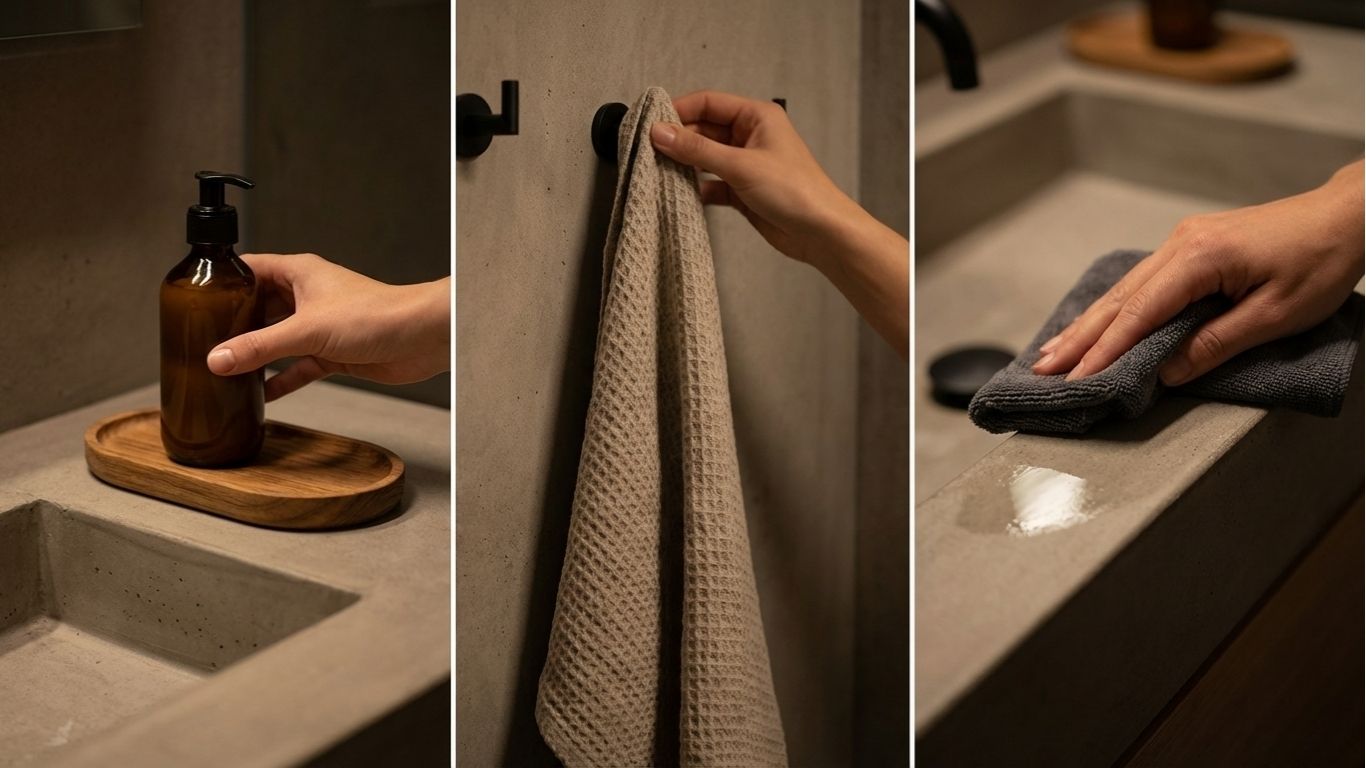
A two-minute evening ritual—hanging the towel, wiping the sink edge, closing the shower curtain—changes the entire energy of the next morning. Put products back in their zone. That's it.
If you want quick wins that take even less time, start here: Pull any empty bottles from the counter and toss them. Peel off labels from bottles you can't decant. Move one towel from the door to a hook. These take five minutes total and make the room feel ten times lighter.
When you wake up to a clear counter, you start the day with a sense of control rather than a list of chores.
A Bathroom That Supports Your Habits
A bathroom that works is responsive.
The towel is where your hand expects it to be. The counter holds only what belongs to this moment. Drawers open easily. Nothing fights you first thing in the morning.
When a space supports your habits instead of resisting them, ease stops being something you chase. It becomes the default state—the way the room feels when you walk in, half-awake, before coffee, before the day has asked for anything yet.
And that quiet beginning changes everything else that follows.
Affiliate Disclosure: This post contains affiliate links, which means I may earn a small commission at no extra cost to you if you make a purchase through these links.
Ready for More Organization Ideas?
Continue creating calm, intentional spaces with these thoughtfully curated guides:


