
How to Host a Dinner Party That Feels Effortless
This post may contain affiliate links. As an Amazon Associate, I earn from qualifying purchases, at no extra cost to you.
This post may contain affiliate links. If you purchase through these links, I may earn a small commission at no extra cost to you. Full disclosure.
A successful dinner party starts with a clear timeline, a simple menu, and a well-styled table. Plan your guest list and menu two weeks ahead, prep what you can the day before, and give yourself a final 30-minute styling walk-through before guests arrive. The secret is structure, not perfection.
One of my first dinners in New York happened in a small apartment where everything felt far too limited. The space was tight, the pieces were mismatched, and nothing looked the way the evening deserved. There were worries about the table, the timing, the food, the candles, the plates, the mood. Even before the first guest arrived, the exhaustion had already set in.
A good dinner party does not come from having a perfect home. It comes from knowing how to set the evening up so it can breathe. Some of the most inviting tables are not in grand dining rooms at all. They live in apartments, kitchens, and homes where space is tight but the atmosphere feels easy and warm.
That understanding took time. After years of working on events in private homes and beautiful New York settings, hosting a dinner party at home stopped feeling like a performance and started feeling like a structure. When the structure is right, the evening feels calm, generous, and natural.
This guide is everything a first-time host deserves to hear before that first dinner. A step-by-step approach to hosting a dinner party at home, from planning your guest list to the final 30-minute walk-through that professional event stylists never skip.
Start With the Guest List (Not the Menu)
Most people begin planning a dinner party by thinking about what to cook. The guest list comes later, almost as an afterthought. But the number of people at your table shapes everything else: the menu, the seating, the energy of the room, even the amount of food you need to prepare.
Six to eight guests is the sweet spot for a home dinner party. Enough voices to keep the conversation alive, few enough that everyone can talk to each other without shouting across the table. At events in larger settings, there are ways to manage bigger groups. But at home, especially the first few times, a smaller table gives you room to enjoy the evening yourself.
Think about the mix. Placing two people who already know each other next to someone new keeps the conversation moving naturally. Avoid clustering couples together or seating close friends side by side, where they tend to talk only to each other.
Send your invitation about two weeks before the dinner. Earlier than that and people forget. Later than that and schedules fill up. A simple text message works perfectly. No one expects a formal card for a dinner at home.
If you are unsure about seating, place name cards at each setting. It removes the awkward moment when guests arrive and do not know where to sit, and it gives you control over the conversation flow.
Plan a Menu You Can Actually Enjoy
The biggest mistake new hosts make is choosing a menu that keeps them in the kitchen all evening. The goal is to be at the table with your guests, not standing over the stove when everyone is laughing in the other room.
One hot dish is enough. Build everything else around foods that can be served at room temperature or prepared the day before. A roast that goes into the oven an hour before guests arrive, a salad that only needs dressing at the last moment, a cheese board that sits beautifully on the table while people settle in. This approach is not cutting corners. It is how professional events run smoothly behind the scenes.
Prepare at least 80 percent of the food before the doorbell rings. Sauces, dressings, desserts, marinated vegetables, bread sliced and wrapped. The less you have to do in the final hour, the calmer the evening feels from the very first minute.
Write your menu on a small card and tape it inside a kitchen cabinet. On the night of the party, you will not have to remember what comes next. This is something every event coordinator does behind the scenes.
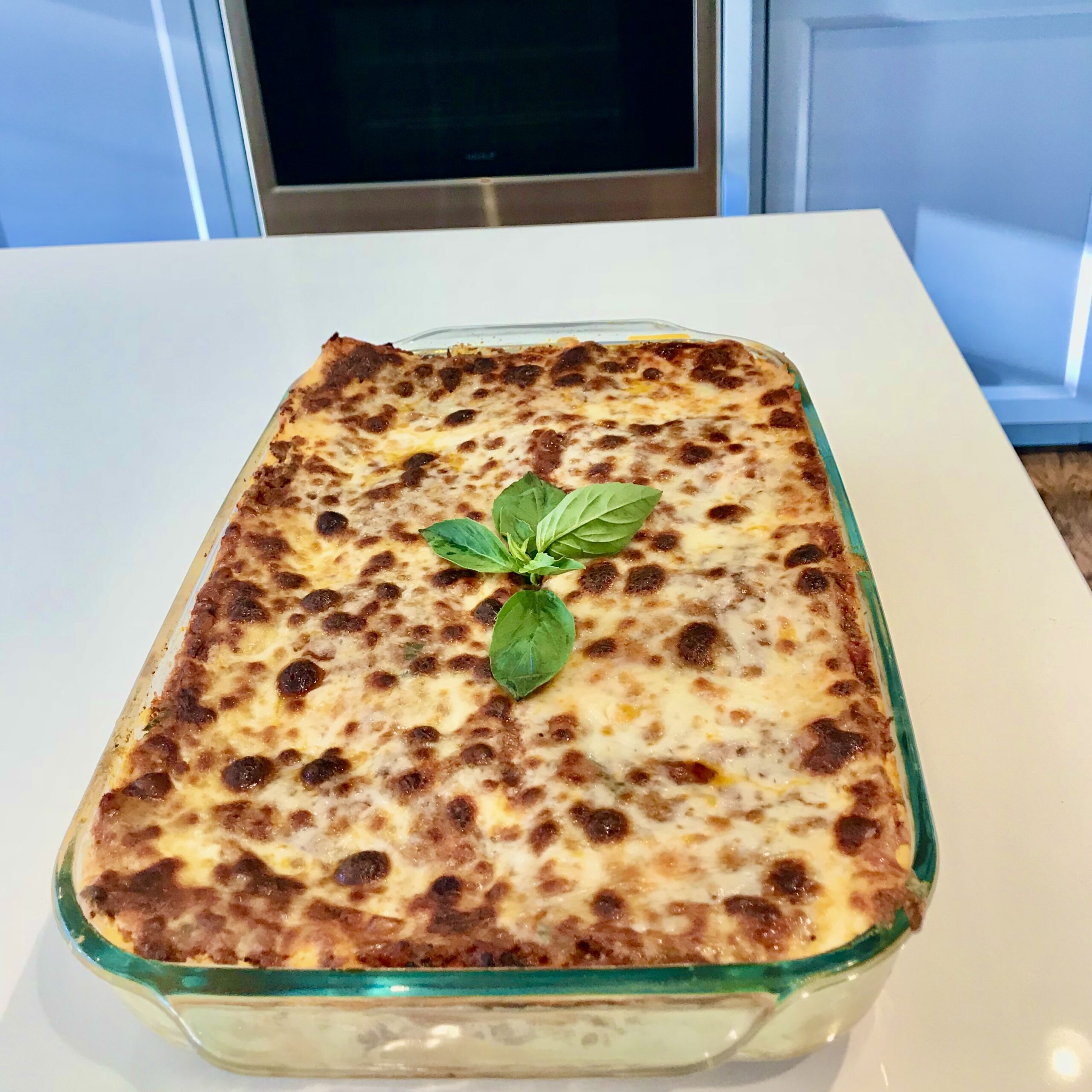
One hot dish that goes into the oven before guests arrive. That is the whole strategy.
Photo by MyHomeShelf.com
And resist the urge to try something new. A dinner party is not the night to experiment with a recipe you have never made. As Martha Stewart has said, preparation is the real secret to confident hosting. Cook what you already know, and put your creative energy into how the table looks and how the evening flows.
Create a Timeline That Works Backwards
Professional event planners never work forward from a start time. They work backwards from the moment guests walk through the door. This is the single biggest difference between a stressful evening and a calm one.
Start with your arrival time and count back. If guests are coming at seven, the table should be fully set by six thirty. Styling begins at six. Cooking wraps up by five forty-five. Prep starts at three, or even earlier.
Here is a simple framework that works for most dinner parties:
Finalize the guest list and send invitations. Choose a general menu direction.
Confirm your guest count. Shop for non-perishable ingredients, candles, and any table pieces you need. Check your linens and table essentials and press them if necessary.
Shop for fresh ingredients. Prepare anything that holds well in the fridge: sauces, desserts, marinated dishes.
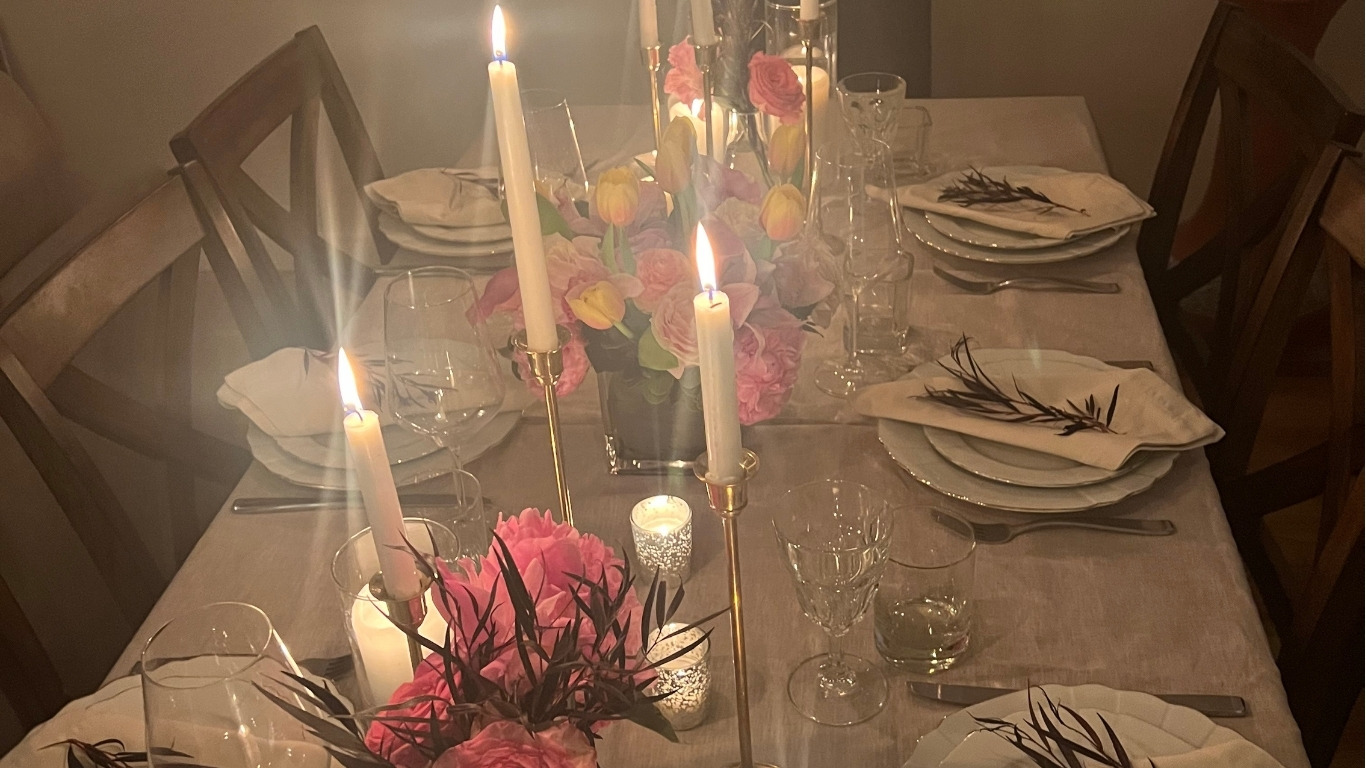
Set the table completely. This is the professional secret most home hosts miss. There is no reason to wait until the day of the party for plates, napkins, glasses, and candles. Set it all the night before, cover it with a clean cloth if you like, and wake up knowing the hardest visual work is done.
Cook, get dressed, and do your final walk-through. Nothing else. For a detailed version of this timeline, follow our dinner party checklist from two weeks out to the final thirty minutes.
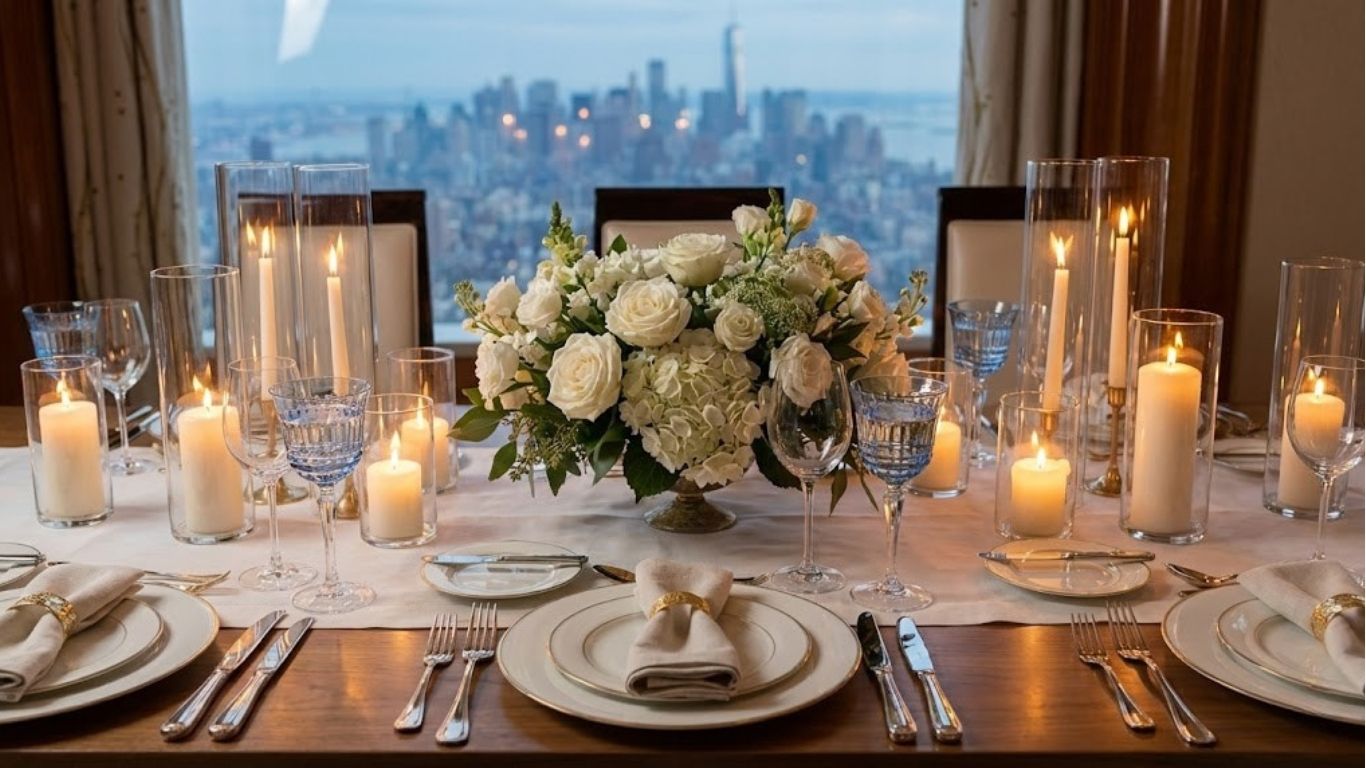
Set the table the night before and wake up knowing the hardest visual work is already done.
Photo by MyHomeShelf.com
Style Your Table Like a Professional
A table does not need to be expensive to look beautiful. It needs structure. After styling hundreds of tables for events across New York, the same three principles show up every time: height, texture, and a simple color story.
Height means not everything sits flat on the table. A tall candle next to a low votive. A small arrangement of flowers lifted in a bud vase beside plates that sit on chargers. These small shifts in level make a table feel layered and intentional, even with everyday pieces. For taper candles, a set of glass holders like the Hewory Glass Candlestick Holders creates that variation in height without cluttering the table.
Texture is what keeps things interesting. Linen next to ceramic. Wood next to glass. A smooth white plate on a woven placemat. When everything matches too perfectly, a table can feel flat. When materials contrast gently, the whole setting comes alive.
Color story simply means choosing two or three tones and staying with them. Warm neutrals with gold accents. White and green with natural wood. The palette does not need to be dramatic. It just needs to feel consistent from one end of the table to the other. Small touches like Volens Gold Votive Candle Holders can tie a warm neutral palette together with just the right amount of glow.
For the centerpiece, keep it below eye level. Guests should be able to see each other without leaning around the flowers. A few low bud vases or a simple greenery runner along the center of the table works better than one tall arrangement that blocks the conversation.
Place candles in odd numbers and at different heights. Three candles of varying sizes grouped together look more natural than four evenly spaced. At events styled with Baccarat crystal, the candlelight takes on a different quality, but even simple glass holders create the same principle of warmth and depth. Light them at least ten minutes before guests arrive so the wax softens and the glow feels warm, not brand new.
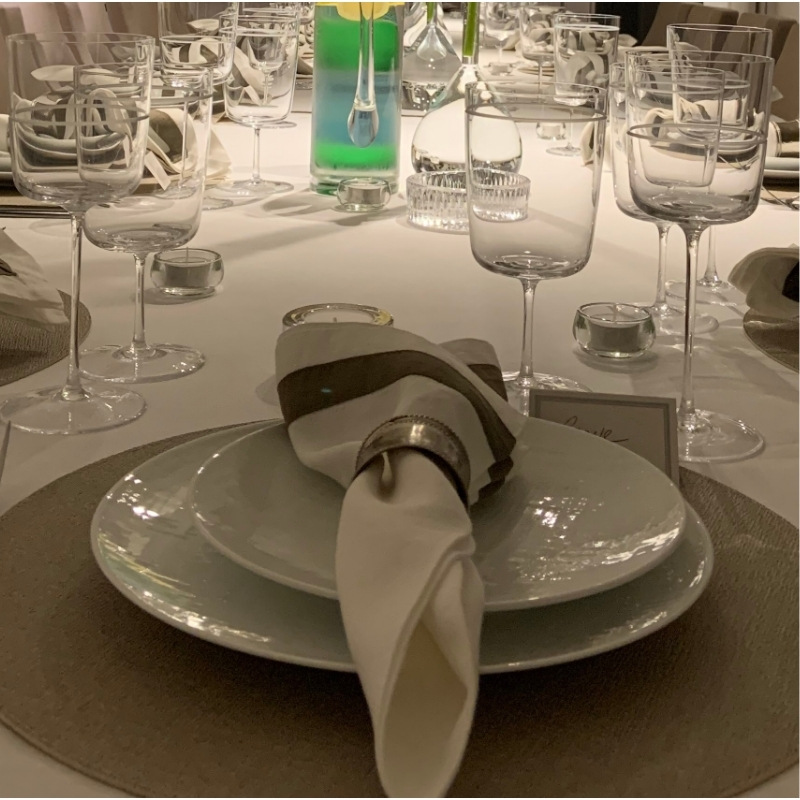
A layered place setting turns even a simple table into something memorable.
Photo by MyHomeShelf.com
How to Host a Dinner Party That Feels Atmospheric
Atmosphere is not one thing. It is four things working together: light, sound, scent, and temperature. At professional events, each one is planned deliberately. At home, the same approach takes only a few minutes but changes everything.
Lighting matters more than any other single element. The trend toward warm, layered lighting in dining spaces reflects what professional event stylists have always known: the quality of light shapes how the entire evening feels.
One inexpensive dimmer switch, like the Lutron Caseta Plug-In Dimmer, can transform a room. It plugs directly into a floor lamp or table lamp with no wiring needed, making it ideal for renters. Overhead lights at full brightness make any space feel like a waiting room. Dim them halfway, add candles at the table, and the same room feels like a restaurant. If a dimmer is not an option, turn off the overhead light entirely and use table lamps or string lights instead.
Music should already be playing when the first guest arrives. Start with something upbeat and conversational during the welcome and drinks. As people sit down to eat, shift to something slower and quieter. The playlist does not need to be perfect. It just needs to be there, filling the gaps between conversations so silence never feels awkward.
Scent is the element most hosts forget entirely. Light a candle thirty minutes before guests arrive, then blow it out before serving food. The warmth stays in the room without competing with dinner. Avoid anything too strong or floral near the table. A clean, warm scent works best: cedar, vanilla, or something with soft citrus.
The four elements of atmosphere in order of impact: lighting first, then music, then scent, then temperature. Get the lighting right and everything else falls into place.
Temperature is simple but easy to overlook. A room full of people warms up quickly. Set your home a few degrees cooler than usual before guests arrive. By the time everyone is seated and the candles are lit, the room will feel exactly right.
The 30-Minute Walk-Through
Every professional event stylist does a final walk-through before guests arrive. It is the last thing that happens after the cooking is done and the table is set. Most home hosts skip this step entirely, and it is the one that makes the biggest difference.
Give yourself thirty minutes. Not to fix anything major. Just to see the evening the way your guests will see it.
Once the essentials are covered, a few details quietly elevate the evening: red wine should stay at room temperature and looks beautiful served from a glass decanter, like the Le Chateau Crystal Wine Decanter. White wine needs to be chilled ahead of time, and a wine chiller bucket on the table keeps it cold throughout dinner without trips to the kitchen. If you have Riedel or similar quality wine glasses, use them. Good glassware is meant to be enjoyed, not saved for a special occasion. When pouring, wrap a linen napkin around the neck of the bottle to catch any drips. These are small gestures that guests may not consciously notice, but they shape the feeling of the whole evening.
Then adjust the atmosphere. Dim the lights, start the music, light the candles. Stand in the middle of the room for a moment and just feel it. If it feels calm to you, it will feel calm to your guests.
This is not perfectionism. It is the opposite. The walk-through is what lets you stop worrying and start enjoying, because you already know everything is ready.
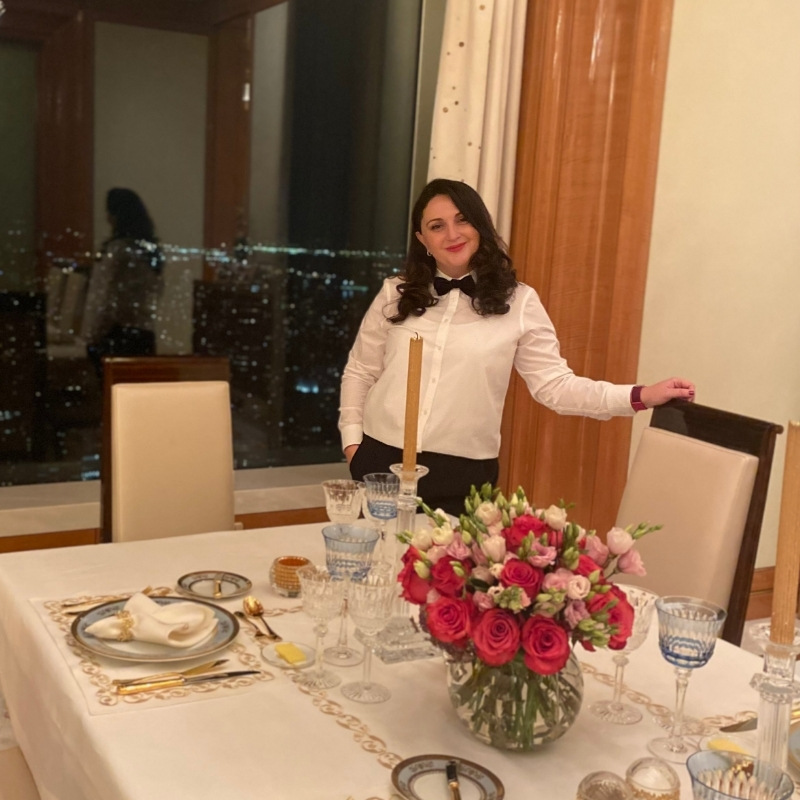
The final walk-through is the step most home hosts skip, and the one that makes the biggest difference.
Photo by MyHomeShelf.com
During the Party
Once guests arrive, your only job is to be present. The cooking is done, the table is set, the atmosphere is ready. Now the evening belongs to the people in the room, not to the kitchen.
Choose a service style that lets you stay seated as much as possible. Family style, where dishes are placed in the center of the table for everyone to share, is the easiest option for most home dinners. It feels generous and relaxed, and it means you are not standing up to plate each course individually.
For a larger group or a more casual evening, a simple buffet works well. Set everything on a side table or kitchen counter and let guests serve themselves. This keeps the dining table clear for candles, flowers, and conversation instead of crowded with serving bowls.
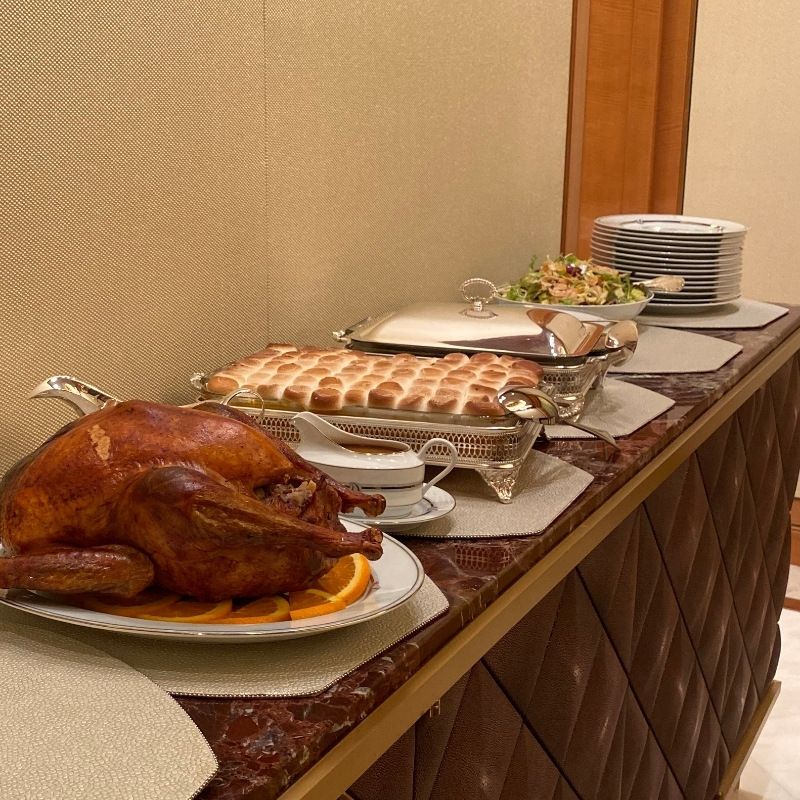
A simple buffet keeps the dining table clear for candles, flowers, and conversation.
Photo by MyHomeShelf.com
Between courses, do the small things quietly. Refill water glasses without asking. Clear plates gently when everyone has finished, not while someone is still eating. Replace a candle that has burned low. These are habits from professional events that translate perfectly to home hosting. The goal is to take care of the room without drawing attention to the effort.
Never clear the table while one person is still eating. It makes them feel rushed. Wait until every plate is finished, then clear them all at once, quietly.
And if something goes wrong, let it go. A dish that does not turn out exactly right, a spilled glass, a dessert that needs ten more minutes. None of it matters as much as you think. The warmth of the evening covers everything.
Frequently Asked Questions
How far in advance should I plan a dinner party?
How many guests should I invite for my first dinner party?
What is the easiest dinner party menu for beginners?
How do I set a beautiful table without spending a lot?
What do professional event stylists do differently from home hosts?
What should I do the day after a dinner party?
A dinner party is not a performance. It is an invitation to slow down, sit together, and share something real. The more you host, the more you learn that your guests remember how they felt at your table, not whether everything was perfect. And that is the only thing worth getting right when you are learning how to host a dinner party at home.