
How to Setup a Bar Cart (That Guests Actually Use)
This post may contain affiliate links. As an Amazon Associate, I earn from qualifying purchases, at no extra cost to you.
To set up a bar cart, keep it simple: 3 to 4 spirits, 2 to 3 mixers, fresh ice, garnish, and enough glassware for your guest count. For eight to ten guests, that usually means around a dozen glasses within easy reach, with backups stored below. Group everything by drink type rather than by bottle, so a guest can build a drink without asking where anything is.
Consider the very first thing you do when you walk into a party. Once the initial hellos are out of the way and your coat is set down, what do your eyes instinctively look for next?
A drink, of course.
Long before everyone gathers around the dining table, they naturally gather around the drinks. Whether I've been setting up intimate dinners in quiet Tribeca lofts or larger gatherings in breezy summer homes in Water Mill, I've watched the same little ritual unfold again and again. The bar cart isn't just another piece of furniture, it's where the evening quietly begins.
Because it attracts so much attention, it's also one of the easiest places to over-style. In an effort to make it look beautiful, we fill it with too many bottles, a forest of paper straws, stacks of cocktail books, and rows of delicate glassware that look almost too perfect to touch.
That's what I call The Showroom Freeze.
Guests walk over, take one look, and suddenly hesitate. Instead of feeling invited to pour themselves a drink, the setup feels more like a boutique display than a welcoming part of the party. They step back, wait for the host, and suddenly you've become the bartender for the rest of the evening.
Over the years, I've learned that the best bar carts aren't the fullest or the most elaborate. They're the ones that quietly tell guests exactly what to do without a single word from the host.
The styling choices are often surprisingly small, but together they make a huge difference. Here are the simple principles I rely on to create self-serve bar carts that feel beautiful, approachable, and effortless, so your guests feel comfortable helping themselves, and you get to spend more time enjoying your own party.
How to Setup a Bar Cart: The Essentials First
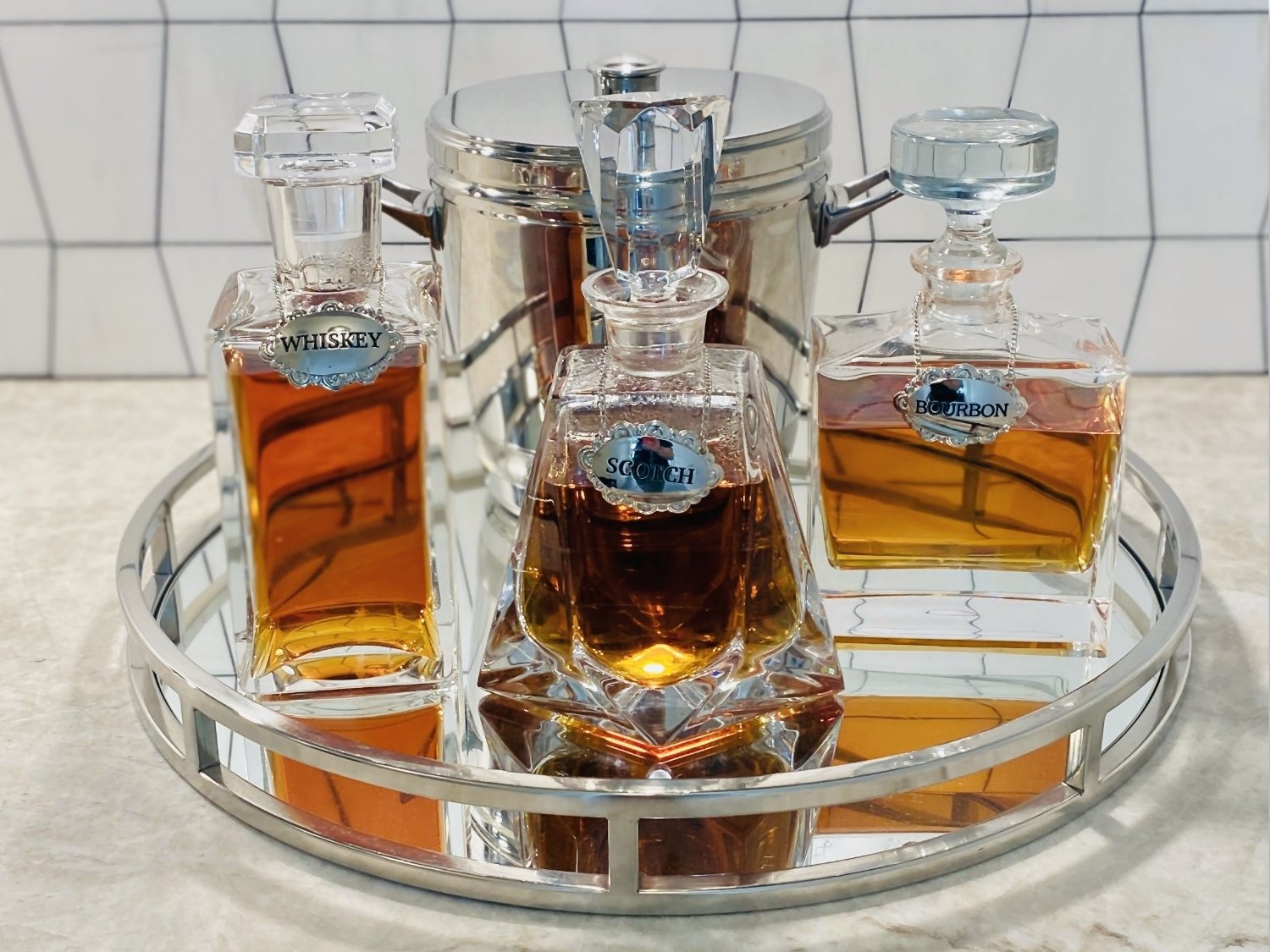
Start with the spirits. Three to four is the number I return to again and again. A clear spirit. A brown one. Something for the non-drinkers to feel included. Maybe one seasonal bottle. Much more than that and guests freeze, scanning the labels like a menu they never asked for. Too little, and the cart feels unfinished. A simple bartender kit covers the tools without cluttering the surface.
Next come the mixers. Keep them close to the spirits they belong with. Tonic beside the gin. Soda water that works with almost everything. A small pitcher of citrus water or simple syrup adds a thoughtful touch without turning the evening into a cocktail class.
Now think about the structure of the cart. The glassware matters just as much as the bottles. Resist the urge to display every beautiful glass you own. For eight to ten guests, about a dozen within easy reach is right, with backups stored below. I almost always reach for one versatile glass style that works just as well for bourbon as it does for a gin and tonic or a sparkling spritz.
Then there's the ice. This is where so many beautiful bar carts quietly fall apart. An empty ice bucket is just another decoration. Fill it with fresh ice before your guests arrive with a proper insulated ice bucket, or for something with a little more polish on the tray, a silver champagne bucket. The moment it starts to sweat, the cart feels alive. People don't have to wonder if they should use it. They simply do.
Garnishes are one of those details people often skip but guests always notice. A bowl of citrus wheels. A few sprigs of rosemary. Maybe some olives if your crowd leans savory. None of it is complicated. Together, those small touches make the cart feel generous instead of staged.
One thing I never skip is a small ceramic bowl or vintage dish for the aftermath. People need somewhere to drop lime wedges, olive pits, cocktail picks, and used napkins. If you don't give them a place, they'll make one. It usually ends up being the prettiest corner of your bar cart.
That's really the whole idea. The goal isn't to impress people with how much you own. It's to remove every tiny hesitation before someone reaches for a glass. When everything feels obvious, guests help themselves. Conversations start flowing. And you get to enjoy your own party instead of tending the bar.
An empty ice bucket is just another decoration.
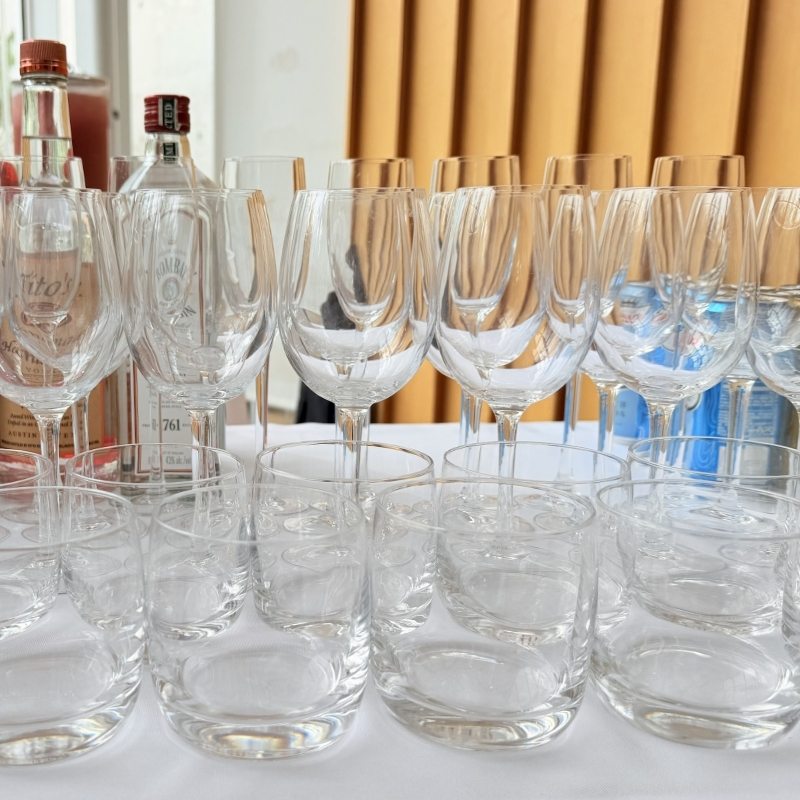
Versatile glassware for a self-serve bar cart.
You Don't Need a Cabinet Full of Glasses
Most home entertaining feels more relaxed with just a few versatile glasses. Guests aren't thinking about whether they're holding the technically correct one. They're thinking about the conversation they're in.
Ironically, the bigger the collection on display, the more likely people are to hesitate. Instead of reaching for a drink, they pause, wondering which glass they're supposed to use. Good entertaining shouldn't make anyone feel like they're taking a test.
I also wouldn't worry too much about everything matching perfectly. Some of my favorite bar carts include glasses collected over the years. Different shapes can still feel connected when they share something in common, whether that's clear glass, a similar weight, or a timeless silhouette. It's the same philosophy I use when mixing dinnerware at the table. A thoughtful collection usually has far more character than a matching box set.
If you're going to invest in one thing, make it beautiful, clear glass. It catches the light, makes every drink look better, and quietly elevates the entire cart. In my experience, that's a far better investment than another bottle you'll rarely open.
Good entertaining shouldn't make anyone feel like they're taking a test.
Flowers Belong Here, Too
A bar cart may be all about drinks, but it's still part of the room. Flowers help connect it to the rest of your home instead of making it feel like a separate station tucked into the corner.
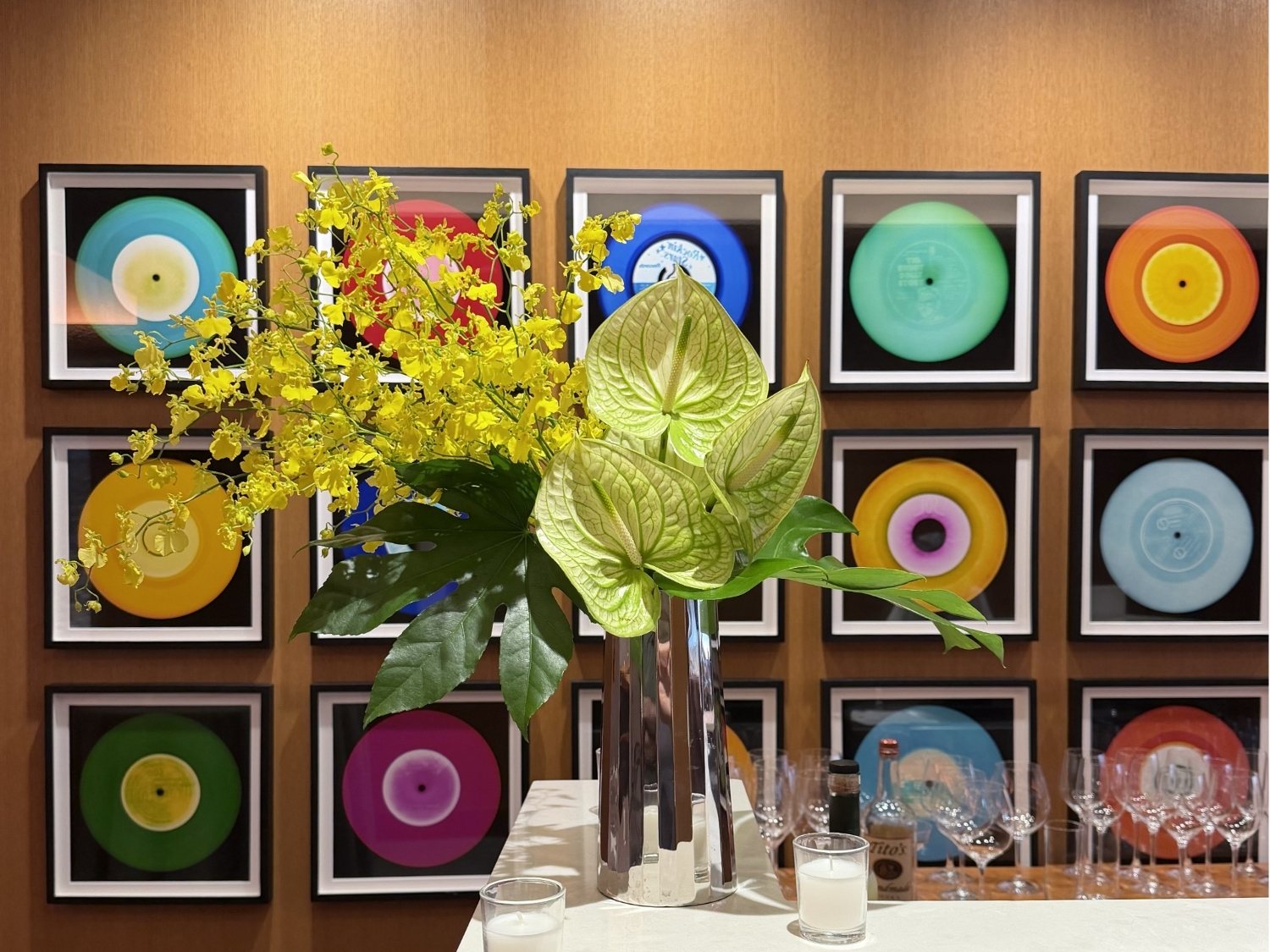
Floral styling by Edelweiss Floral Atelier.
You don't need a large arrangement. In fact, I think restraint feels more luxurious here. One seasonal arrangement, or even a single dramatic stem, is often enough. I almost always work with what's naturally in season. Spring tulips, summer hydrangeas, a branch with autumn leaves, or simple winter greenery all feel more effortless than an oversized bouquet. They soften the glass, metal, and bottles without competing with them.
Where you place the flowers matters just as much as what you choose. I always keep them off to one side so they never get in the way of someone reaching for a bottle or pouring a drink. A bar cart should feel inviting to use, not precious to look at.
Working alongside florists for years, I've seen how one thoughtful arrangement can quietly change the mood of a room. Flowers quietly tell your guests they were expected. It's a subtle gesture of hospitality, but it's one people almost always feel, even if they can't explain why.
If you look at the photo below, you'll see why I almost always place the arrangement in the far corner. It gives the cart a visual anchor while leaving the center open for people to serve themselves comfortably.
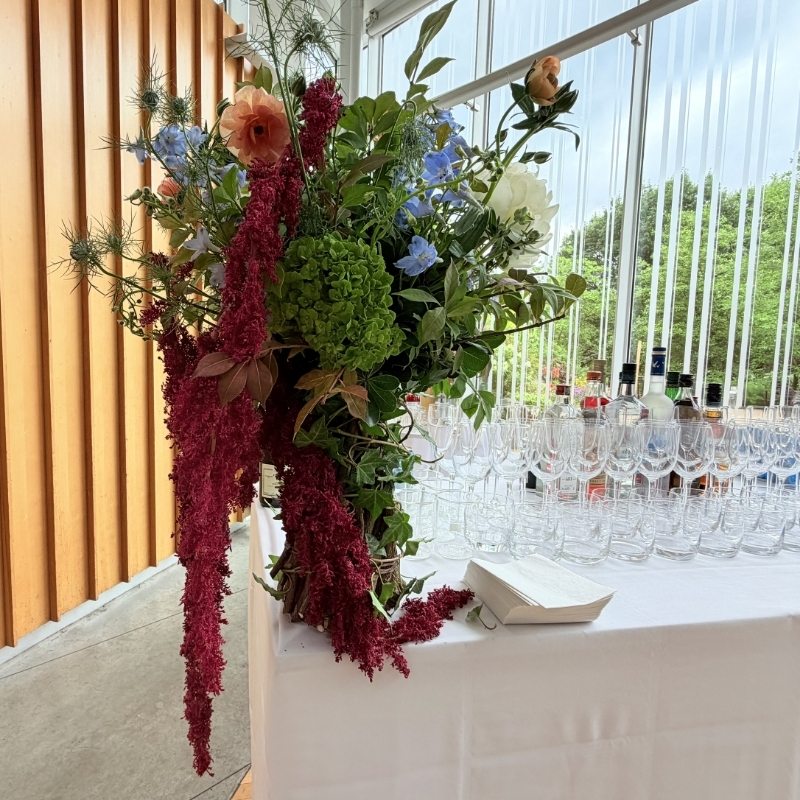
Arrangement by Edelweiss Floral Atelier, placed in the far corner.
One last thing. Keep fragrance in mind. Strongly scented flowers can compete with what's in the glass. I usually let texture, shape, and seasonal color do the work instead. If you'd like more on seasonal styling, my guide to flower arrangements for the dining table covers the same principles.
The Same Rules, No Matter the Space
Not every home has room for a dedicated bar cart. And honestly, it doesn't need one. A single tray, like a round wood bar tray, on a console table can be just as inviting. When space is limited, edit ruthlessly. Two spirits. One mixer. A stack of six glasses. One small vase. That's often all you need. The constraint becomes the style. A thoughtfully edited corner almost always feels more elegant than one overflowing with bottles and accessories.
A standard two-tier cart gives you a little more flexibility. Keep the things guests reach for most on the top shelf, including the spirits, mixers, and everyday tools. Extra bottles, backup glassware, and anything you won't need right away can quietly live below. A taller decanter or a single branch draws the eye upward and keeps the cart from feeling flat.
As the gathering gets larger, the cart stops being just a piece of furniture and starts becoming a station. I learned this while setting up parties in spacious summer homes, where guests rarely arrive at the bar one at a time. They come in little waves.
That's why I like creating a simple flow. Glasses at one end. Bottles in the center. Garnishes at the far end. It keeps people moving naturally instead of reaching across one another for the ice or slowing down the conversation. A guest should be able to walk up, pour a drink, and step away in the time it takes to say hello to the person behind them. This is the same flow I map out on my dinner party checklist before guests ever arrive.
What Not to Put on the Cart
Sometimes the best styling decision is simply deciding what to leave off the cart. A little editing goes a long way. A few things quietly work against you:
Keep: a small tray to corral tools, one floral element, garnish within reach, a small dish for the aftermath
Skip: a forest of paper straws, stacks of cocktail books used as props, more bottles than anyone could finish, delicate glasses that look too precious to touch
That last one matters most. When a glass looks like it belongs in a museum, guests leave it there. The whole setup should whisper help yourself, not look, don't touch.
Frequently Asked Questions
How many bottles should be on a bar cart?
What is the difference between a bar cart and a bar cabinet?
Do I need a bar cart to host a party?
How do you stock a bar cart for a larger party?
The Final Shift: From Stylist to Guest
By now you've probably noticed this isn't really a story about bottles or bar carts. It's about creating a space that works without you.
At the end of the evening, a successful bar cart shouldn't look the way it did when the first doorbell rang. The ice bucket will be half empty. A bourbon bottle may have wandered into the gin's spot. There might be a lime wedge resting on the tray, or a forgotten cocktail napkin tucked beside the flowers.
Some people would call that messy. To me, it's proof that guests felt comfortable enough to make themselves at home. The styling did exactly what it was meant to do — it stepped quietly into the background so the evening could take center stage.
That's the quiet secret of a beautiful bar cart — it isn't built by adding. It's built by editing.
You spent the start of the evening setting the stage. By the end of it, you finally get to step into it yourself — because the best drink of the night is the one you get to enjoy with everyone else.