
Beautiful Storage Ideas for Small Apartments (That Don’t Ruin the Aesthetic)

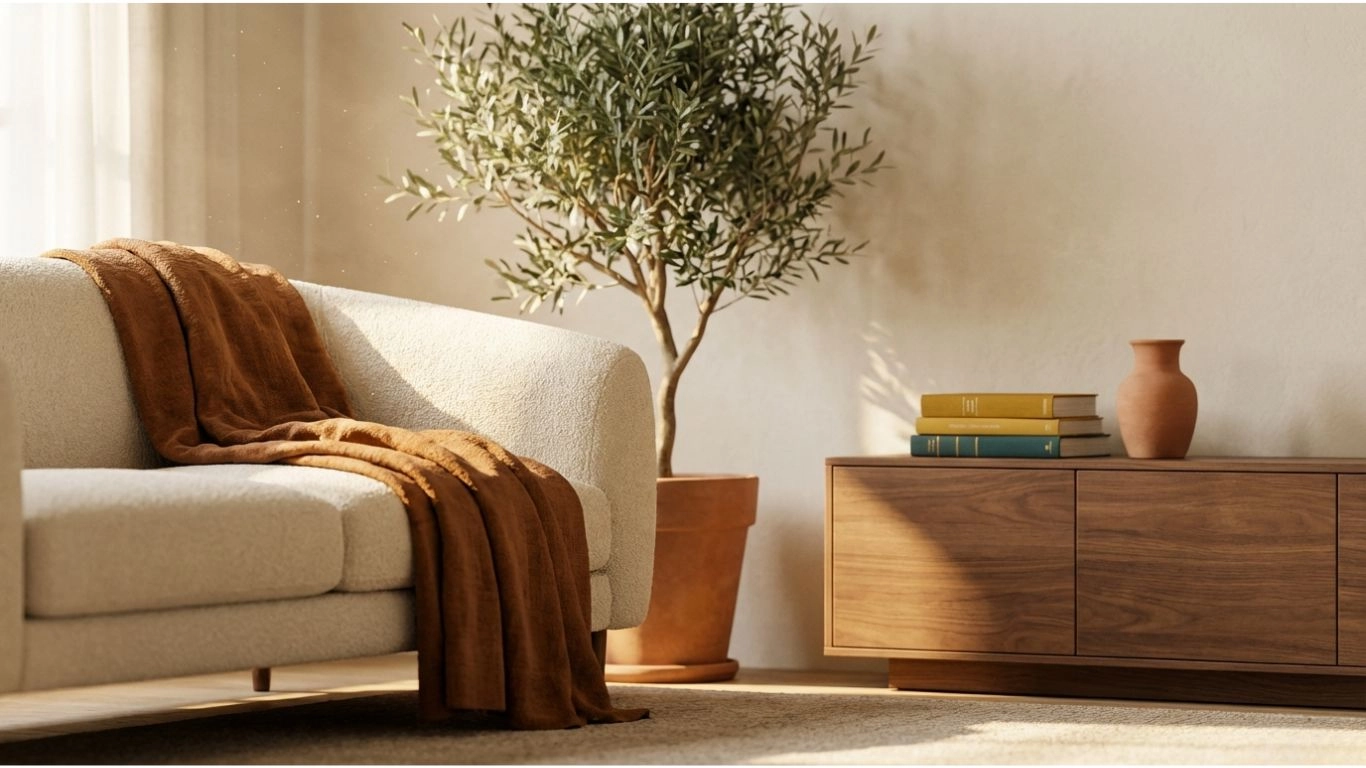
Small apartments have a way of humbling you — especially when it comes to storage ideas for small apartments that actually work.
You spend weeks choosing the right linen curtains. You finally find that perfect vintage mirror. Everything feels intentional, calm, edited.
Then life happens. Mail lands on the console table. Winter coats multiply by the door. The kitchen counter slowly disappears under olive oil bottles, a cutting board, yesterday's coffee mug, and three different types of salt that suddenly feel essential.
It's not that there's too much stuff.
It's that everyday things don't always have a place that feels visually at ease.
For years, the default solution was purely functional: more bins, more baskets, more organizational systems that worked — but looked utilitarian. In a small apartment, where everything is visible, those solutions rarely disappear. Instead, they become part of the visual clutter they were meant to solve.
These storage ideas for small apartments aren't about hiding everything. They're about creating solutions that belong.
Table of Contents
When Storage Looks Like Decor
The goal isn't to make things invisible.
It's to make them feel intentional.
In well-designed small spaces, the elements that hold everyday life are chosen with the same care as the furniture itself. A low wooden bench with hidden compartments reads first as a bench — not as a solution. Its usefulness feels secondary, almost incidental.
Materials matter most here. If a space is defined by warm wood tones, soft linens, and neutral textures, functional pieces should echo that same language. A wide basket in natural seagrass beside the sofa doesn't register as clutter control; it reads as texture. In a more industrial interior, the same role might be played by a black metal container; in a maximalist home, a bold box with pattern and color. The form may change, but the function remains the same.
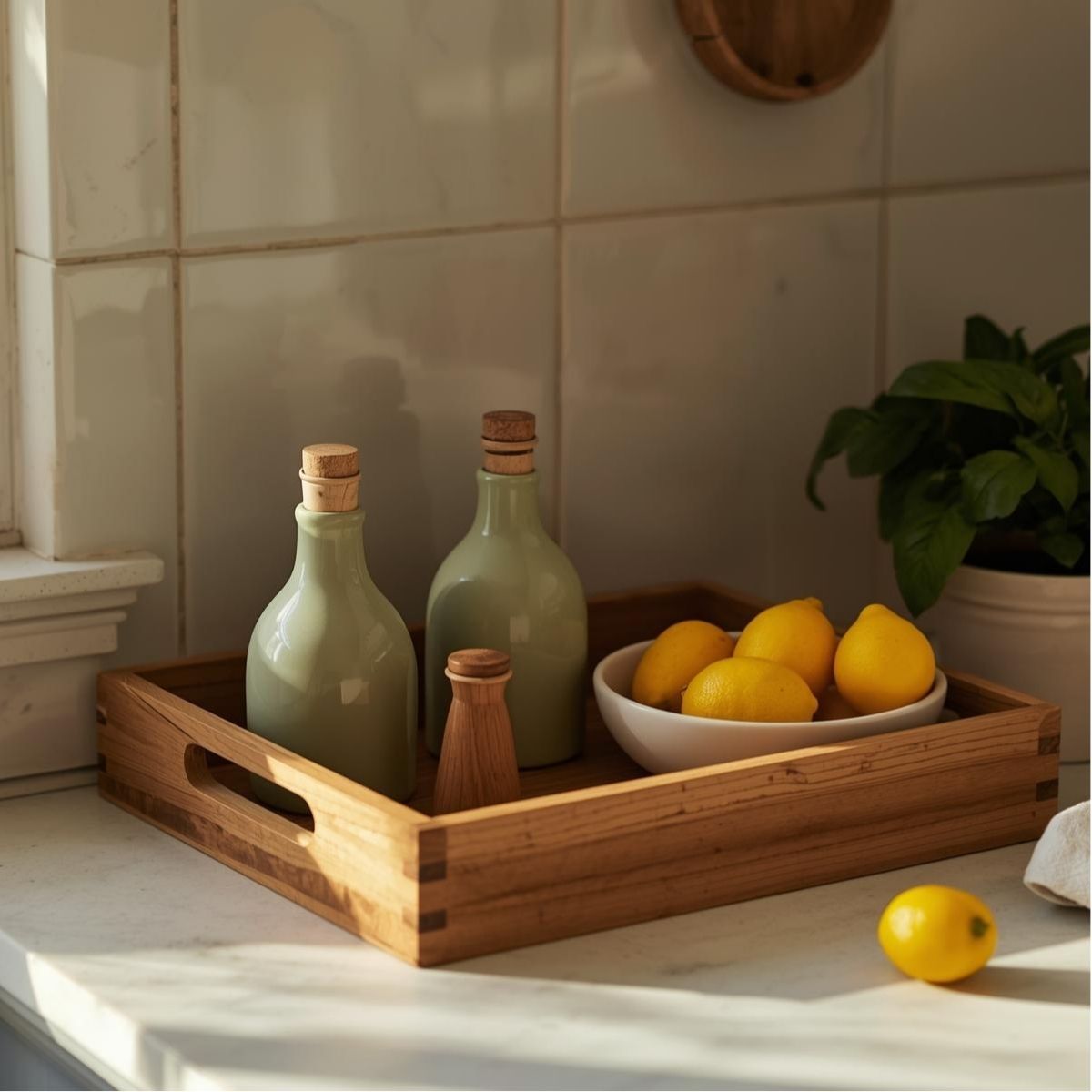
The same logic applies in the kitchen. Replacing several mismatched countertop items with a single ceramic container for utensils and a tray for oils and salts achieves the same function with far less visual noise. Whether that tray is wood, stone, or metal matters less than the fact that it visually gathers what would otherwise feel scattered.
When functional pieces visually align with the space, they stop competing for attention.
Furniture That Secretly Works Harder
The most effective solutions in a small apartment don't announce themselves at all.
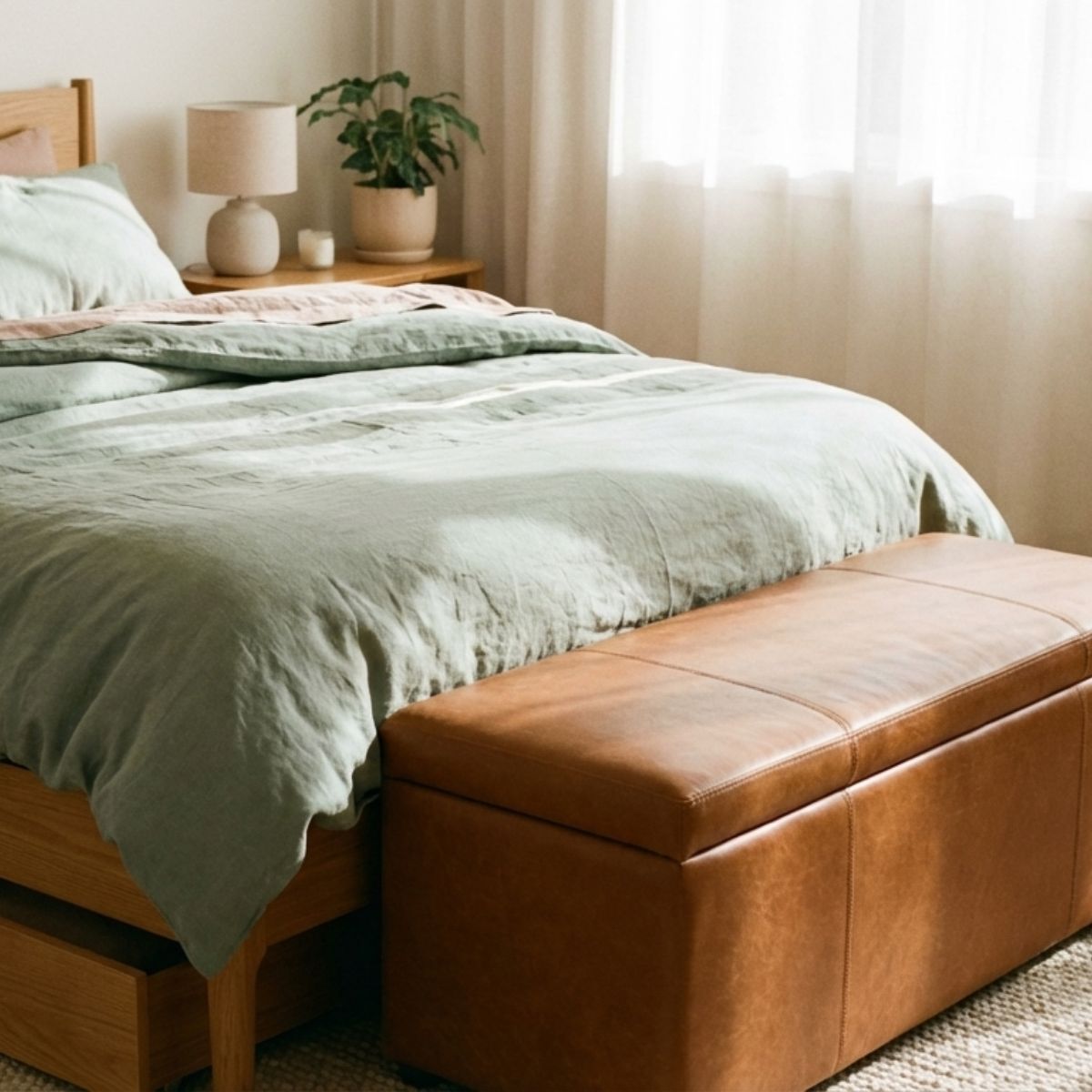
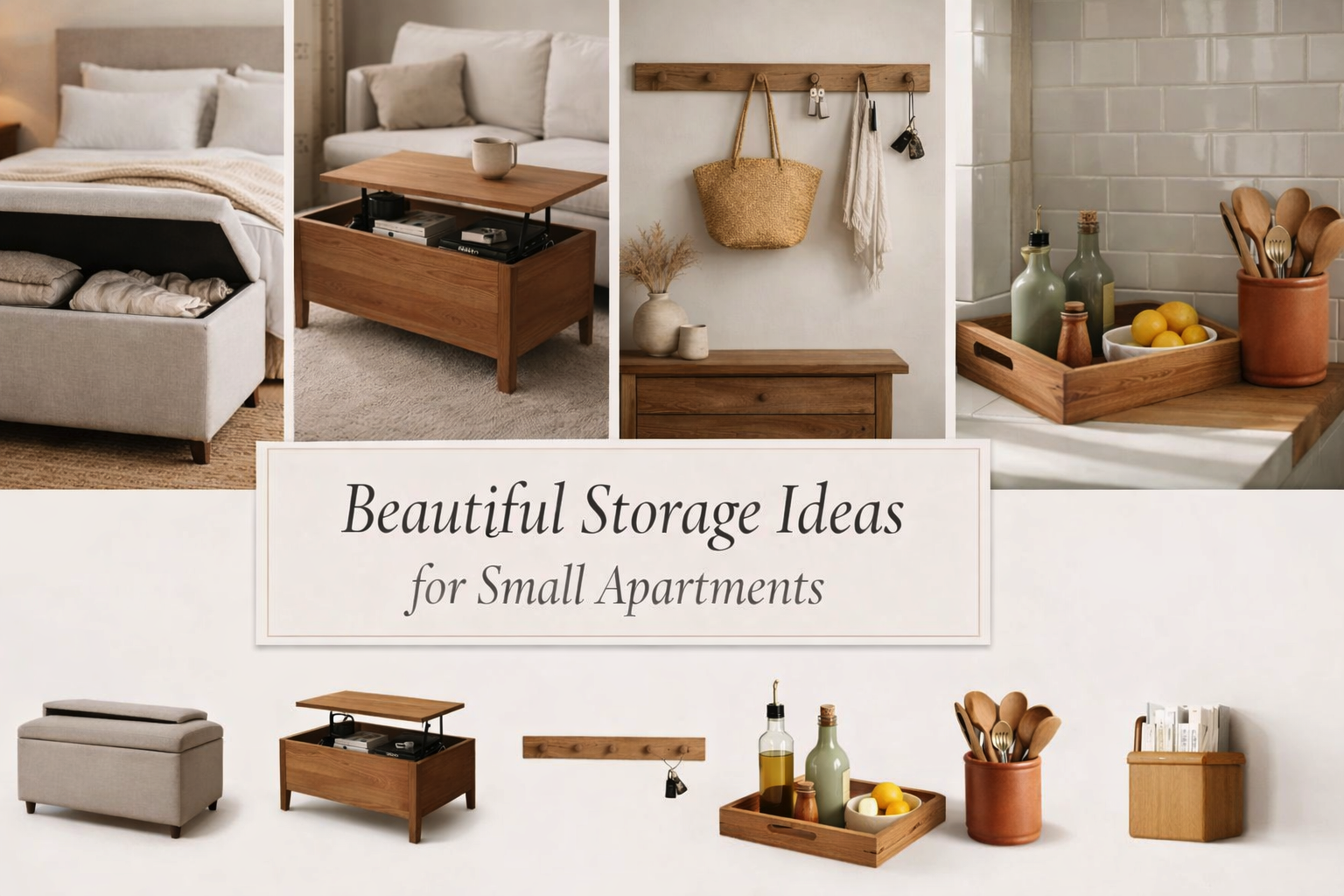
An upholstered ottoman at the end of the bed quietly holds winter blankets. A solid wood coffee table — especially one with a lift-top or hollow interior — keeps remotes, chargers, and half-read books out of sight.
In tight spaces, particularly rentals without generous closets, this kind of hidden capacity often does the work that extra rooms usually handle. Because these pieces read as furniture first, the apartment never feels overfilled.
The same principle applies under the bed. Low wooden drawers that match the bed frame, or soft linen bins tucked neatly beneath, keep items accessible without breaking the visual line from floor to ceiling. Everything remains clean. Everything stays calm.
Going Vertical Without the Clutter
When floor space runs out, walls become the next option. This is also where small apartments can begin to feel busy.
The key is restraint.
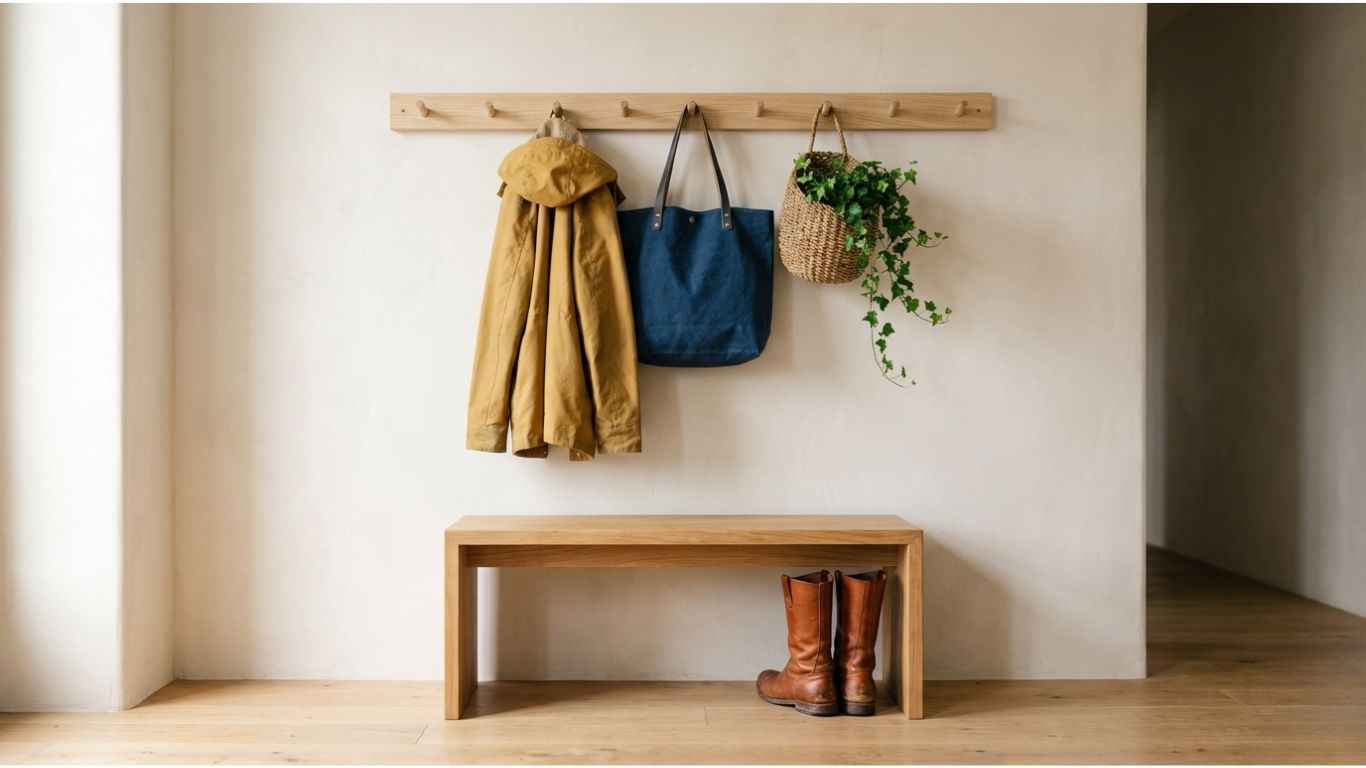
A simple peg rail near the entryway — just a few wooden pegs — holds coats, bags, and keys without the visual weight of a bulky rack. Narrow floating shelves in the bathroom lift necessities off the counter without pressing in on the room.
Open shelving works best when it leaves room to breathe. A handful of carefully chosen objects with space around them feels intentional. When every inch is filled, the wall begins to demand attention rather than support the space.
Vertical elements should frame a room, not close it in.
A Place for the Things That Never Stay Put
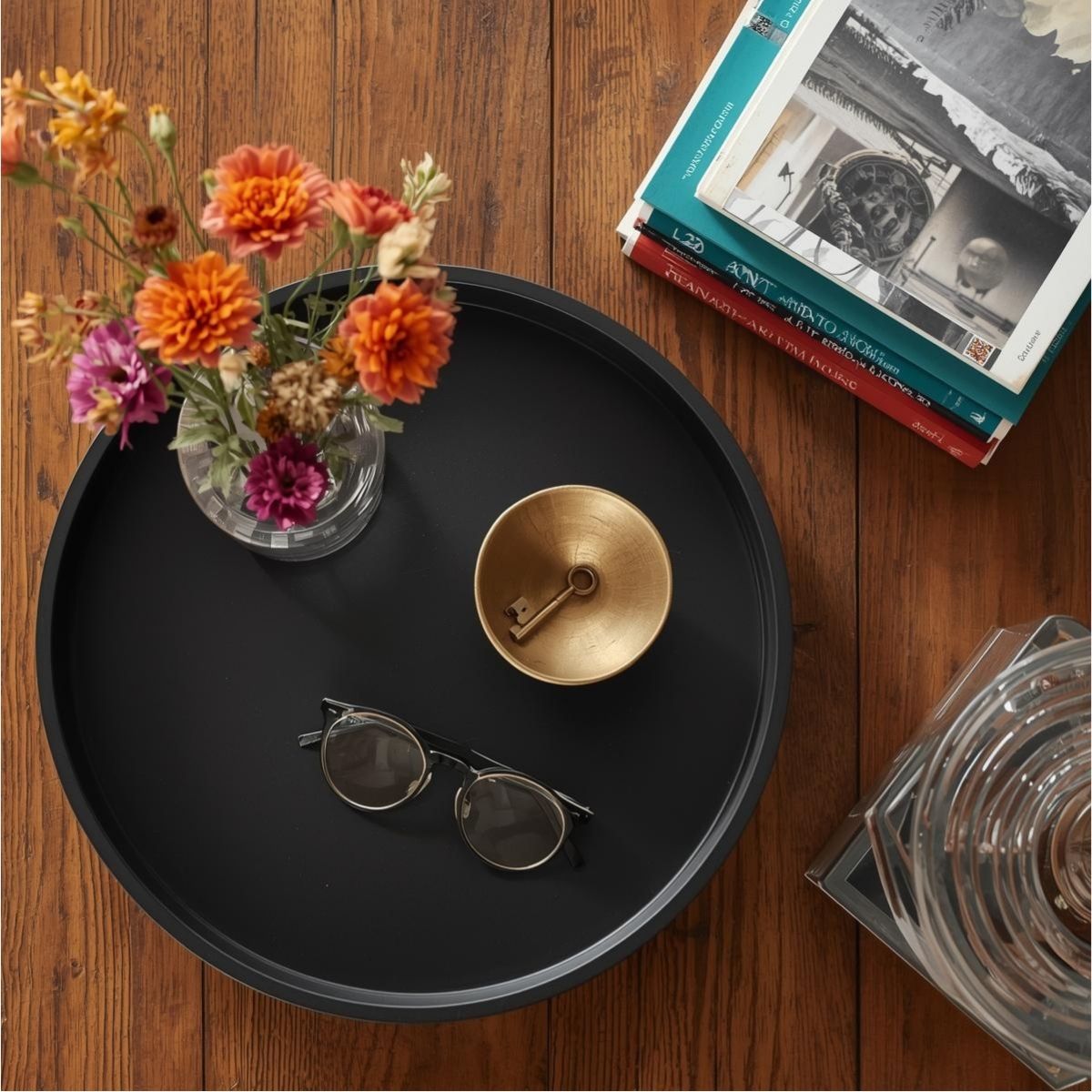
Some items resist drawers by nature.
Keys. Sunglasses. Mail. Phone chargers. Remotes. These are the objects that migrate to counters, chairs, and coffee tables — not out of messiness, but because they need to remain within reach.
Calm spaces account for this — not just through objects, but through placement. A ceramic bowl only works if it's closer to the door than the kitchen counter. A tray for daily essentials succeeds because dropping things there is easier than carrying them further inside.
This is where good design quietly supports human behavior. We tend to follow the path of least resistance. When the easiest place to set something down is also the right place, order maintains itself almost effortlessly.
A shallow ceramic tray on a coffee table gathers small essentials. A wooden bowl near the door catches keys without calling attention to itself. A wide basket beside the sofa keeps blankets contained rather than scattered.
In the kitchen, a single tray quietly holds oils, salt, and soap, keeping surfaces clear without forcing everything out of sight.
When everyday items are given a place that feels visually resolved — and physically convenient — they stop reading as clutter.
When Organization Creates More Noise
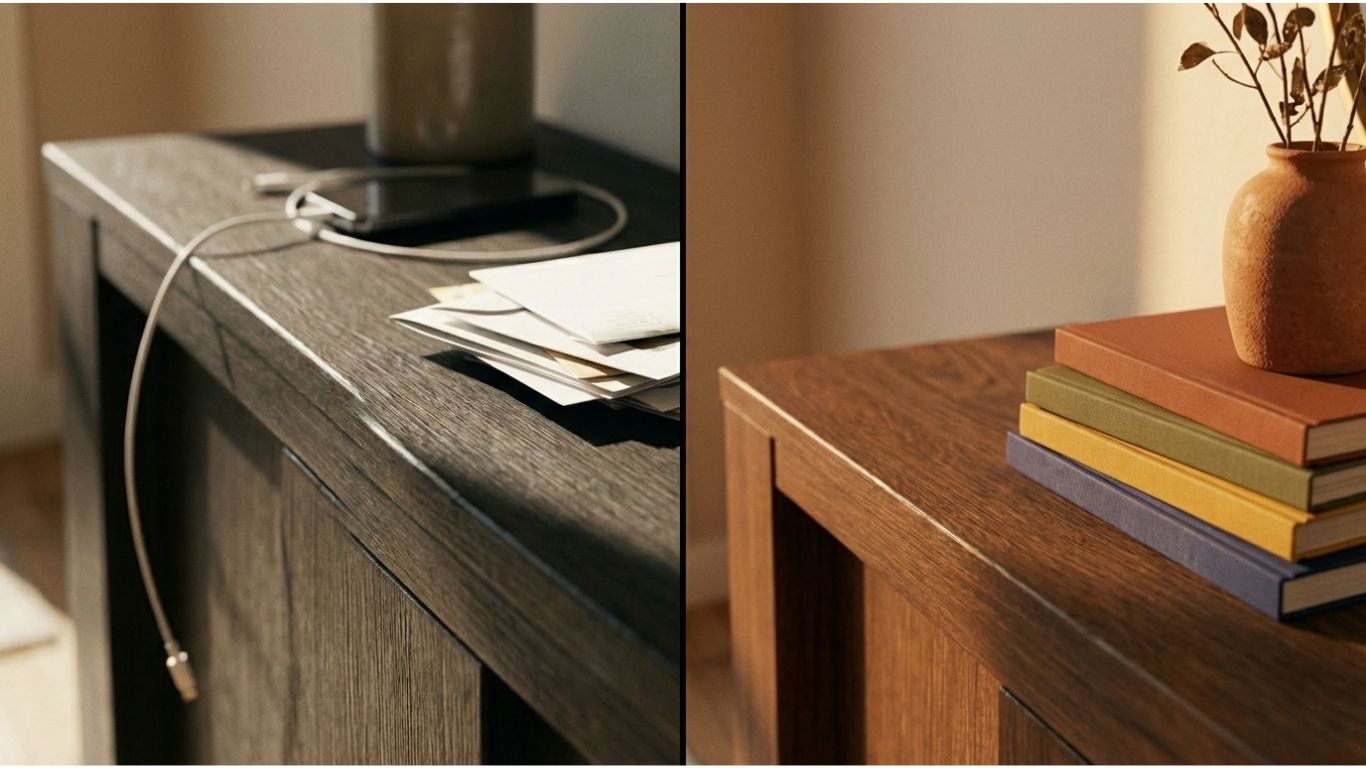
Most missteps happen when solutions work practically but overwhelm visually.
Clear containers used everywhere expose every detail — suddenly your bookshelf shows every pen, every rubber band, every forgotten receipt. The eye has nowhere to rest. Unless the contents are meant to be seen, opaque materials create a quieter backdrop.
Open shelving becomes another point of tension when it's asked to hold too much. It works best as a place for display, not bulk storage.
Some systems fail not because they're poorly designed, but because they demand too much effort. When returning items to their place feels inconvenient, even the most beautiful organization slowly unravels.
Often overlooked areas — the back of doors, narrow gaps between furniture, or unused corners — can absorb items discreetly, keeping surfaces clear without demanding attention.
Less Visual Noise, More Ease
A few weeks later, the space feels different.
The mail no longer spreads across the table — it rests quietly in a tray near the door. The winter coat has a hook waiting for it instead of the back of a chair. The kitchen counter clears itself more easily, not because it's perfect, but because everything knows where it belongs.
Nothing dramatic has changed. There's no strict system, no constant tidying. Just small decisions that make daily life softer — and easier to reset.
A beautiful small home isn't defined by having less.
It's defined by removing just enough visual noise so life can unfold without friction.
And when organization stops trying to disappear and starts to belong, calm becomes something you live with — not something you chase.
Frequently Asked Questions
What are the best storage solutions for small apartments?
The most effective solutions don't announce themselves. Furniture with hidden storage — like ottomans, lift-top coffee tables, and beds with built-in drawers — does the work of extra closets without making the space feel crowded. The key is choosing pieces that look like furniture first, storage second.
How do I organize a small apartment without it looking cluttered?
Visual calm comes from two things: materials that match your space, and giving everyday items a designated place. When storage elements echo the textures and tones already in the room, they blend rather than compete. Opaque containers, natural materials, and restraint on open shelving all help reduce visual noise.
Should I use clear or opaque storage containers?
Unless what's inside is intentionally beautiful, opaque materials create a quieter backdrop. Clear containers expose every detail, leaving the eye with nowhere to rest. Soft fabrics, woven baskets, and ceramic pieces visually soften a space in ways plastic never can.
Where should I put everyday items like keys and mail?
Placement matters as much as the container itself. A tray or bowl works only if it's easier to use than not — closer to the door than the kitchen counter, within reach of where you naturally drop things. When the right place is also the easiest place, order maintains itself.
Does floating furniture really make a small apartment feel bigger?
It doesn't make the room physically larger, but it changes how the space feels. Pulling furniture slightly away from walls creates purposeful zones rather than empty voids. The edges become pathways, and the center becomes a place for connection. The room gains intention rather than square footage.
Affiliate Disclosure: This post contains affiliate links, which means I may earn a small commission at no extra cost to you if you make a purchase through these links.
Ready for More Home Styling Ideas?
Continue creating calm, intentional spaces with these thoughtfully curated guides:
Or explore more small space storage ideas at Apartment Therapy


