
Bone China vs Porcelain: Which Is Best for Your Table?
This post may contain affiliate links. As an Amazon Associate, I earn from qualifying purchases, at no extra cost to you.
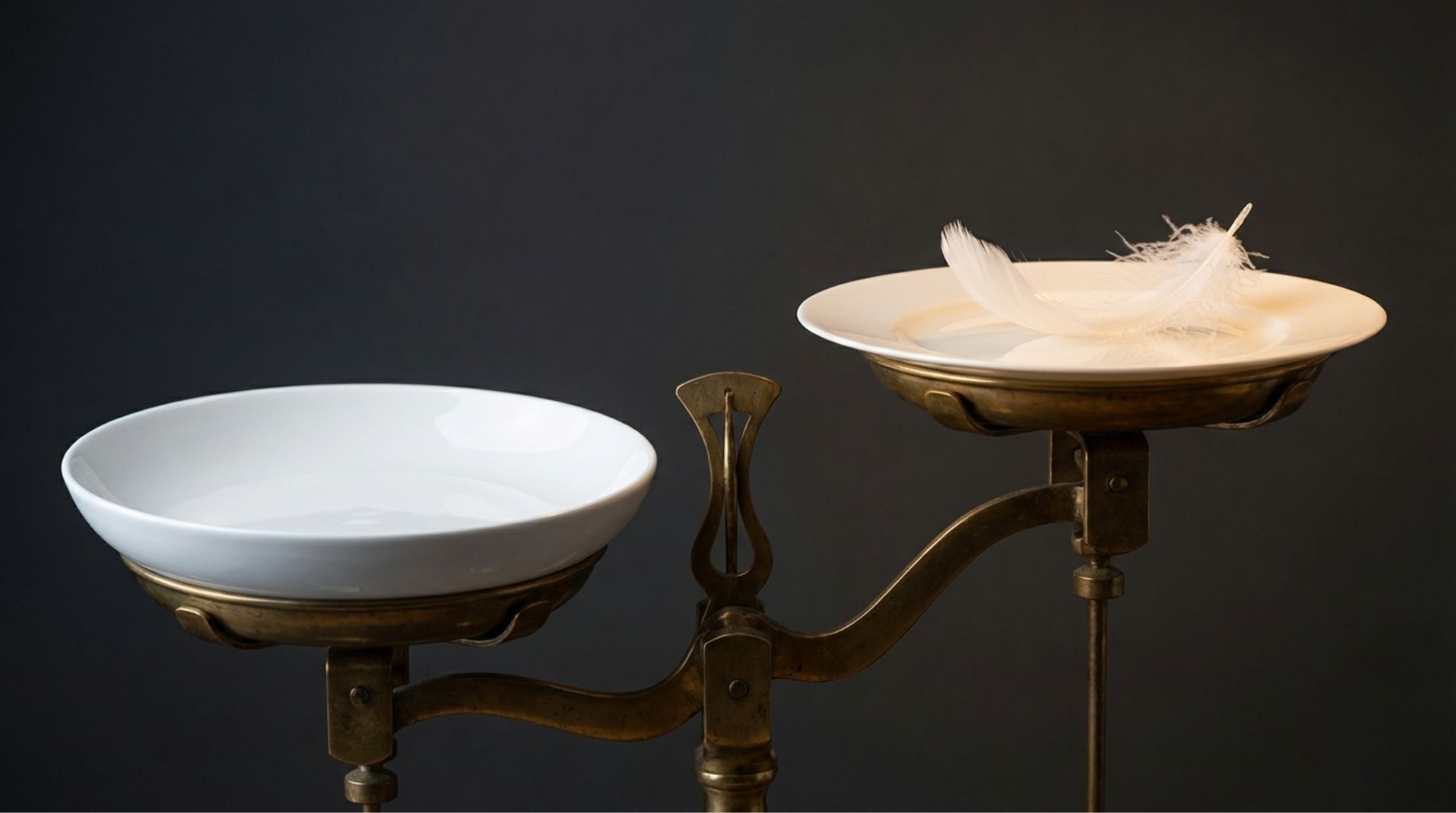
Bone china vs porcelain comes down to how you use your dinnerware. Porcelain is denser, more chip-resistant, and ideal for everyday meals. Bone china is lighter, warmer in color, and translucent at the edges, making it a beautiful choice for entertaining and special occasions. Most professionals recommend owning both.
Ever browse dinnerware online only to find every listing says something different? Bone china. Porcelain. Fine china. Vitrified ceramic. It all starts blurring together, and the price tags are no help either, because a porcelain plate can cost $12 or $120 depending on the brand.
The bone china vs porcelain question comes up in almost every conversation I have about tableware. After years of working with dinnerware in luxury homes, I can tell you the difference between these two materials is real. It's not just marketing. If you are building your first dinnerware collection, understanding this difference will save you both money and regret.
In this guide, I will walk you through exactly what sets bone china and porcelain apart: how they are made, how they feel in your hands, how they hold up over time, and which one actually makes sense for the way you live.
Bone China vs Porcelain: Which Is Better?
Still here? Good. Let me explain why, because the details actually matter when you're spending your money.
What Is Bone China?
Bone china is a specific type of porcelain that contains bone ash, typically 25% to 50% of the total composition. The rest is kaolin clay and feldspathic material, similar to regular porcelain. That bone ash content is what gives bone china its signature qualities.
The first time you hold a quality bone china plate, say a Bernardaud, you notice three things immediately: it is lighter than you would expect, the color is a soft, warm ivory (not stark white), and if you hold it up to light, you can see a gentle translucency at the edges. That glow is the hallmark of quality bone china.
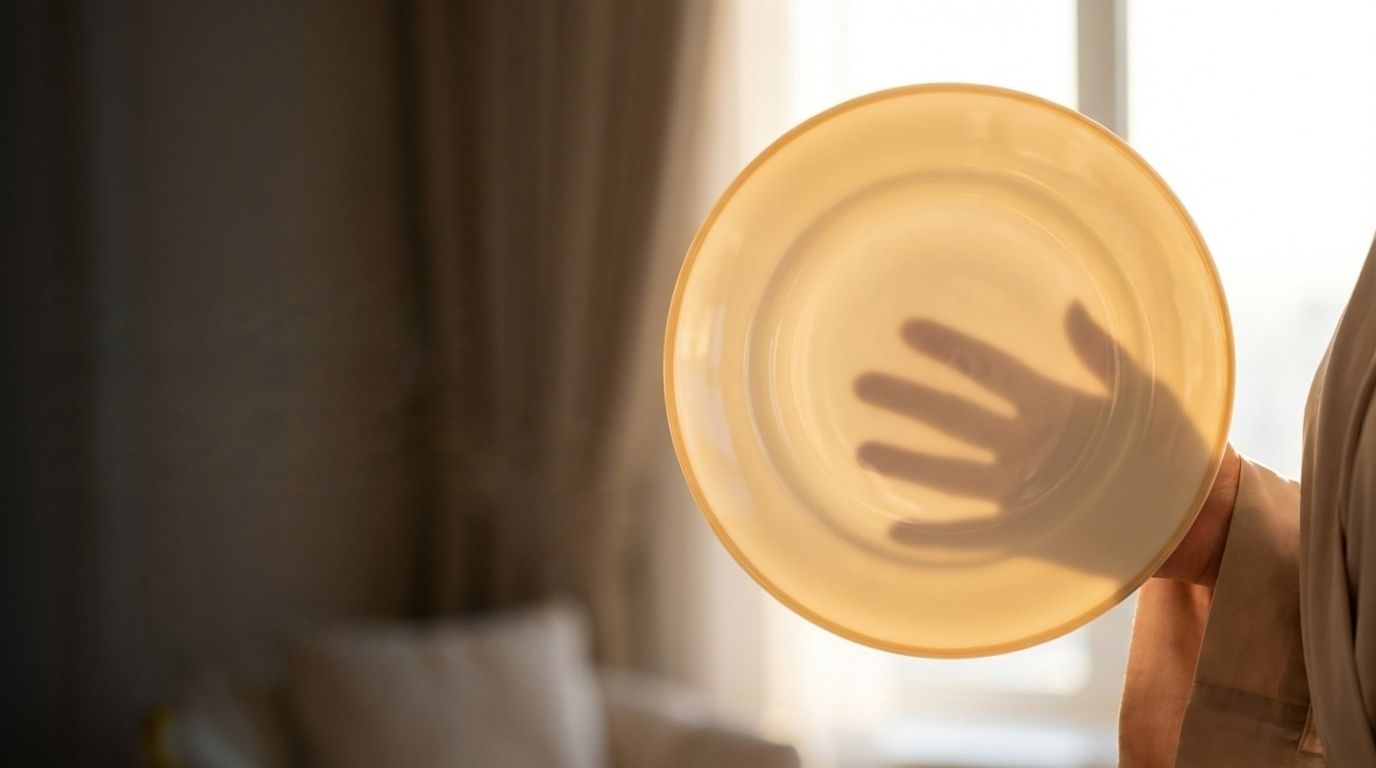
The translucency test: real bone china glows when held to light
Bone china is fired at slightly lower temperatures than hard-paste porcelain, which allows it to develop that delicate, almost luminous quality. Despite feeling thinner and lighter, well-made bone china is surprisingly strong. The bone ash actually increases chip resistance compared to what you might assume from how delicate it looks.
What makes bone china special:
- Warm, creamy white tone that flatters food beautifully
- Lightweight, noticeably lighter than porcelain of the same size
- Translucent edges when held to light
- Often associated with English and French fine dining traditions
I have seen bone china hold up beautifully in homes where it is used weekly for dinner parties, but I have also seen it chip when handled carelessly in a busy kitchen. It requires gentle care. When paired with the right linens, candles, and finishing touches, bone china elevates the entire table. Whichever material you choose, it does its best work on a properly set table.
What Is Porcelain?
Porcelain, sometimes called hard-paste porcelain, is made from kaolin clay, feldspar, and quartz, fired at very high temperatures (typically above 2,300°F). That intense heat vitrifies the material, creating a surface that is dense, non-porous, and extremely hard.
The first thing you notice with porcelain is the weight. It has a satisfying heft, solid and grounded on a table, with a color that tends toward a brighter, crisper white compared to bone china's warmer tone.
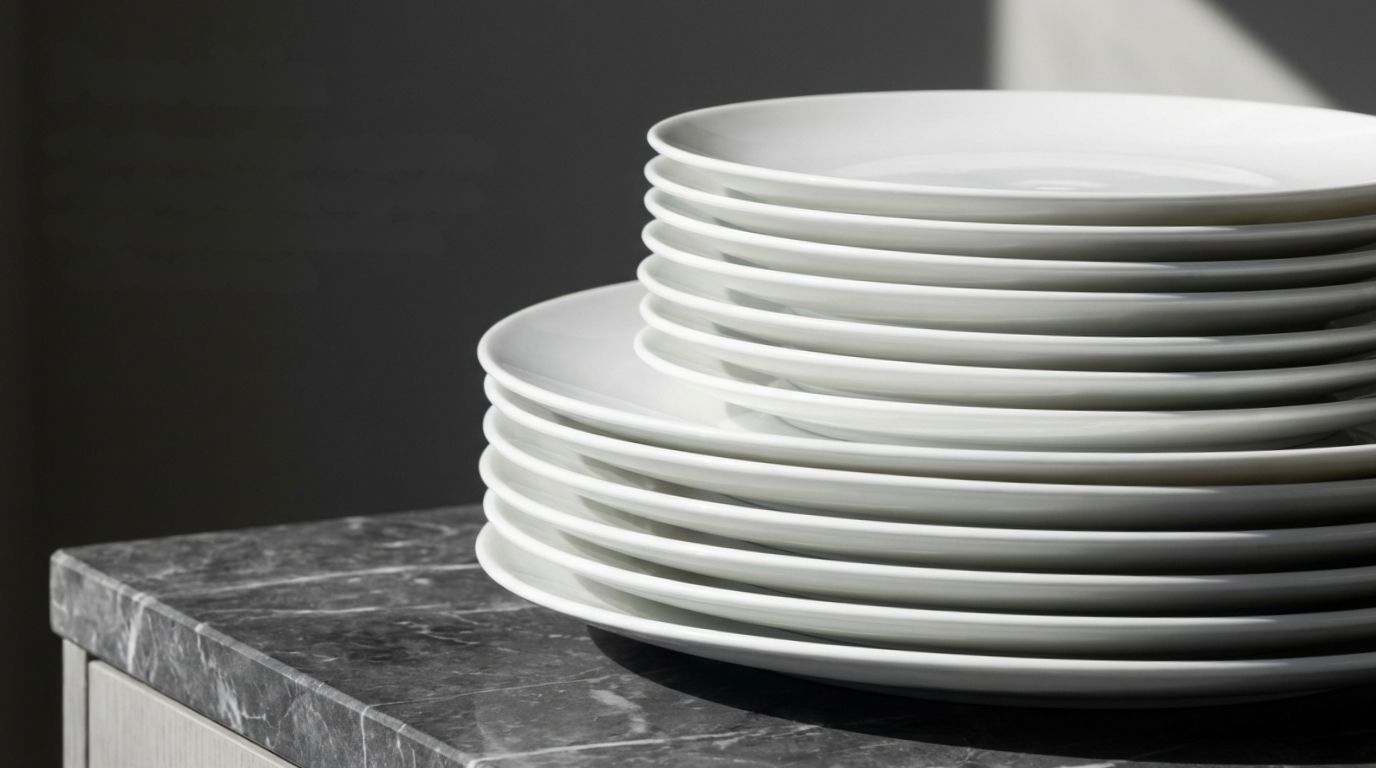
Porcelain stacks beautifully and handles daily use without showing wear
Porcelain has been made for centuries. The Chinese perfected it long before it reached Europe. Today, it ranges from mass-produced everyday sets to museum-quality pieces. What stays consistent is the material's core strength: it resists scratching, staining, and chipping better than most other ceramics.
What makes porcelain stand out:
- Bright white color with a clean, modern look
- Heavier and more substantial in hand
- Extremely durable and resistant to chipping
- Non-porous, so it will not absorb flavors or odors
- Wide range from affordable everyday sets to luxury collections
- Generally dishwasher and microwave safe
Porcelain is the real workhorse of beautiful tables. It takes daily use without complaint and still looks elegant when you set it out for guests. It pairs equally well with casual folded linen napkins and formal crystal stemware.
Bone China vs Porcelain: Side-by-Side Comparison
Here is a clear breakdown so you can see exactly where each material wins:
| Feature | Porcelain | Bone China |
|---|---|---|
| Composition | Kaolin, feldspar, quartz | Kaolin, feldspar + bone ash |
| Weight | Heavier, substantial | Lighter, delicate |
| Color | Bright, crisp white | Warm, creamy ivory |
| Translucency | Minimal to none | Yes, at edges |
| Durability | Excellent, chip-resistant | Good, less forgiving |
| Dishwasher | Yes (most sets) | Gentle cycle recommended |
| Microwave | Usually yes | Check for metallic trim |
| Price | $30 – $500+ | $80 – $800+ |
| Best For | Everyday + formal | Entertaining + special occasions |
One thing this chart does not capture is the experience of each material at the table. Porcelain says "this is a beautiful, well-run home," while bone china says "tonight is something special." Both are right; they just set a different tone. This bone china vs porcelain comparison highlights how small material differences can completely change the experience at your table.
Which Is Better for Everyday Use?
If you are looking for the best dinnerware material for everyday use, porcelain wins, and I say that as someone who genuinely loves bone china. The practical reality is that everyday dinnerware gets loaded into dishwashers, stacked in cabinets, grabbed in a rush during weeknight cooking, and occasionally knocked against the counter. Porcelain handles all of that beautifully because its density and hardness mean it resists the small chips and scratches that accumulate over years of real daily use.
That does not mean bone china can not be used daily. It absolutely can, but it asks for a bit more mindfulness. If your household includes kids who help clear the table, or you tend to stack plates high in the dishwasher, porcelain gives you more breathing room.
If you are exploring options across different price points, I put together a full guide on the best dinnerware sets for elegant entertaining with picks from luxury to budget.
How to Choose for Your Lifestyle
All the material science in the world does not help if you do not think about how you actually live, so here is a quick guide based on what I have seen work (and not work) in real homes.
Skip multiple sets. Invest in one quality porcelain set and change the mood with linens, napkin rings, candles, and flowers.
Children deserve real dishes, not plastic. It teaches care and makes them feel included. Porcelain is forgiving enough for small hands.
Porcelain survives the cooking-serving-clearing-washing cycle without showing wear. Luxury hotels choose it for a reason.
Both materials work beautifully in a mix and match approach. A bone china salad plate layered over a porcelain dinner plate adds depth without looking forced.
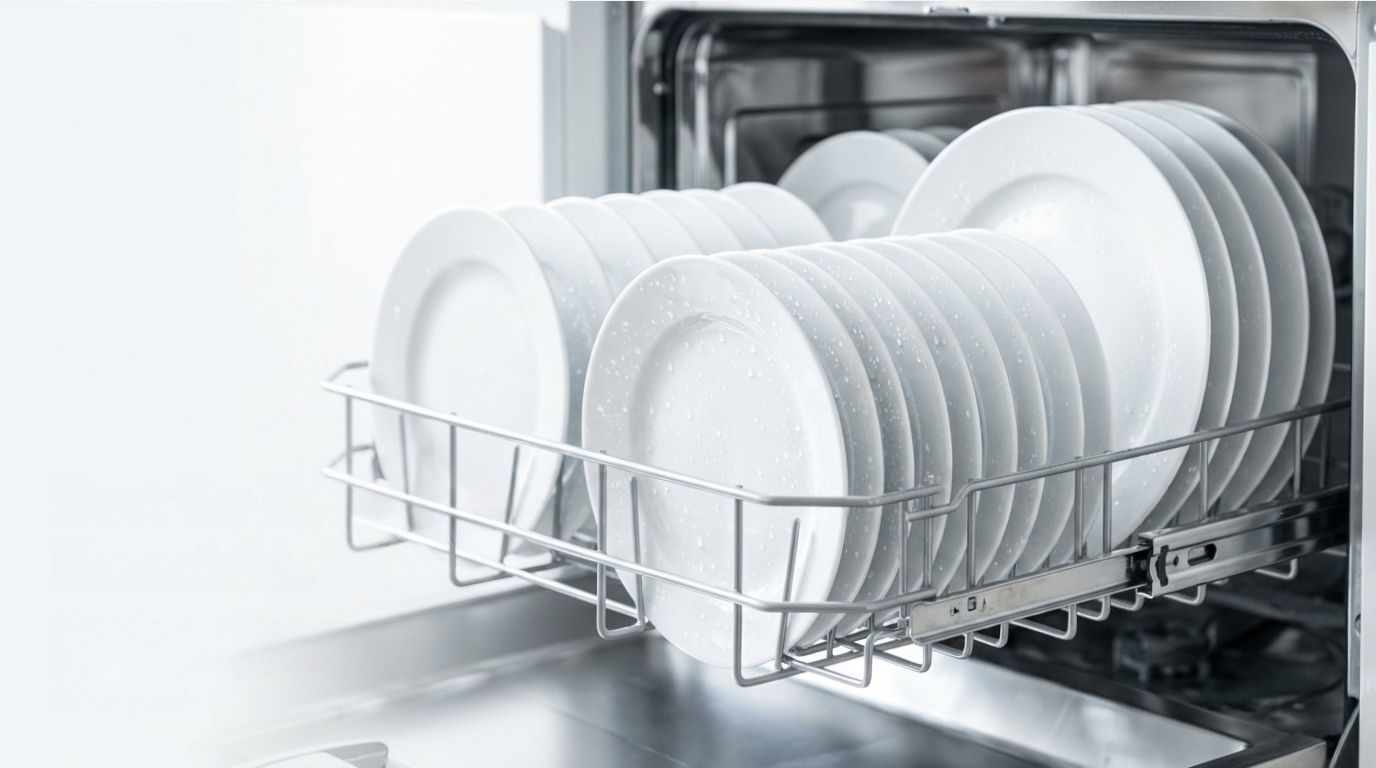
Porcelain handles the dishwasher cycle without losing its beauty over time
What I Actually Use (And Why)
My own approach is simple: one set of quality porcelain as my daily foundation, and a few bone china pieces that come out for dinner parties and holidays. The porcelain handles the rhythm of everyday life without complaint, and the bone china shifts the atmosphere when I want the table to feel special. There is something about the way light catches a translucent rim that guests notice, even if they can not name why.
The gap most people leave is serving pieces. Plates get all the attention, but the platters and bowls are what actually carry a dinner party, and a mismatched serving bowl undoes a beautifully chosen dinner plate faster than anything else. I covered that in a separate guide to serveware sets for entertaining.
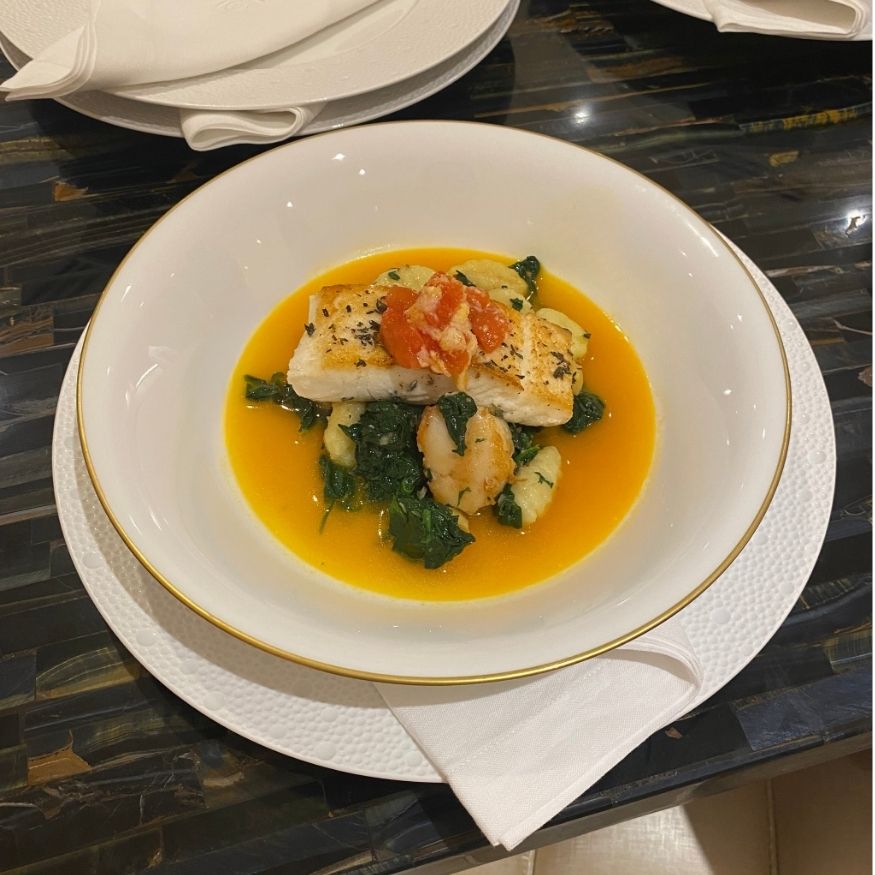
Quality porcelain with a gold rim elevates even a simple weeknight dinner
Photo by MyHomeShelf.com
If you are ready to start building, remember that linens, candles, and finishing touches make just as much difference as the plates themselves.
Frequently Asked Questions
Porcelain vs bone china: what is the actual difference?
Porcelain vs bone china: which one is more expensive?
Is bone china stronger than porcelain?
Can you use bone china every day?
Is bone china worth the extra cost?
What is the best dinnerware material for everyday use?
How can you tell if something is real bone china?
Can you mix bone china and porcelain on the same table?
When choosing between bone china vs porcelain, start with the one that fits how you actually live — not how you think you should live. Build from there, layer with accessories, and remember: the most important thing at any table isn't what the plates are made of. It's the care you put into setting them.
My Dinnerware Picks
If you would like to explore the porcelain and bone china pieces I personally recommend, you can browse my curated collection below. Thoughtful, practical, and designed to work beautifully together.
Explore the Full Dinnerware Edit →