
Serveware Sets for Entertaining: What You Actually Need
This post may contain affiliate links. As an Amazon Associate, I earn from qualifying purchases, at no extra cost to you.
The best serveware sets for entertaining start with five pieces: a 16 to 18 inch oval platter, two serving bowls in different sizes, a wooden board, and a small tray. Plan one serving piece per dish on your menu, plus one or two extras. Choose neutral materials in white porcelain, stoneware, or stainless steel so the pieces work for both formal and casual tables.
I've never had a guest compliment a serving bowl. They'll ask where the flowers came from, or reach for a wine glass and say they love it. But if the serveware did its job well, nobody mentions it.
Whether I was setting a table in a Manhattan penthouse or preparing a summer dinner in the Hamptons, one thing never changed. Guests noticed what sat in front of them. Building serveware sets for entertaining is less about buying beautiful pieces than about choosing ones that hold food well, pass easily between hands, and fit the scale of the table.
After years of styling tables, I've learned the hardest-working pieces are rarely the most memorable. A platter sized right for the table. A bowl that's easy to serve from. A tray that passes naturally from one guest to the next. Small choices individually. Together they shape how people gather.
You don't need cabinets full of matching serving pieces to host beautifully. You need a collection that adapts to different menus and makes serving feel effortless. Below are the pieces I reach for most, how many you actually need, and how to build a collection that lasts. If you are still choosing the plates underneath, start with our guide to the best dinnerware sets and come back here for what goes on top.
Serveware by Material: What Actually Holds Up
The material you choose affects far more than the look of your table. It influences how long food stays warm, how comfortable a piece is to carry, how well it survives everyday use, and whether serving feels effortless or awkward.
Rule of ThumbDon't choose a material because it looks beautiful on an empty table. Choose it because it still works beautifully once the food arrives.
Stoneware and Ceramic
Stoneware and ceramic are the materials I reach for most often.
Many stoneware serving pieces retain heat longer than porcelain, which can make a real difference when a side dish sits on a buffet for thirty or forty minutes. That extra weight is practical, too. A serving bowl stays in place while guests help themselves instead of sliding across the table.
Handmade ceramics bring something many factory-made pieces lack: subtle variation. A speckled glaze, a softly uneven rim, or slight differences in shape feel intentional rather than imperfect. Those details add warmth to the table. I often pair a rustic ceramic serving bowl with fine china underneath. The contrast makes both look better, and it is the same thinking behind our approach to mixing and matching dinnerware.
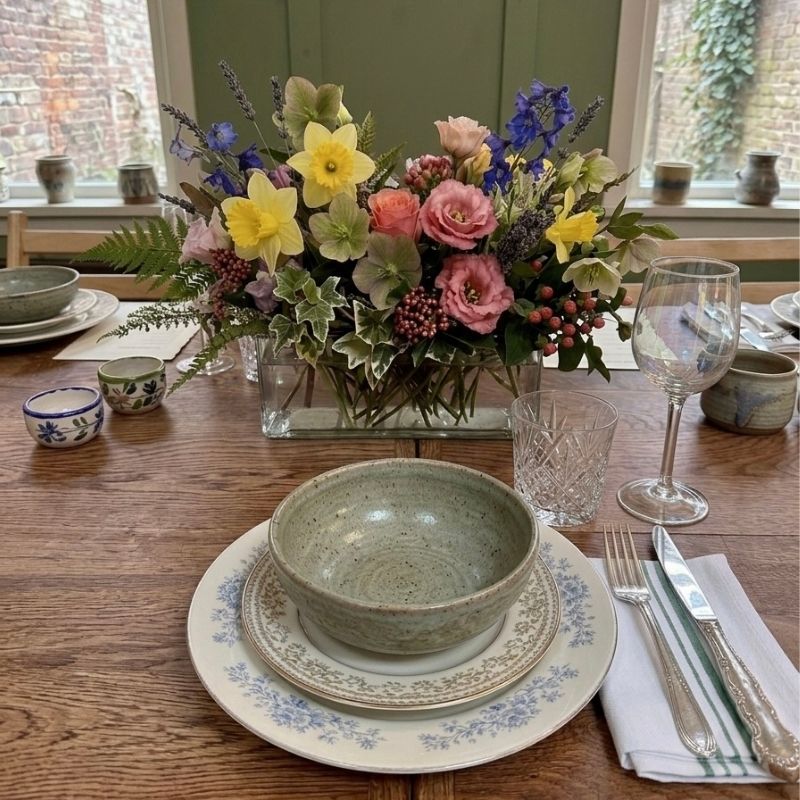
A handmade ceramic bowl layered over fine china. The contrast makes both pieces look better.
One lesson I learned early on is that bigger isn't always better. A stoneware platter over 16 inches can weigh five pounds before any food goes on it, so I reserve the largest pieces for dishes that stay on the table rather than ones I need to carry across a room.
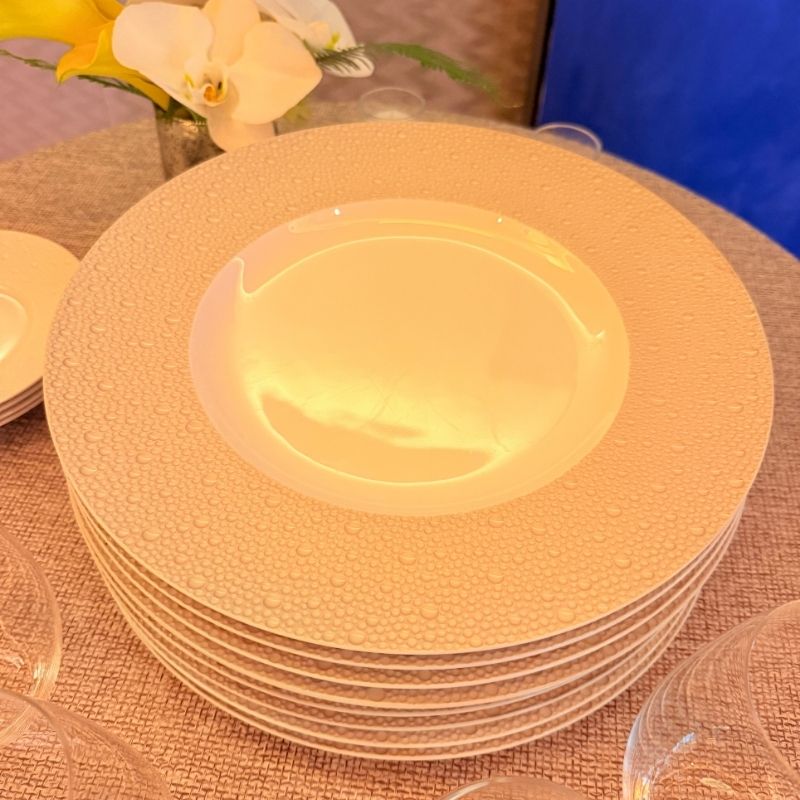
Bernardaud porcelain. Fine porcelain holds heat less than stoneware, but its weight and finish read as formal on any table.
Wood
Wood may be the most underrated serving material in a home collection.
At events I've styled, wooden boards are some of the hardest-working pieces on the table. They add height and texture instantly, making a spread feel layered instead of flat.
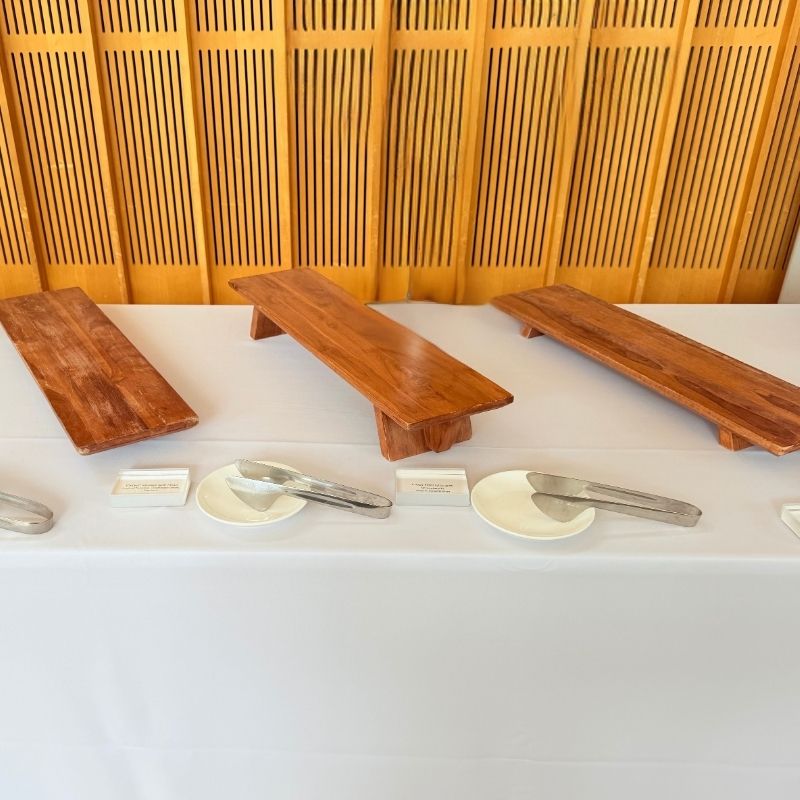
Wooden boards and risers add height to a flat buffet, which is the fastest way to make a spread look composed.
I save wood for dry foods: bread, cheese, charcuterie, crackers, grilled vegetables. Anything with a lot of moisture belongs on ceramic or porcelain. Wood absorbs liquid, and oily marinades leave stains that are difficult to remove.
The care is simple but important. Wash by hand, dry immediately, and condition the surface every three to four months with food-safe mineral oil. A board left soaking in water won't stay beautiful for long.
Melamine and Acrylic
Years ago, melamine usually meant brightly colored picnic plates that looked unmistakably plastic. Today's versions are very different.
For outdoor entertaining, melamine earns its place. It won't shatter on a stone patio, it's light enough to carry loaded, and many modern collections closely resemble ceramic while being far easier to live with outside. A piece like this 16 inch melamine oval platter covers most outdoor menus without the weight of stoneware.

Outdoor service asks different things of a serving piece: light enough to carry, sturdy enough for a stone patio.
I use acrylic differently. Clear trays and risers aren't there to steal attention. They create structure, adding height to a buffet without competing visually with the food, which is one reason they appear so often at professionally catered events.
Neither material belongs in the oven or under a broiler. Check the manufacturer's instructions before putting melamine in the microwave, since many pieces are not microwave safe. The FDA questions and answers on melamine in tableware is worth reading once before you buy.
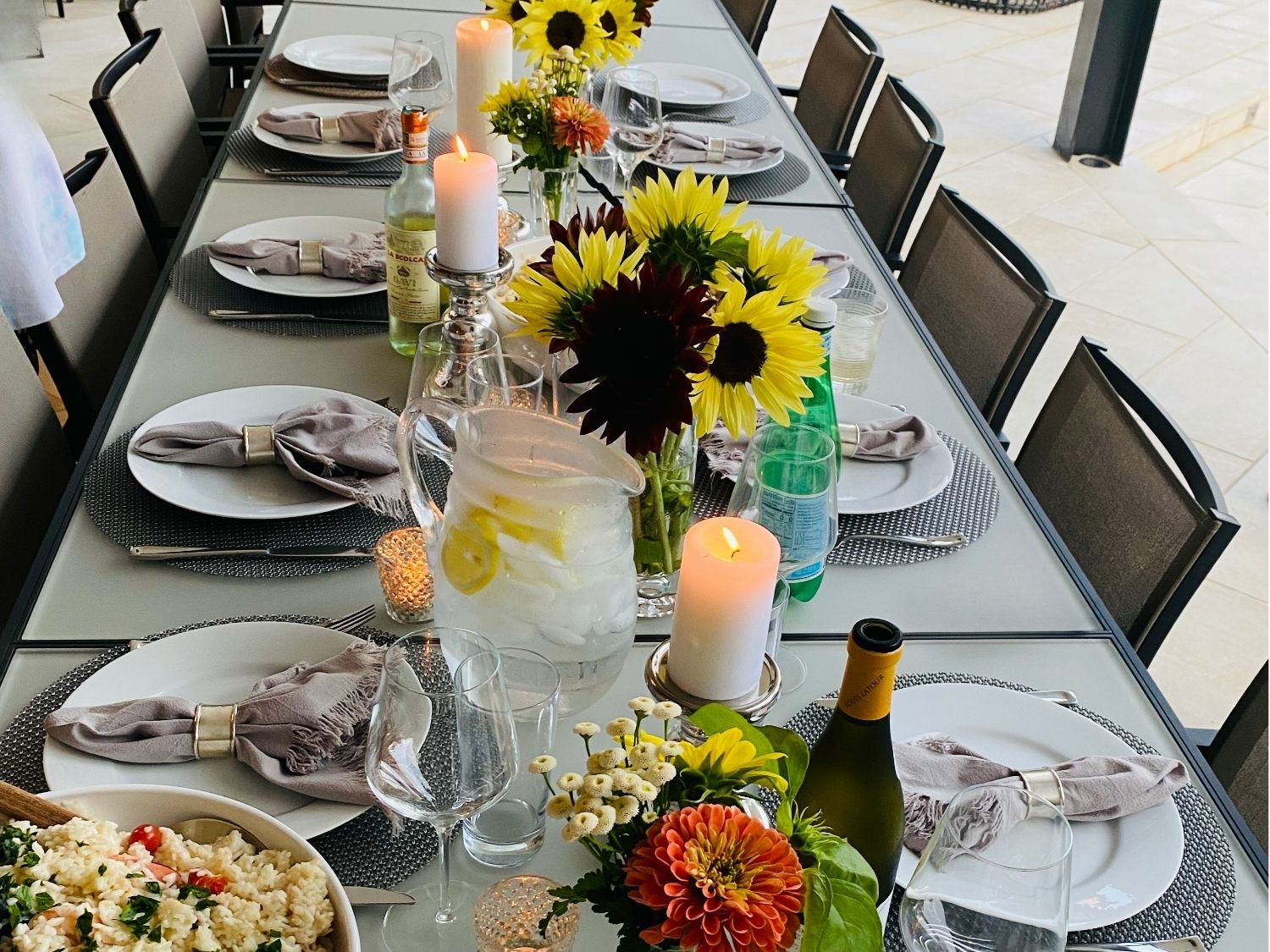
One large bowl and a single pitcher carry an entire outdoor dinner.
Metal and Glass
Most of us don't need restaurant equipment at home, but one stainless steel chafing dish can change the way you host a holiday meal. A covered warmer holds food at temperature for roughly an hour, which gives you the freedom to enjoy your guests instead of worrying whether dinner is going cold while everyone is still talking in the living room.
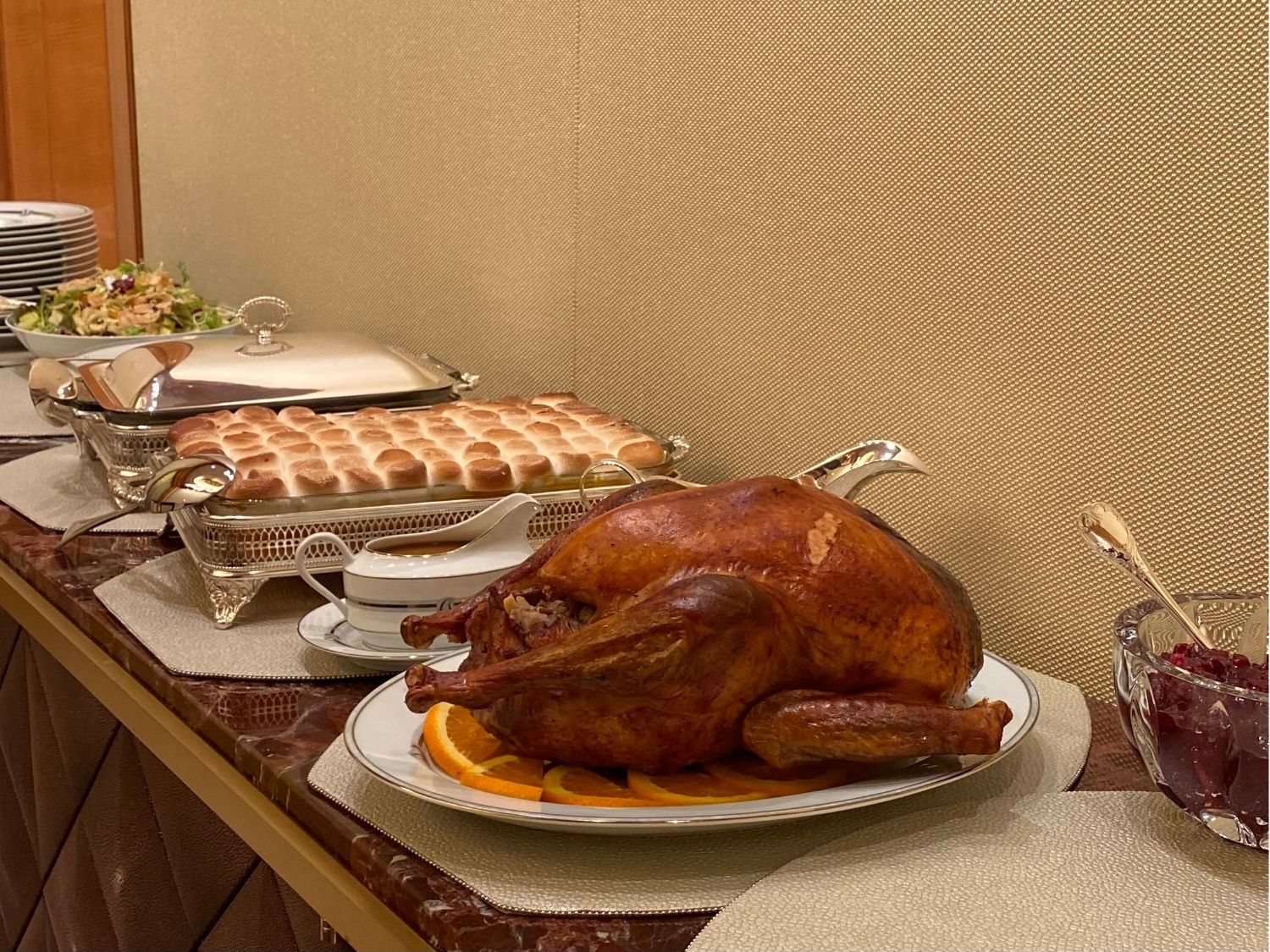
A covered warmer holds food at temperature long enough for guests to arrive at their own pace.
Glass serves a different purpose.
Whenever I'm serving something layered, whether a trifle, a dip, or a fruit salad, I almost always reach for clear glass. Seeing the food becomes part of the presentation. The colors and textures do the decorating for you. The same logic applies to the drinks side of the table, which we cover in our guide to types of glassware.
Choose materials for the way they perform, not only the way they look.
The best serveware disappears into the experience. That's how you know it's doing its job.
How Much Serveware Do You Actually Need?
Most home collections go wrong in one of two ways. Either there isn't enough to serve a full meal comfortably, or there's a cabinet full of specialty pieces that come out once a year and spend the rest of their lives taking up shelf space.
The NumbersOne serving piece for every dish on the menu, plus one or two extras. For eight guests and a four-dish menu, that comes to six serving pieces.
There is almost always something you didn't plan for: a guest who arrives with dessert, a sauce that deserves its own bowl, or a loaf of bread that needs somewhere to land. If you want the full timeline that sits around these numbers, our dinner party checklist maps out the two weeks before guests arrive.
The Five Pieces That Earn Their Storage
One large oval platter, 16 to 18 inches
If I could recommend only one serving piece, this would be it. It handles everything from roasted vegetables and sliced meats to whole fish, pastries, or a weekend breakfast spread. I also prefer an oval shape over a rectangle. It feels more generous on the table and fits naturally into both round and rectangular layouts.
- Everyday: a plain 16 inch white porcelain oval platter, oven and dishwasher safe.
- Investment: the Pillivuyt Perle large oval platter, which will outlast several sets of dinnerware.
Two serving bowls in different sizes
Choose one large bowl for salads and generous side dishes, and a smaller one for grains, roasted potatoes, sauces, or seasonal vegetables. Two different sizes are far more useful than owning two bowls that do exactly the same job. A pair of 10 inch shallow serving bowls covers most of what a home menu asks for.
One wooden serving board
One board covers bread, cheese, charcuterie, grilled vegetables, and most desserts. Even a simple meal feels more thoughtfully arranged when a single dish sits raised above the rest. A wood and marble board set gives you two surfaces in one piece: marble for anything that needs to stay cool, wood for everything dry.
One small tray
A tray solves dozens of small hosting problems without drawing attention to itself. It carries drinks from the kitchen, keeps condiments together, serves coffee after dinner, and prevents small items from scattering across the table. It's one of those pieces you end up using far more often than you expect. A simple 14 inch stainless tray with a hammered rim works for all of it.
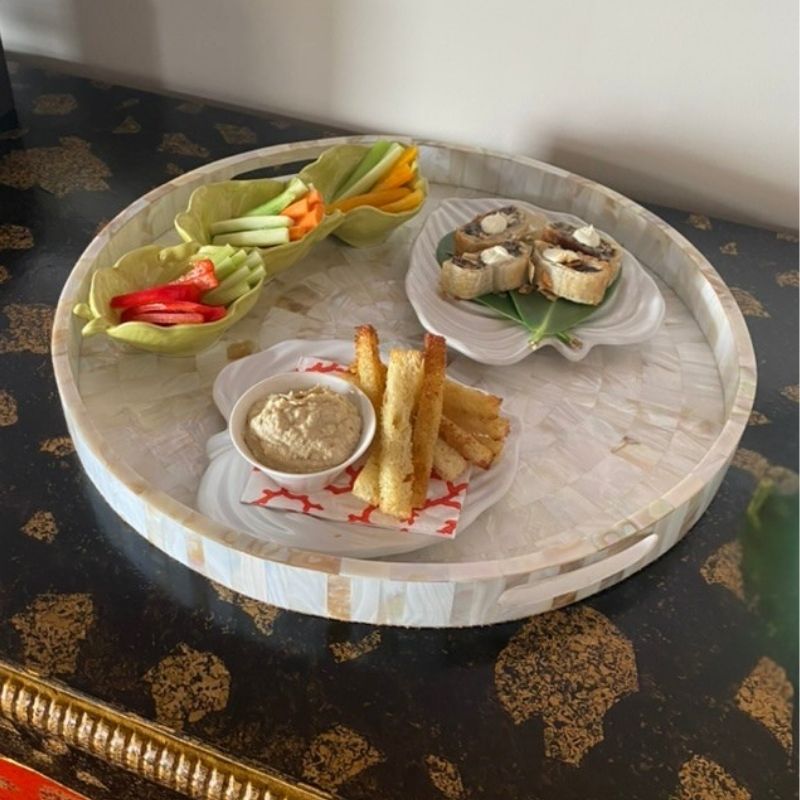
A tray keeps small items together and moves them from kitchen to table in one trip.
Trays also do most of the work when you are serving hors d'oeuvres, where the pieces move constantly and nothing stays in one place for long.
Two Pieces I Would Add Next
A footed bowl or compote
This is the most overlooked serving piece I know, and the one that changes a table fastest. Raising fruit, bread, or a simple salad by four or five inches creates height, opens space underneath, and makes the entire table feel more layered. A wood and marble footed fruit bowl does this without reading as formal.
A dedicated set of serving utensils
This is something many people overlook until they host a larger dinner. I prefer serving utensils that aren't tied to a particular flatware pattern. A sturdy pair of tongs, a large serving spoon, a slotted spoon, and a wide server will outlast several dinnerware collections and work with almost any table style. An eight-piece stainless hostess set covers every one of those jobs at once.
What to Skip Until You Actually Need It
I've seen plenty of specialty serving pieces that looked useful in the store and spent the next five years collecting dust in a cabinet.
Chip-and-dip sets, deviled egg plates, and fixed three-tier stands are rarely essential for everyday entertaining. A versatile platter, a serving bowl, or a footed compote can do the same job while adapting to many different menus.
Start with pieces that earn their place every time you host. You can always add specialty serveware later, once you discover you truly need it, not because a checklist told you to buy it.
Formal vs Casual: Choosing Serveware Sets for Entertaining Any Occasion
A formal table isn't defined by expensive serveware. It's defined by consistency. The materials work together, the serving style feels structured, and every piece supports the same mood without competing for attention.
Three details usually make a table feel more formal.
- Serving pieces in one material and one color. White porcelain paired with polished stainless steel or silver has remained a classic combination for a reason. The serving pieces stay visually quiet, allowing the food to become the focal point.
- Covered or heated serving pieces. A chafing dish or lidded warmer immediately changes the atmosphere. It tells guests the meal is meant to be enjoyed over time instead of being served all at once.
- Individual portions whenever practical. Food plated for each guest generally feels more formal than dishes shared from the center of the table.
If you want the full protocol behind that kind of table, the Emily Post table setting guides remain the clearest reference on formal service, and our own guide to how to set a table translates it for a home dining room.
What Makes a Table Feel Casual
Casual entertaining leaves room for contrast. A wooden serving board beside a ceramic bowl and a simple glass pitcher feels collected rather than coordinated. At a relaxed table, that mix adds warmth and personality.
One summer dinner I styled on a rooftop terrace reminded me of that. We served the entire meal from three mismatched ceramic bowls and two wooden boards on a bare oak table. It became one of the most photographed tables of the evening, yet not a single serving piece matched.
That dinner reinforced something I still believe today: guests rarely remember whether every serving bowl matched. They remember how the table felt, relaxed and welcoming and easy to gather around. Lighting does a great deal of that work too, which is why creating ambiance for a dinner party matters as much as what the food arrives in.
Casual tables rely on texture more than perfection. Handmade ceramics with visible glaze marks. Wood beside porcelain. A glass pitcher catching the afternoon light. Serving pieces at different heights. Nothing is identical, yet everything belongs together.
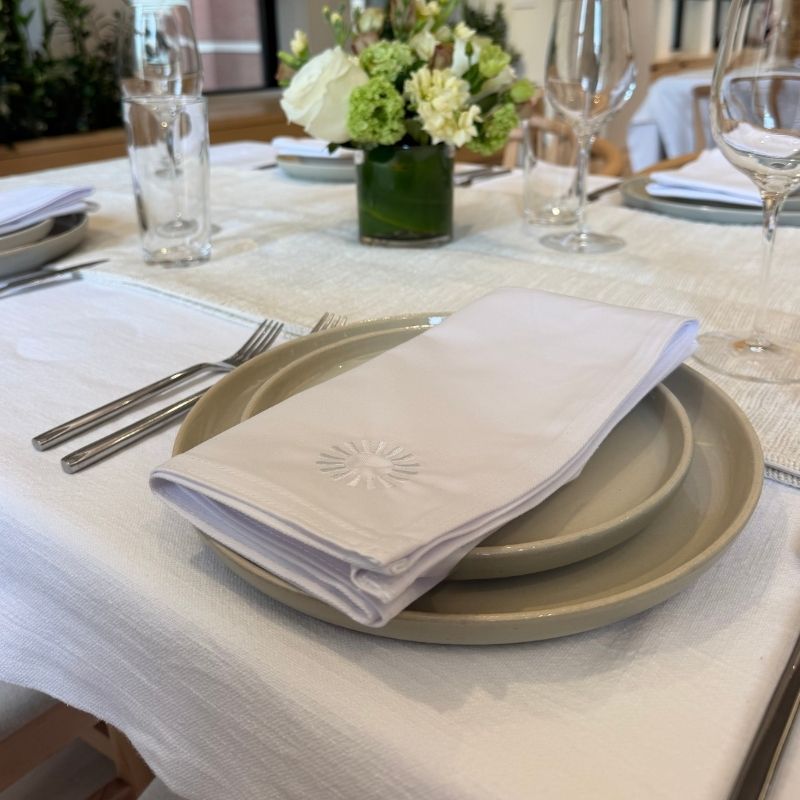
Neutral pieces read formal on linen and casual on bare wood. That flexibility is what makes them worth buying first.
The Pieces That Work for Both
Some serving pieces never feel out of place. Dress them up with linen and candles, or pair them with everyday dinnerware. They work equally well in either setting.
- A white oval platter looks elegant on crisp linen yet feels just as comfortable on a rustic wooden table.
- A footed bowl in glass or plain ceramic adds height without looking overly formal.
- Simple stainless steel serving utensils blend into almost any table setting instead of competing with it.
Start with timeless, neutral serveware you'll reach for all year. Seasonal colors, bold patterns, and specialty pieces can always come later, once you've built a collection that works with almost everything you already own. The same restraint applies to the drinks corner, as we found while putting together our bar cart ideas.
Build the neutral foundation first, and the table setting underneath will do the rest of the work.
Frequently Asked Questions
What are the essential pieces in a basic serveware set?
How much serveware do I need for eight guests?
What is the best material for durable everyday serving dishes?
Are serveware sets for entertaining worth buying, or is it better to buy pieces individually?
Can wooden serving boards go in the dishwasher?
Is melamine serveware safe for hot food?
What size platter is most useful for entertaining?
How do I make a buffet table look less flat?
Do serving pieces need to match my dinnerware?
What serveware should I skip when starting a collection?
There is a moment near the beginning of every dinner when the food is finally on the table, the serving pieces are in place, and the host gets to sit down.
Everything before that moment is logistics.
The right serveware sets for entertaining shorten that stretch: fewer trips back to the kitchen, fewer last-minute substitutions, and less time spent looking for a bowl large enough to hold what you've already prepared.
You don't need to build the entire collection at once. Start with the pieces that solve the problems you encounter most often, then add to them slowly as the way you host becomes clearer.
The pieces themselves are not the reward. The evening you get to enjoy is.