
How to Set a Table: A Step-by-Step Place Setting Guide

This post may contain affiliate links. If you purchase through these links, I may earn a small commission at no extra cost to you. Full disclosure.
To set a table place setting, center the dinner plate, place the fork to the left, and the knife and spoon to the right with the knife blade facing inward. Set the water glass above the knife. For a dinner party, add a bread plate upper left and a wine glass alongside the water glass. Each guest needs roughly 24 inches of space.
My earliest memory of "hosting" wasn't at a grand event. It was in my mother's kitchen on a Tuesday night. She set the table for soup and bread as though it mattered, because to her, it did. She believed that how you set the table told your guests, even if those guests were just your family, that their presence was an event in itself.
Years later, styling tables for high-stakes dinners in Manhattan, I realized she was right. A well-set table isn't about snobbery. It's about preparation. It's a map for the meal ahead. Whether you're serving a three-course dinner or a simple brunch, knowing the geography of the table allows your guests to relax. They never have to wonder which glass is theirs or which fork to pick up first.
In this guide, I'll walk you through everything: the basic everyday place setting essentials, how to expand it for a dinner party, and the finishing details that turn a set table into a welcoming one.
How to Set a Table Place Setting: The Basics
Every place setting, no matter how simple or elaborate, starts from the same foundation. Once you understand the logic behind it, you'll never have to look it up again.
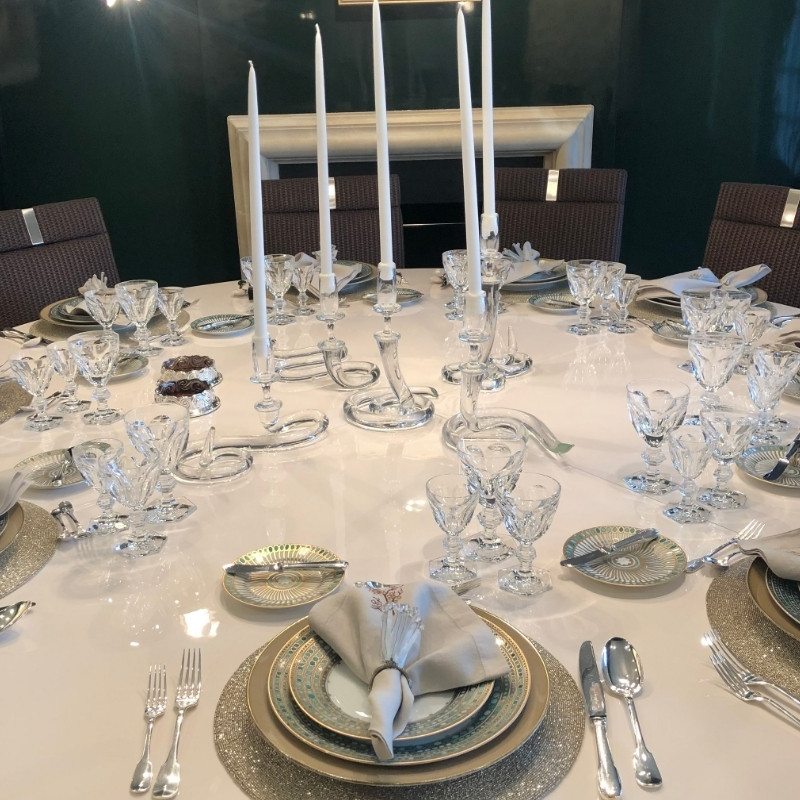
A classic place setting with charger plate, dinner plate, linen napkin, and silverware arranged in the correct position.
Photo by MyHomeShelf.com
The dinner plate sits in the center of the place setting, about one inch from the edge of the table. Everything else is arranged around it.
The fork goes to the left of the plate. For an everyday meal with one fork, that's all you need on that side.
The knife goes to the right of the plate, blade facing inward toward the plate. This is a rule that never changes, whether you're setting a kitchen table or a hotel ballroom.
The spoon sits to the right of the knife. For a casual meal, one spoon is enough.
The water glass is placed above the knife, slightly to the right. This is the anchor for your glassware. For guidance on choosing the right glasses, our glassware guide covers everything from everyday water glasses to crystal.
The napkin can go in one of three places: folded on the plate, to the left of the fork, or tucked under the fork. All three are correct. I tend to place mine on the plate for everyday meals and under the fork when the table is more dressed. For more napkin ideas, take a look at our napkin folding guide for simple folds that work beautifully at home.
Plate
One more thing worth knowing: the knife blade always faces the plate. Not the guest, not outward. Always inward. It is one of those small details that reads as polished without anyone being able to say exactly why.
Setting the Table for Dinner Guests
When you're expecting company, the basic place setting expands. Not dramatically, but intentionally. Each addition signals to your guest that something a little more considered is happening tonight.
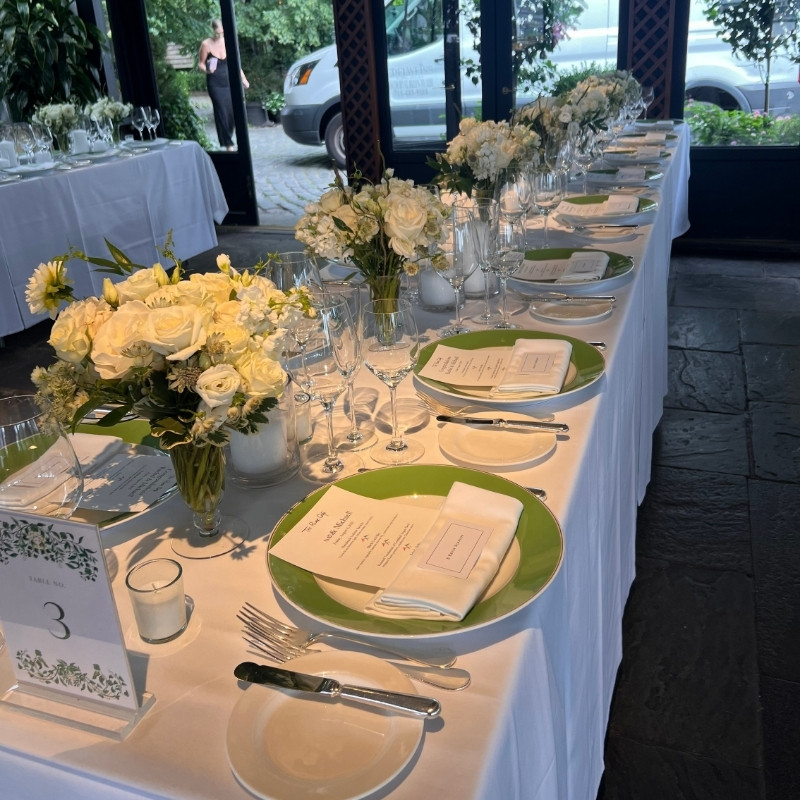
A dinner party table set with white floral arrangements, crystal glassware, and green-rimmed plates at a NYC venue.
Photo by MyHomeShelf.com
The bread plate sits above and to the left of the dinner plate, just above the fork. The butter knife rests across it horizontally. This is one of those details that people notice without knowing why. The table just feels more complete.
A helpful memory trick: make a lowercase "b" with your left hand and a "d" with your right. Left hand is b for bread, right hand is d for drinks. It sounds simple, but I've watched guests at formal dinners silently make this gesture under the table.
The salad fork goes to the left of the dinner fork, furthest from the plate. Forks are used from the outside in, so the first fork your guest reaches for should be the first one they need.
The soup spoon sits to the right of the dinner spoon, furthest from the plate. If you're not serving soup, leave it off entirely. A well-set table only includes what will actually be used. For more on choosing the right pieces for your table, our guide to the best dinnerware sets covers everything from everyday porcelain to fine china.
The wine glass is placed to the right of the water glass, slightly lower. For most dinner parties, one wine glass alongside the water glass is perfectly sufficient. If you're curious about which glass works best for different wines, our glassware guide goes into detail.
The napkin at a dinner party deserves a little more attention. A simple fold, a napkin ring, or even a small sprig of something from the garden transforms it from functional to thoughtful. I keep a set of linen napkins specifically for guests. If you're looking for a reliable option, the Sferra Festival Linen Napkins are what I reach for when I want the table to feel elevated without trying too hard.
The Sferra Festival Linen Napkins launder beautifully and feel entirely different from cotton on the lap. A set lasts for years and works for everything from casual dinners to holiday tables.
One thing I've learned from years of event work: resist the urge to over-set the table. More pieces don't mean more elegance. The most beautiful tables I've styled had exactly what was needed and nothing extra. For guidance on what the true essentials of a table setting are, that article is a good place to start.
The Details That Make the Difference
Once the geometry of the plates is settled, the real work begins. This is where you breathe life into the setting. In my years of experience, I've found that the most memorable tables aren't the most expensive. They are the ones that feel highly specific.
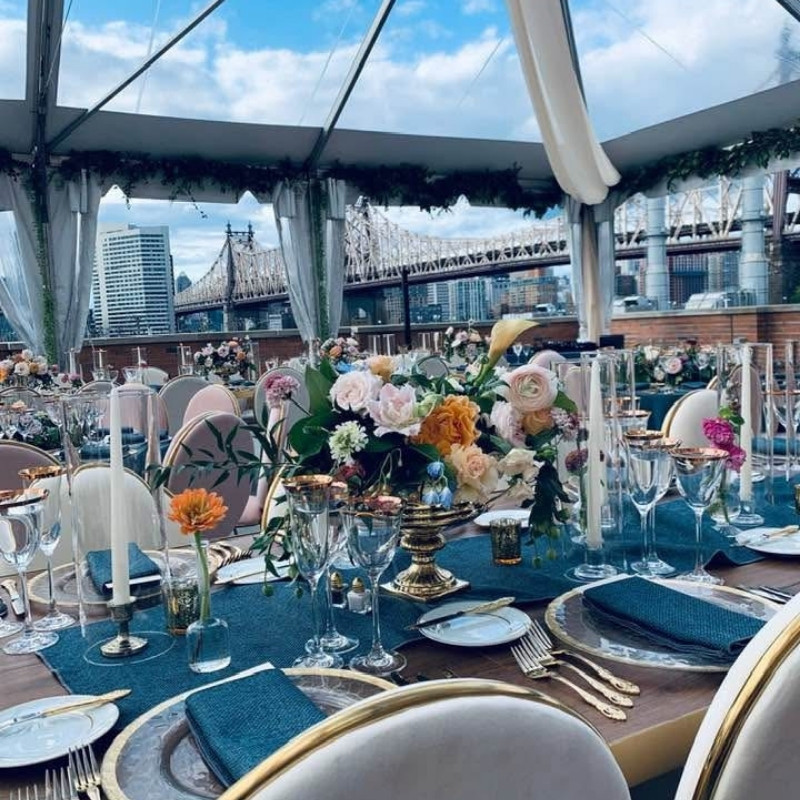
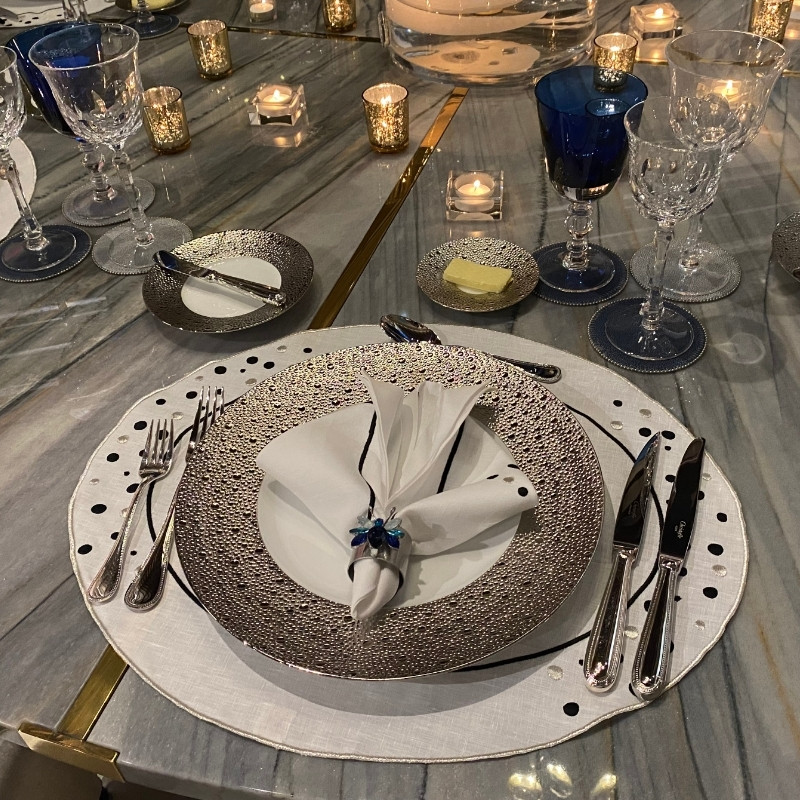
Evening table setting with blue crystal glasses, silver charger plates, and gold tealight holders creating a warm ambient glow.
Photo by MyHomeShelf.com
The Tablecloth or Placemats
A tablecloth or placemat sets the tone before anyone sits down. You don't need one to set a beautiful table, but the right one pulls everything together. A linen tablecloth in a neutral tone works for everything from a casual Sunday lunch to a holiday dinner. The Solino Home Linen Tablecloth is one I've recommended often for people who want the look of a dressed table without the formality of white damask. For a more casual everyday setting, IKEA's linen-blend placemats are an honest, affordable option that holds up well over time.
Candles
Candles are the single fastest way to change the atmosphere of a table. Even two simple taper candles in clean holders shift the mood entirely. The Hewory Glass Candlestick Holders are understated and work with almost any table style. For a warmer, more relaxed setting, the Volens Gold Tealight Holders scattered along the center work beautifully at varying heights.
A Centerpiece
A centerpiece doesn't need to be elaborate. A few stems in a simple vase, a bowl of seasonal fruit, or a cluster of candles at different heights. The one rule I follow: keep it low enough that guests can see each other across the table. A centerpiece that blocks conversation defeats its own purpose. For more on this, our guide to flower arrangements for the dining table covers how to approach it without overcomplicating things.
For fine china with a centerpiece, Bernardaud's pieces hold their own against the most elaborate floral arrangements. If you're building a table that will be used for years of entertaining, investing in quality dinnerware is worth understanding. Our bone china vs porcelain guide explains the key differences.
Napkin Rings
Napkin rings are a small touch that reads as very intentional. They work especially well when you're using cloth napkins for a dinner party. A set of simple golden napkin rings can be used year-round and lift even a basic linen napkin into something that feels considered.
A round dinner table styled with tall white taper candles at varying heights, crystal glassware, and silver charger plates.
Photo by MyHomeShelf.com
I never use overhead lights for a dinner table. Never. Mix your candle heights: tall tapers for drama, pillar candles for warmth, small tealights at the base for glow. You're after that amber light that makes everyone look beautiful and relaxed. The overhead fixture can stay on in the kitchen. At the table, it belongs off.
The setting includes the air around the plates. A soft jazz or acoustic playlist acts as a floor for the conversation, not a ceiling. Keep the volume low enough that no one has to raise their voice. When the music, the scent of food, and the flicker of candles align, the how-to of table setting disappears. The experience begins.
For more ways to style a table that feels cohesive rather than decorated, our philosophy piece on mixing and matching dinnerware approaches this from a different angle.
Frequently Asked Questions
What is the correct order for placing utensils when setting a table?
Which side does the napkin go on when setting a table?
Where does the bread plate go in a place setting?
How much space should each place setting have?
Do I need a tablecloth to set a table properly?
What is the difference between a casual and a formal place setting?
A correctly set table isn't about being right — it's about being ready. It is a map that allows your guests to navigate the meal without a second thought, leaving them free to focus on the person across from them. My mother understood this in her kitchen on a Tuesday night. I hope this guide helps you carry that same feeling to your own table place setting, whatever the occasion, whatever you're serving.


