
The Kitchen Table Centerpiece: A Stylist’s Rules for Everyday

This post may contain affiliate links. As an Amazon Associate, I earn from qualifying purchases, at no extra cost to you.
A kitchen table centerpiece should sit under 12 inches tall and span no more than a third of the table's length, so it never blocks a sightline or crowds a serving dish. Build it from three things: one anchor piece, one low element, one living thing. Everything beyond that is seasonal.
Take a look at your kitchen table right now. Chances are, it isn't waiting for a holiday dinner. It's holding a half-empty mug, a stack of mail, maybe a laptop charger, and whatever was left there after breakfast.
Whenever someone asks me about everyday kitchen table centerpiece ideas, I usually find myself scrolling through inspiration filled with tall vases, layered runners, and carefully arranged objects. My first thought is always the same. Where does the pizza box go on a Friday night?
After years of styling high-end events, I've learned that an everyday table is harder to get right. An event centerpiece only has to survive a few hours. A kitchen table has to hold up while people actually use it.
The Everyday Test: What a Kitchen Table Centerpiece Has to Survive
At a private penthouse on the Upper East Side, I once spent forty minutes on a centerpiece that lived only a few hours. The room turned over that evening and the whole thing came apart. That was the job, and I loved it.
My own kitchen table has never looked like that. For a while, I thought that meant I wasn't trying hard enough at home.
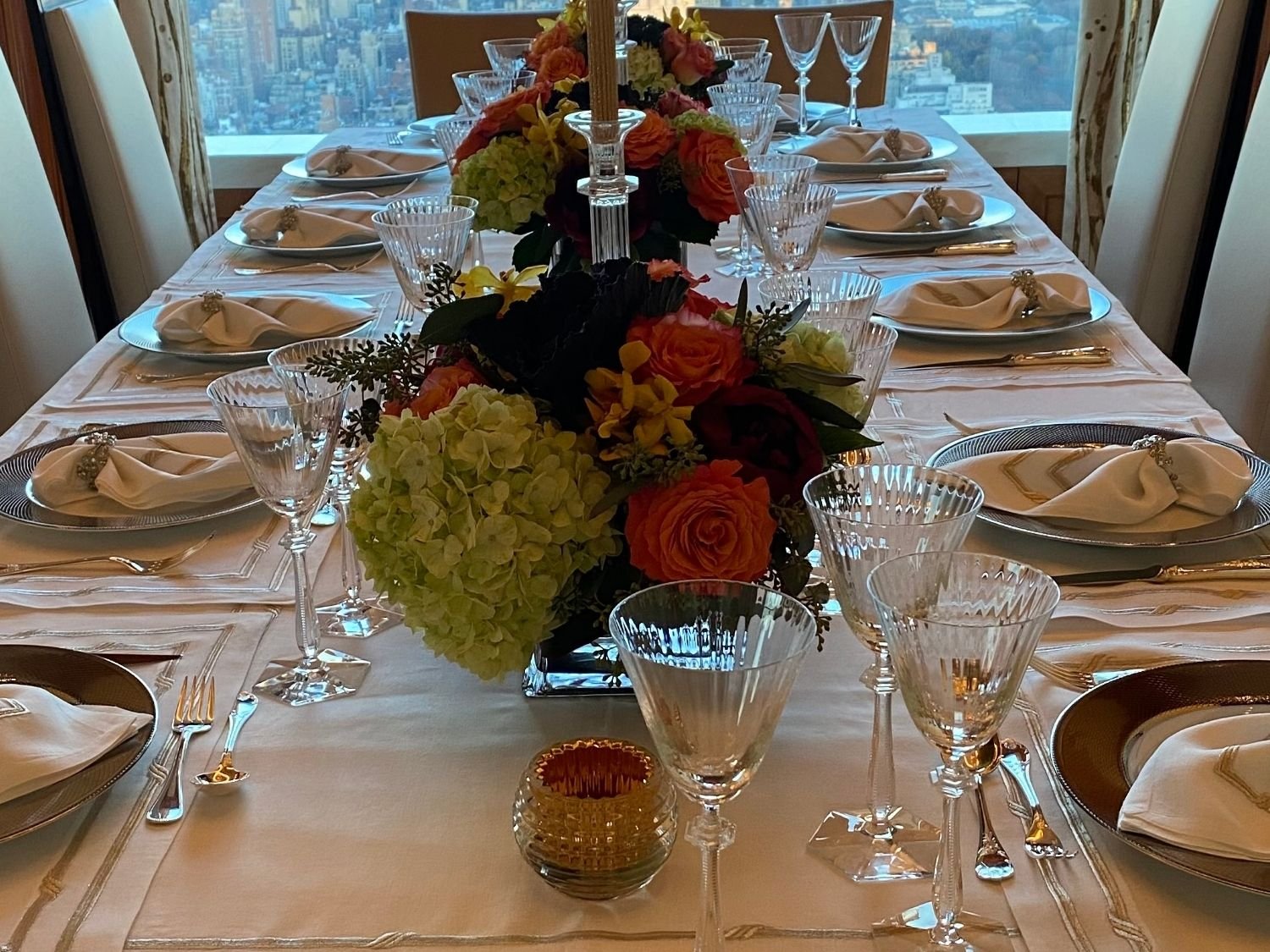
An event centerpiece built for one evening
Photo by MyHomeShelf.com
They ask very different things of each other, but most styling advice treats them the same way.
The test is one question asked three ways.
Can you serve dinner around it?
This is the one that eliminates most of what you see online. If the whole arrangement has to come off the table before the food arrives, it's asking too much of the room. A serving bowl and two plates should be able to land without anything being carried to the counter first.
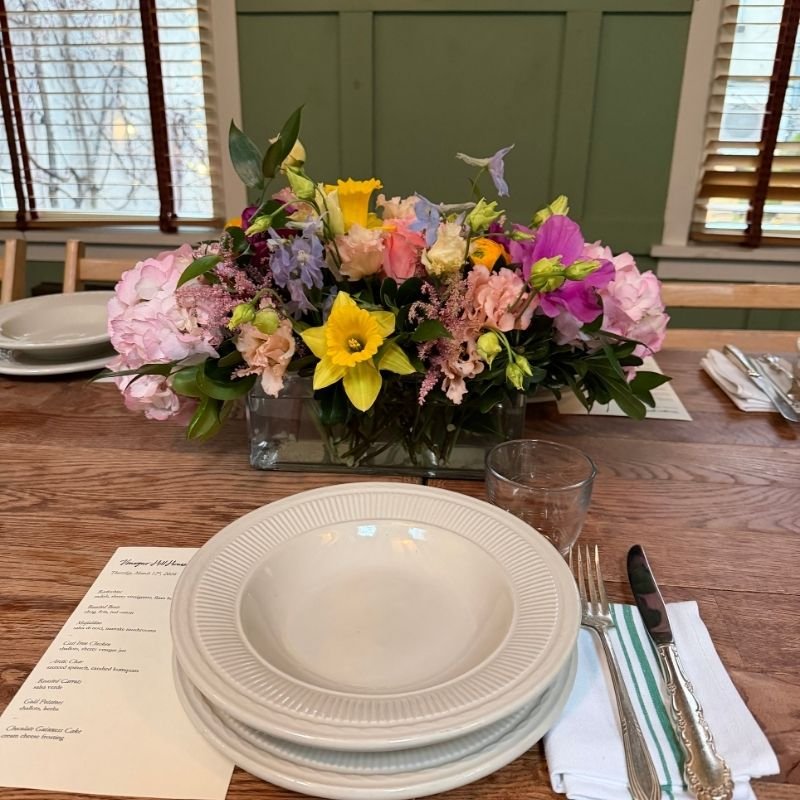
A centerpiece that passes the Everyday Test
Photo, Vinegar Hill House
Can you shift it aside and still have it look right?
Moving something and removing it are not the same thing. Real tables get nudged. The tray slides over to make room for a laptop, then slides back. An arrangement that only works in one exact position drifts out of alignment within a day, and then it reads as neglected rather than styled. Symmetry is fragile that way. A grouping with a clear anchor piece survives, because the eye reads the anchor and not the spacing.
Does it look intentional at eight in the morning?
Candlelight forgives almost anything. Flat morning light forgives very little. It finds the stems that dried out two weeks ago and the bowl of fruit nobody has emptied. A centerpiece that only works after dark is a dinner party centerpiece, and it belongs in the cabinet until you need it.
Almost everything that passes all three turns out to be low, grouped, and made of things you can wipe down. That isn't a style choice. It's what's left after the test.
Kitchen Table Centerpiece Height and Proportion Rules
The Everyday Test is mostly judgment. Proportion is easier, because a few measurements tell you very quickly when a centerpiece is taking over the table.
Keep solid centerpieces under about 12 inches
For an everyday table, I keep the main visual mass below roughly 12 inches. That sits comfortably under the sightline of two people talking across from each other.
You can go higher with something visually light. Slender taper candles, a few airy branches. The problem was never height on its own. It's putting a solid mass directly between two people who are trying to have a conversation.

Keeping a centerpiece under 12 inches
Photo by MyHomeShelf.com
Give the centerpiece roughly the middle third
As a practical starting point, I like an everyday arrangement to stay within about the middle third of the table. It isn't a formula. The goal is to leave most of the surface free for the reason the table exists, the same logic behind how to set a table place setting in the first place.
On a round table the same idea applies in every direction: keep the arrangement concentrated toward the center rather than letting it creep into each place setting.
Protect about 15 inches of depth for each place setting
A typical place setting uses roughly 15 inches of table depth. A dinner plate alone runs 10 to 11 inches across, so that margin matters once glasses, flatware, and serving pieces arrive. The Emily Post Institute lays out the full geometry if you want the formal version. If you're still choosing the dinnerware itself, our guide to the best dinnerware sets covers everyday porcelain through fine china, and table setting essentials walks through everything else that belongs at each seat.
If the centerpiece is pushing into that zone, it's too wide for everyday use, even when it looks perfectly proportioned on an empty table.
These measurements aren't meant to make you style with a ruler. They're the point where the centerpiece stops competing with the meal. After enough tables, you see the proportion before you measure it.
What Actually Works Year-Round on a Kitchen Table
Seasonal decorating gets all the attention, but a kitchen table needs a base that holds in February and in July. Everything else is a swap.
Three pieces. One anchor with some height, one low element, one living thing.
Group in odd numbers
Three objects read as composed. Four read as a set someone lined up. This is old advice and it holds, because an odd grouping has a natural center and the eye settles there instead of counting.
It also happens to be the smallest number that still looks deliberate. Two things on a table look like two things. Three look like a decision.
The anchor
Something with vertical presence that isn't fragile. A stoneware pitcher, a footed bowl, a wooden hurricane. It gives the grouping a center and it survives being slid across the table by someone who isn't paying attention. The Cadeau stoneware vase is the shape I reach for most: heavy enough to stay put, plain enough that it doesn't compete with whatever goes in it. The same principle, one steady piece with everything else allowed to vary, is what makes mixing and matching dinnerware work instead of looking chaotic.
The low element
A tray, a shallow bowl, a board. This is the piece that does the practical work: it gathers salt and pepper, a small vase, whatever tends to migrate across the table anyway. Without it, those things scatter. With it, they read as one arrangement.
A tray also solves the mobility problem from earlier. Everything on it moves at once when the table needs clearing, which is the whole difference between shifting a centerpiece aside and dismantling it. An acacia wood tray with handles is the version I recommend most often, because the handles mean you can lift it with one hand while carrying something else in the other.

An everyday kitchen table centerpiece at breakfast
Photo by MyHomeShelf.com
The living thing
Cut flowers are the obvious answer, and they're the least practical one for a table you use every day. The RHS guidance on conditioning stems will buy you a few extra days, but a small potted herb or a bowl of seasonal fruit asks nothing of you at all.
A shallow bowl handles this better than a vase does. The Marin centerpiece bowl holds lemons in January and stone fruit in July, and when it's empty it still looks deliberate. That is harder to pull off than it sounds. For the evenings when cut flowers are worth the extra care, flower arrangements for the dining table covers how to make them last.
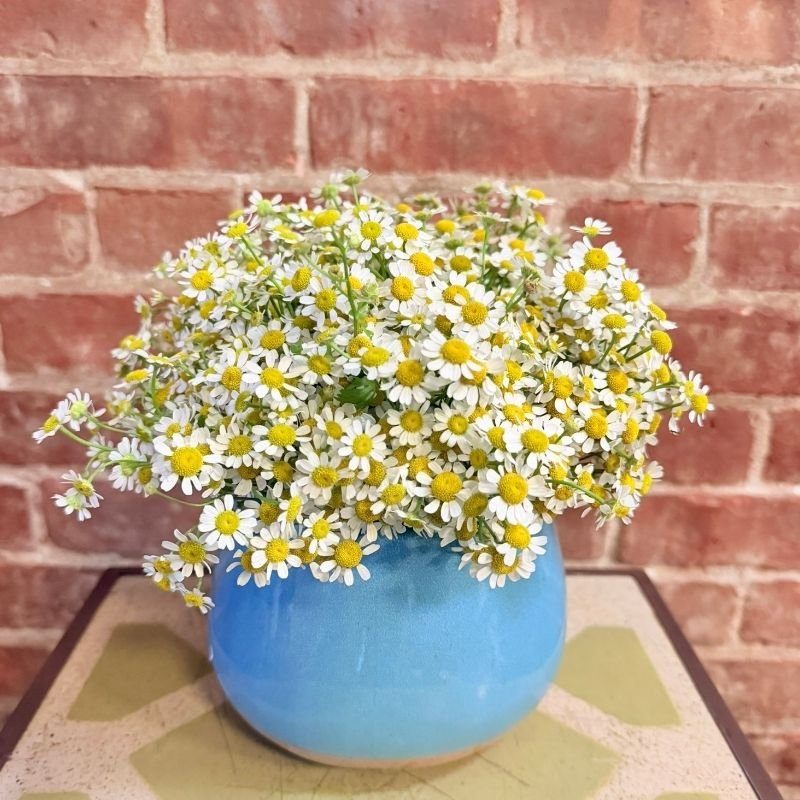
A simple living element that changes with the season
Arrangement by Edelweiss Floral Atelier, Brooklyn NY
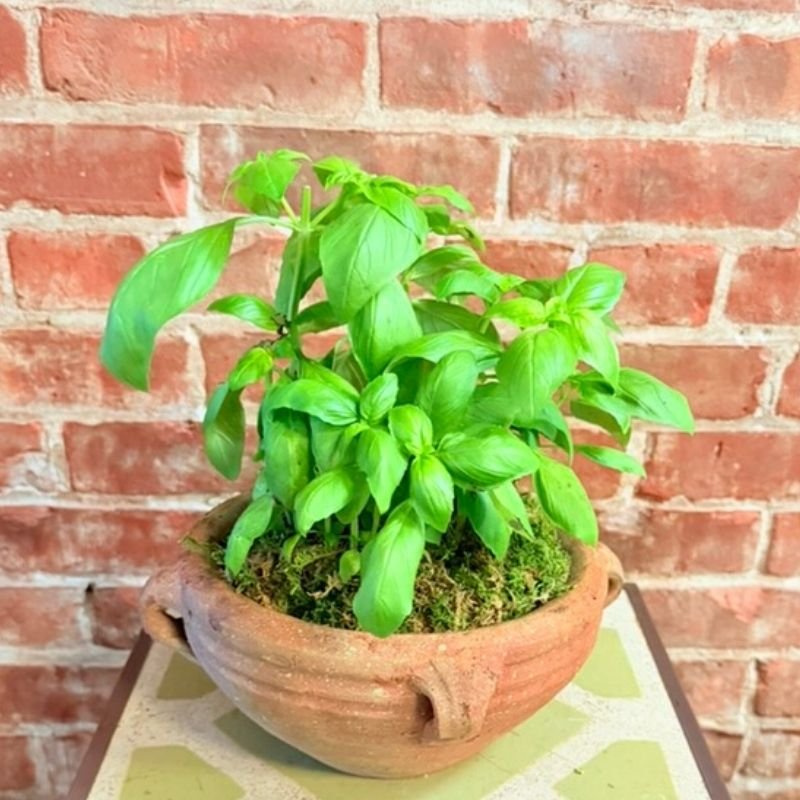
A living element that survives being forgotten for a week
Arrangement by Edelweiss Floral Atelier, Brooklyn NY
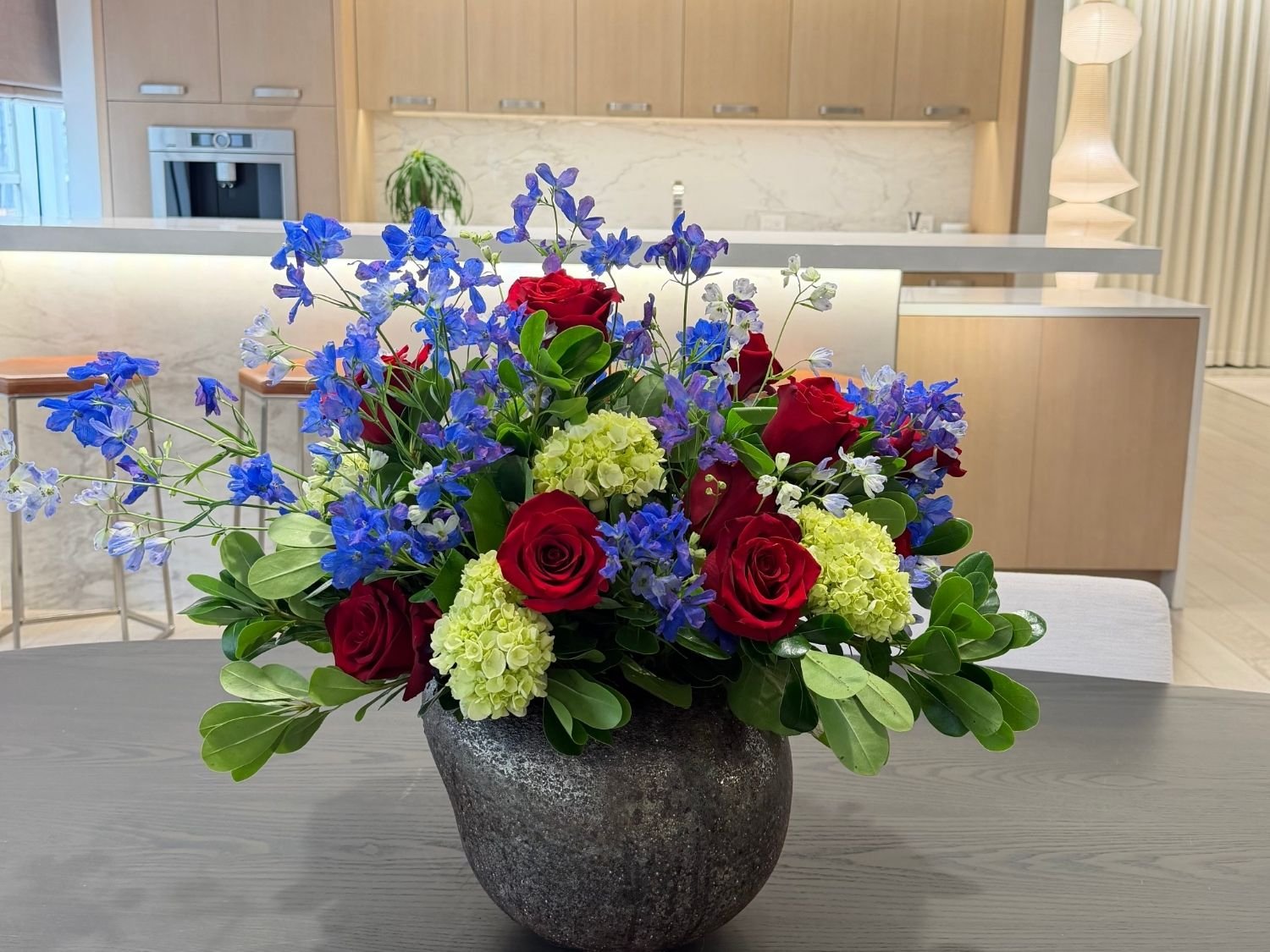
Spring: the swap in the same base
Photo by MyHomeShelf.com

Autumn: the swap in the same base
Photo by MyHomeShelf.com
The reason this holds up is that nothing in it is precious. Every piece is meant to be handled, wiped down, and pushed aside. That's the whole difference between a table you style and a table you live at.
Three Mistakes I See on Almost Every Kitchen Table
These are not really matters of taste. They are the things that make a table feel unconsidered even when someone has clearly put effort into it.
1. Buying for special occasions instead of everyday life
The centerpiece gets chosen for the dinner party that happens twice a year, then lives on the table for all the ordinary days in between. A tall glass vase can be beautiful for one evening and inconvenient every morning after.
Buy for the ordinary week. If the piece works for a dinner party too, that's a bonus, not the requirement. Tapers are the exception worth owning: a set of slim iron candle holders gives you height on the nights you want it, and the stems are narrow enough that nobody is talking around them the rest of the time.
2. Filling the space instead of anchoring it
A long table looks empty in the middle, so things get added to fill it. A candle here, a small dish there, a second vase to balance the first. Soon there are seven objects and no arrangement.
The fix is usually subtraction. One grouping near the center, with open table on both sides, feels more deliberate than a line of objects spread end to end.
Empty surface is not a problem to be solved. On a table people eat at, it's the point.
3. Letting the arrangement go stale
It undoes everything else quietly, because nothing about it looks wrong on the day you build it. Then the flowers disappeared, the tray collected stray objects, and the whole thing slowly became part of the background.
A kitchen table is a working surface. Anything that lives there needs an occasional reset or it starts reading as clutter.
Change the water. Remove the stem that has turned. Wipe the tray. Put back only what still belongs there.
None of these require spending more to fix. They come down to choosing pieces that can stay put through an ordinary week, which is what separates a table that looks styled from one that only looks styled in photographs.
Frequently Asked Questions
What is the best kitchen table centerpiece for everyday use?
How tall should a kitchen table centerpiece be?
How big should a centerpiece be relative to the table?
What are good kitchen table centerpiece ideas that aren't flowers?
Do I need a runner or placemats under a centerpiece?
How do I style a round kitchen table centerpiece?
How often should I change a kitchen table centerpiece?
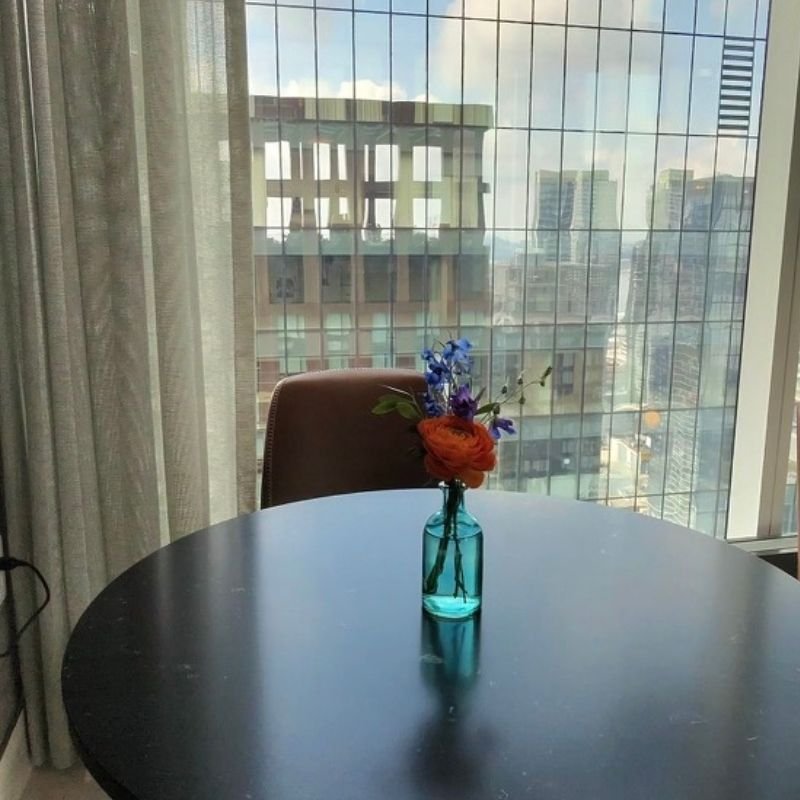
A centerpiece scaled for a round table
Photo by MyHomeShelf.com
The best everyday tables are not constantly restyled. They settle into a rhythm. A few well-chosen pieces stay, the living element changes, and the rest of the table stays open for whatever the day brings.
That is usually enough to make a kitchen table centerpiece feel considered without ever making it feel untouchable — which is the only version that survives a Tuesday.