
Types of Glassware: How to Choose the Right Glass for Every Table

This post may contain affiliate links. If you purchase through these links, I may earn a small commission at no extra cost to you. Full disclosure.
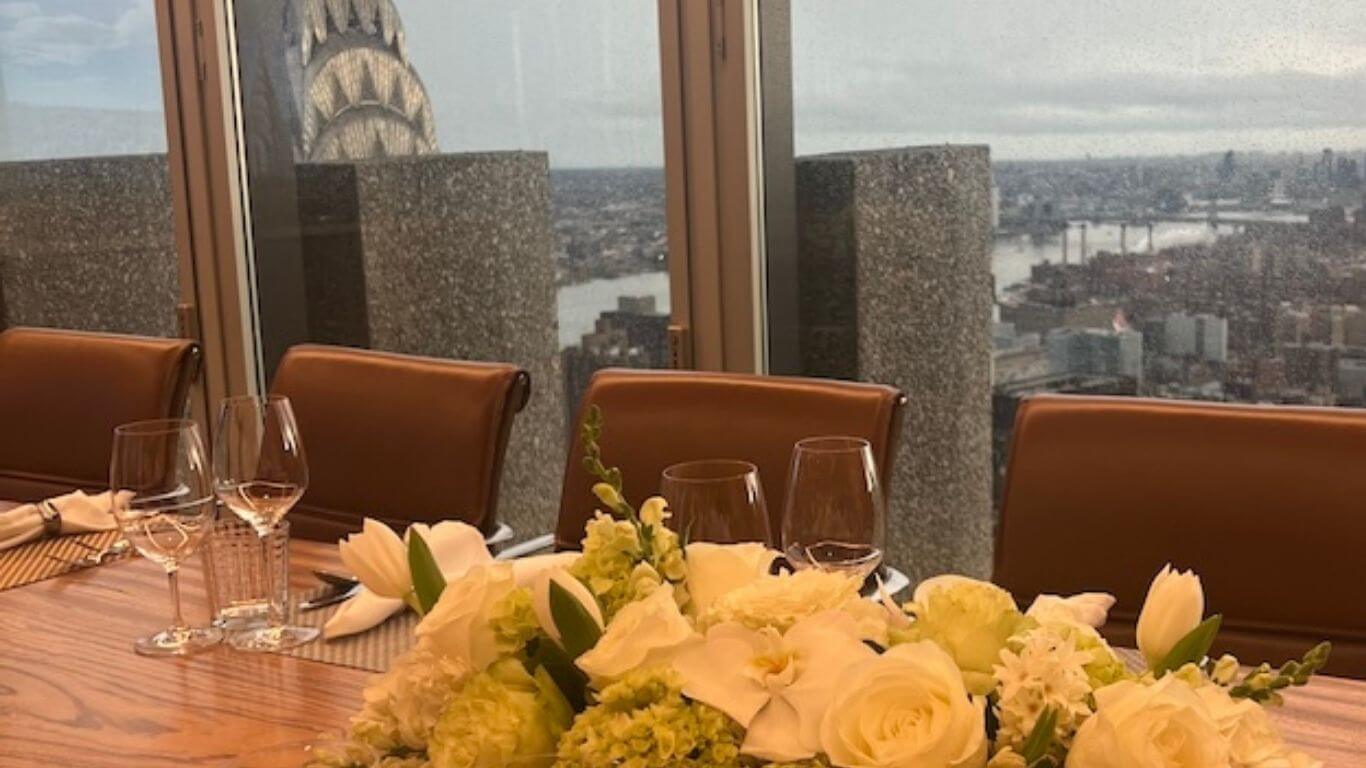
Before the food arrives, before anyone sits down for dinner, the glassware is already telling a story. It catches the candlelight. It frames the plate and quietly signals what kind of evening this is going to be. I notice this every time I set a table for an event. The right glass in the right place changes the entire energy of the table.
Here is the good news: understanding the main types of glassware is simpler than most people think. You do not need a cabinet full of specialty pieces to create a beautiful table. A few well-chosen glasses are enough, as long as you know what each one does. This guide walks through the essential types of dinner glassware for everyday dining and entertaining, from water glasses and wine glasses to champagne flutes and goblets.
The Dinner Glassware You Actually Need
The foundation of every place setting
If you only buy one wine glass, make it this
Larger bowl for aeration and bouquet
For celebrations and sparkling wines
With just a water glass and an all-purpose wine glass, you can set a complete, beautiful table. Everything else is a welcome addition, not a requirement.
Wine Glasses

Choosing the right wine glass makes a noticeable difference in both presentation and taste
Wine glasses are one of those details people tend to overthink, when in reality, a little knowledge goes a long way.
Red wine glasses have a larger, rounder bowl, and it is not just aesthetics. Research has suggested that glass shape can influence how wine aromas reach your nose, with different bowl shapes affecting how aromas are released and perceived. The wider opening lets the wine breathe, releasing the aromas that make a good red worth drinking slowly. If you host dinners with red wine regularly, a dedicated set makes a noticeable difference. A quality hand-blown set like these premium crystal red wine glasses gives you the clarity and weight that elevate a table without breaking the budget.
- ✓ Hand-blown crystal with thin rim
- ✓ Large bowl ideal for aeration
- – Hand-wash only, not dishwasher safe
White wine glasses are narrower with a smaller bowl, which preserves the cooler temperature and concentrates the lighter, more delicate aromas. If you often serve white wine, it is worth having a dedicated set of glasses.
All-purpose wine glasses are the practical middle ground. Slightly smaller than a red wine glass and a little larger than a white, they work for both. Especially perfect if you are building your first collection.
Stemmed vs stemless is a matter of context. Stemmed glasses belong on a well-set dinner table. They look more intentional and keep fingerprints off the bowl. Stemless glasses are perfect for casual evenings and outdoor dining where you want something more relaxed and stable.
For a special occasion, when you want that extra sparkle, crystal wine glasses like the Riedel Vinum Chardonnay deliver a thinner rim and brilliant clarity that you can feel and see immediately. Riedel is well known for designing wine glasses around specific grape varieties, which is one reason many wine lovers and professionals appreciate the brand.
Water Glasses and Goblets
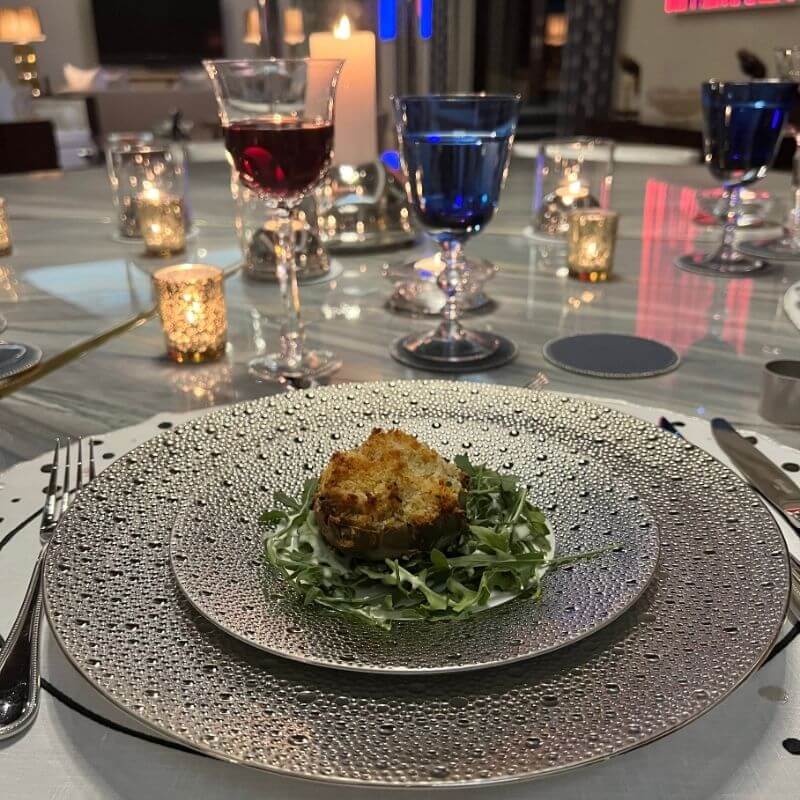
Colored water goblets alongside wine glasses at a private dinner. One simple swap that transforms the table
The water glass is the most used and often the least considered piece on any table setting. It is the first thing your guest reaches for and the last to be cleared. Getting it right quietly elevates everything.
Standard water glasses are clear, simple, and typically hold 12 to 16 ounces. They work for every occasion and quickly become the most versatile piece in your collection. If you are only buying one type to start, make it a simple water glass you would be happy to use every single day.
Water goblets are different. They are stemmed, slightly more formal, and add height to a place setting while looking beautiful alongside wine glasses. They are what you will see at most formal events, and they bring character and a sense of occasion to the table.
Pro Tip from Nino
Before your guests sit down, fill each water glass with ice and add a thin slice of lemon. It looks fresh, feels thoughtful, and instantly makes the table seem more polished.
Colored goblets are one of my favorite styling tools. A set of blue, amber, or green goblets transforms a neutral white table into something with personality, without changing anything else. You keep the same plates, the same linens, and simply swap the water glass. It is one of the easiest upgrades you can make. A set like these cobalt blue iced tea glasses brings that depth of color to your table at an accessible price point.
- ✓ Rich cobalt color, instant table upgrade
- ✓ Set of 12, enough for hosting
- – Stemless design, more casual than goblet style
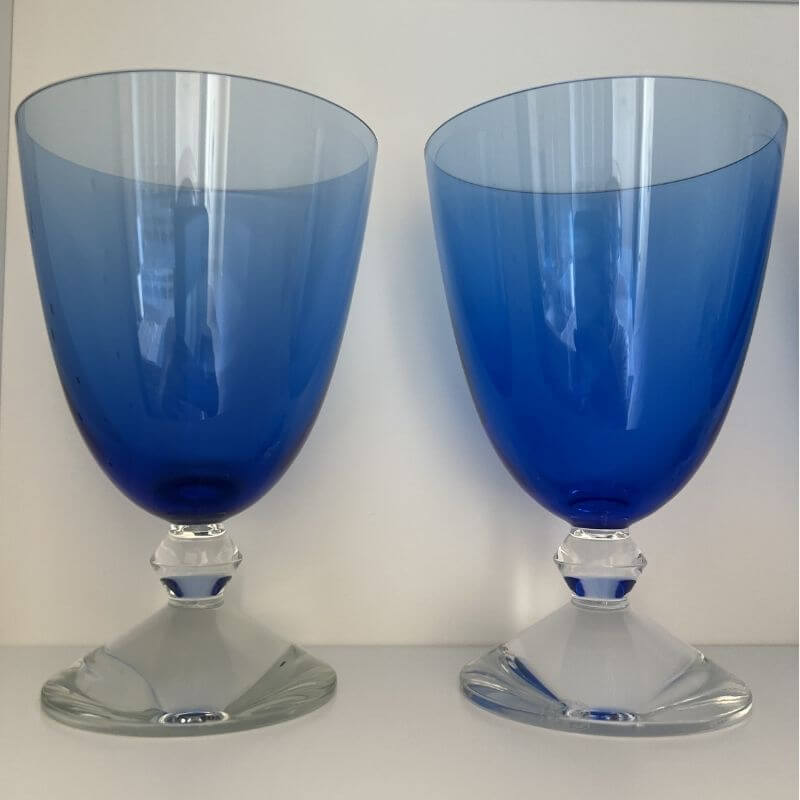
Colored crystal goblets, the fastest way to change the mood of a table
At luxury venues, I often see brands like Baccarat using colored crystal goblets (deep blue, rich ruby, warm amber) to create a signature look. You do not need to invest at that level, but the principle is the same: color in the glassware is the fastest way to change the mood of a table.
Champagne Flutes and Coupe Glasses
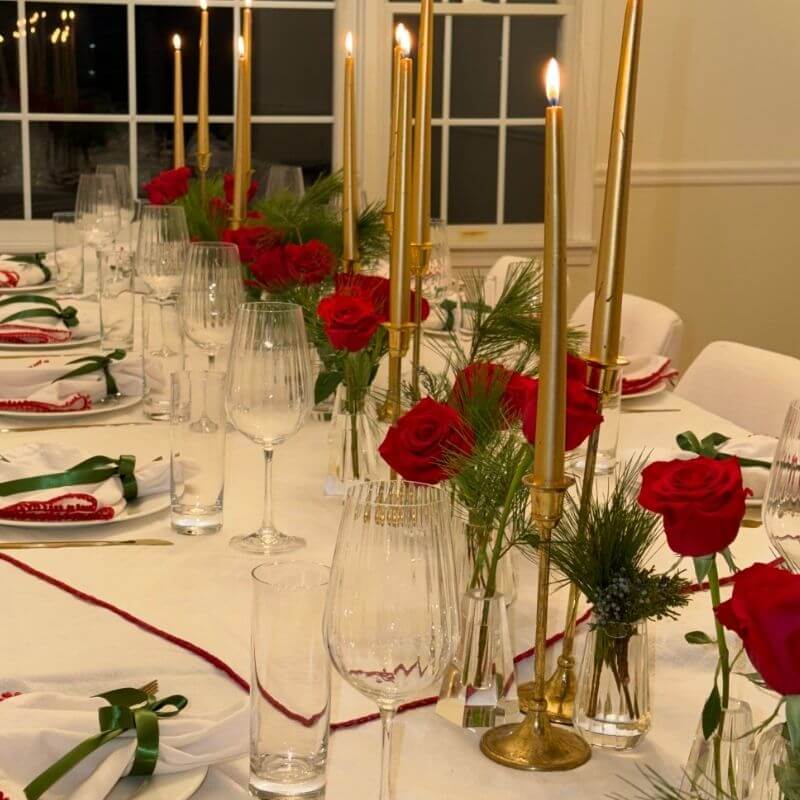
Champagne flutes set for a holiday dinner, the classic choice for celebrations
Champagne flutes are tall and narrow for a reason. The shape helps preserve the bubbles and directs the aroma upward. For formal events and passed champagne, flutes are often the more practical choice. At home, a set of six like these hand-blown champagne flutes easily covers everything from New Year's Eve to a Sunday morning mimosa.
Coupe glasses, with their wide, shallow bowl and short stems, are making a comeback. They bring a vintage elegance that photographs beautifully and looks stunning for cocktail-style entertaining. At events, I tend to see coupes more often at cocktail hour tables and dessert stations than used for champagne itself.
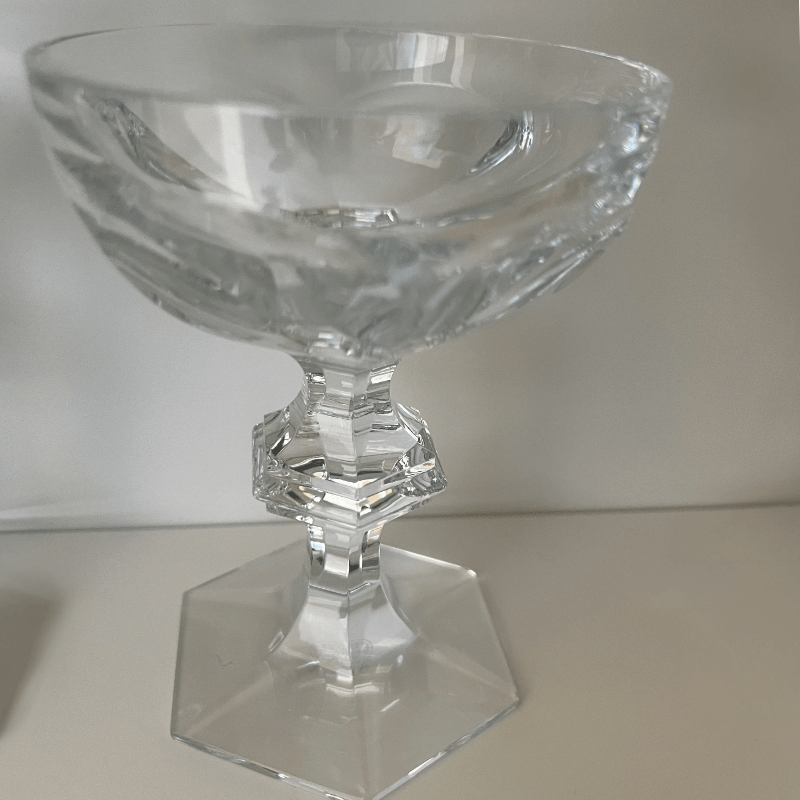
The crystal coupe, a vintage style making a modern comeback
Which to choose? If you host sit-down dinners, start with flutes. If your entertaining style leans more toward cocktail parties and casual gatherings, coupes are more versatile.
Cocktail and Everyday Glasses
Not every glass on your shelf needs to be for formal dining. For everyday use and casual entertaining, two types cover almost everything:
Highball and rocks glasses handle nearly every drink, from cocktails and sparkling water to juice and iced tea. A well-made set like the Libbey Ascent tumbler and rocks set gives you 16 glasses in two sizes, enough for daily use and hosting, in a design that looks clean on any table.
- ✓ 16 pieces in two sizes, excellent value
- ✓ Dishwasher safe and durable
- – Basic design, not for formal settings
Specialty glasses (martini glasses, margarita glasses, Irish coffee mugs) are fun to own but far from essential. Unless you regularly serve a specific cocktail, they are easy to skip and save valuable cabinet space.
Once you know which shapes you need, the next question is usually about material.
Crystal vs Everyday Glass: What Is the Difference?
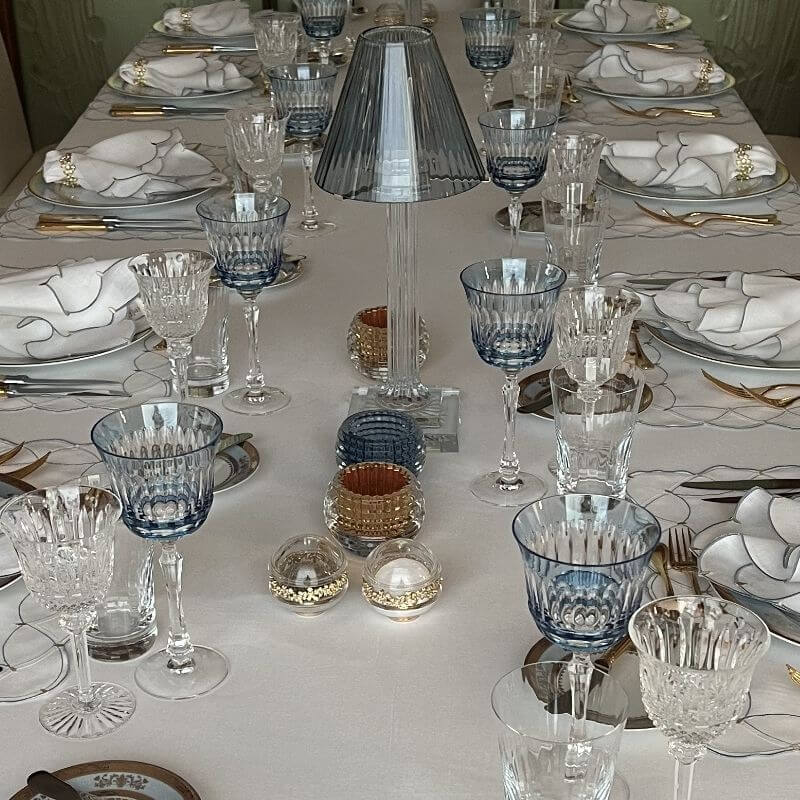
Fine crystal glassware, the clarity and brilliance that sets crystal apart from everyday glass
This question comes up often, and the answer is simpler than most people think. Similar to choosing between bone china and porcelain, it comes down to occasion, budget, and what you value most.
Crystal contains minerals (traditionally lead oxide, now often replaced with barium or zinc) that make it clearer, thinner, and more brilliant. Studies have shown that glass shape can influence how wine aromas are perceived, and crystal, with its thinner walls and finer rim, enhances that experience. You can see the difference the moment you pick it up. Crystal is lighter, it catches light in a way that everyday glass does not, and the rim feels noticeably more refined. Brands like Waterford and Baccarat have built their reputations on exactly this quality.
Everyday glass is thicker, more durable, and dishwasher safe. It will not shatter if someone sets it down too firmly. For weeknight dinners, outdoor entertaining, and homes with young children, everyday glass is the practical choice.
Can you mix them? Absolutely, and I do it regularly. Crystal wine glasses with everyday water glasses works beautifully. The wine glass draws the eye, the water glass does its job quietly. It is intention that makes mixing work, not matching.
How to Place Glassware on the Table
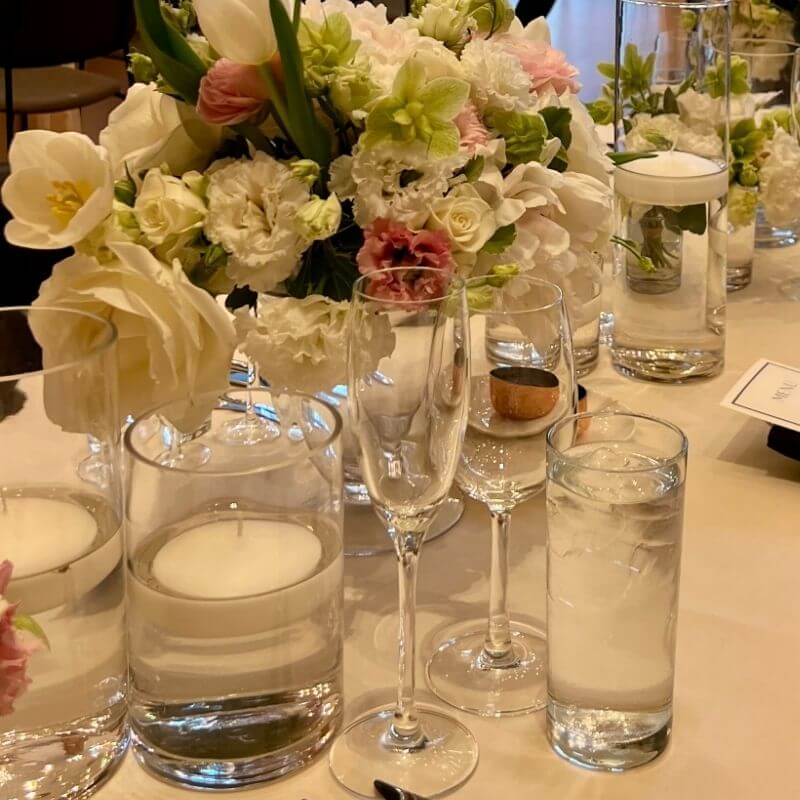
Proper glassware placement, water glass and champagne flute in position at a spring event
Once you have chosen your glasses, placement is straightforward. The arrangement follows a simple logic based on when each glass will be used during the meal.
The water glass sits directly above the dinner knife, at roughly the one o'clock position from the plate. This is the anchor of your glassware place setting.
Wine glasses go to the right of the water glass, angled slightly toward the edge of the table. If you're using two wine glasses (red and white), place the one that will be used first closest to the guest, usually the white wine glass.
The general rule: glasses move from left to right in the order they will be used during the meal.
For a complete guide to setting your full place setting with linens, candles, and finishing touches, see our full table setting guide. And once each place setting is arranged, finish it with a beautifully folded napkin. It is the detail that ties everything together.
Building Your Glassware Collection
You do not need to buy everything at once. Build your collection gradually, starting with what you will use most:
Start with two sets: water glasses and all-purpose wine glasses. These cover about 90 percent of daily use and casual hosting.
Add next: dedicated red and white wine glasses if you serve wine often, or champagne flutes if you host celebrations.
Then: colored goblets or crystal pieces for personality and special occasions. These are the finishing touches that make your table feel uniquely yours.
A practical note: sets of six tend to work better than sets of twelve for most households. You will replace a broken glass eventually, and it is easier to store and rotate smaller sets. A well-built collection doesn't feel excessive. It simply feels ready for any moment.
Frequently Asked Questions
What types of glassware do I need at home?+
What is the difference between crystal and regular glass?+
Where do glasses go on a table setting?+
Can you mix different types of glassware on the same table?+
What size wine glass should I buy?+
How many glasses do I need for a dinner party?+
The right glass doesn't just hold a drink — it completes the table. Start with two good sets, use them every day, and let your collection grow from there. The best type of glassware for your home is the kind you'll actually reach for.


